El Fasher… When Cities Are Slaughtered
Report – Sudan Events
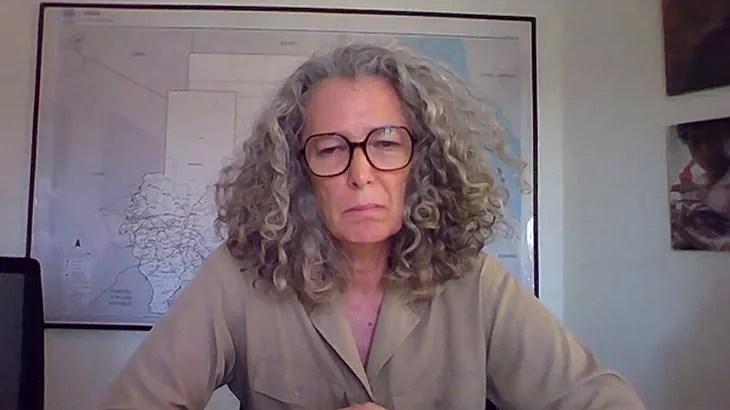
A senior UN official said that international humanitarian workers who entered El Fasher for the first time since the militia seized control of the city found it largely deserted, with only a handful of people sheltering inside buildings or beneath plastic sheets. Denise Brown, the United Nations Humanitarian Coordinator in Sudan, stated that these people are living in extremely fragile conditions. Some, she said, are staying in abandoned buildings, while others are surviving in rudimentary conditions under plastic covers, without sanitation or water—conditions she described as degrading and unsafe.
Brown added that the hospital building is still standing, but it is clear that someone has cleaned it. However, she noted that medical supplies are completely absent. She also spoke of the presence of some medical staff, without specifying whether they were doctors or nurses, and said that the number of patients is very small.
She further mentioned the existence of a single small market selling rice, tomatoes, onions, potatoes, and biscuits in very small bags, indicating that people cannot afford to buy more. Brown warned of the presence of detainees, saying, “We were not able to see them, but we are confident they exist.” She also noted seeing armed men in the streets, explaining that the mission moved only within areas that had been agreed upon in advance, adding, “What we saw is just the tip of the iceberg.”
The United Nations had previously indicated that negotiations to send its mission to El Fasher took several weeks. The UN official’s remarks corroborate accounts by those who fled the hell of El Fasher, who confirmed that the city has been turned into a vast slaughterhouse where civilians are killed, their organs sold, and their blood extracted, amid strict measures to prevent residents from leaving the city.
A source inside El Fasher said the militia attempted to open some roads and filmed them to create the impression that conditions were normal. It also deployed some of its supporters in civilian clothing in various areas. However, the city has in fact become virtually deserted, and movement within it is extremely dangerous, as the militia fires at any moving target after sunset. Life has come to a standstill, the source said, and no one knows what is happening around them. Even militia fighters, he added, know nothing about their surroundings except what they follow on “media” throughout the day.
“There was no sign whatsoever of the UN visit,” the source continued. “We did not see any UN vehicles, nor any humanitarian aid, or even talk of aid. What is being said is merely an attempt to cover up what is happening to the people of El Fasher.” He added sarcastically, “Does the United Nations really think the militia would allow it to enter El Fasher and distribute aid? That seems utterly unrealistic. If militia fighters find you carrying a few tomatoes or onions in the street, they will not let you pass; they will confiscate them, and you could even be killed because of them.”
The source went on to say that most of the remaining residents—few in number and among the city’s poorest—have moved toward concrete buildings in an attempt to protect themselves from the widespread gunfire. The militia, he said, fires into the air constantly throughout the day, with the situation worsening at night. In addition, internal clashes and exchanges of gunfire among militia members are ongoing. Vehicles used to loot and transport stolen goods from people’s homes sometimes clash with one another, leading to deaths, including cases where individuals were caught stealing from a house that another looter had already begun to plunder.
He concluded by saying that the idea that international or other organizations could enter the city and distribute medicines or aid is illogical. “They are literally still looting people’s homes and state institutions and transporting the stolen goods in vehicles. How can people whose behavior is like this distribute aid, treat the sick, or run a state? They are nothing but thieves and looters.”
Meanwhile, Mohamed Adam Kesh, a leader in the Sudan Liberation Movement (Minawi faction) who left El Fasher after its fall, said he remains convinced that the international community is complicit. He accused it of adopting a policy of “cold statements and lifeless condemnations” while the militia was besieging El Fasher and killing its people. Once the militia entered the city, he said, the international community hastened to call for a truce and to push for the entry of aid—moves that, in his view, amount in practice to endorsing the genocidal crimes committed against defenseless civilians.
Kesh added that the United Arab Emirates and Israel are seeking to implement their ambitions in Darfur by using the Rapid Support Forces militia as a tool to divide Sudan and undermine its stability. He also pointed to what he described as an ongoing demographic change in Darfur, citing the militia’s efforts to bring in groups of foreigners, settle them in the region, integrate them into the local community, and expand the scope of their presence and influence.