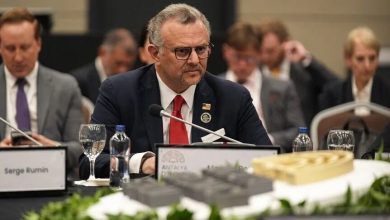
Saudi political analyst Munif Ammash Al-Harbi said that what is unfolding in Sudan represents “a new form of colonialism that will neither pass nor succeed,” asserting that “the Zionist project has, for the first time in history, worn an Arab cloak—specifically, the cloak of Abu Dhabi.”
Speaking to DW Arabic, Al-Harbi sharply criticized the Emirati role in Sudan, arguing that Abu Dhabi’s support for the Rapid Support Forces constitutes a direct assault on the Sudanese state and its sovereignty. He described this support as part of a broader regional project linked to normalization with Israel.
He added that the conflict in Sudan is not an isolated internal struggle, but rather part of a wider regional political and security engineering effort aimed at reshaping the region through local proxies. Al-Harbi emphasized that the Sudanese people “have thwarted far greater colonial projects throughout their history and will not allow this new project to pass.”
Background:
Al-Harbi’s remarks come amid intensifying regional and international debate over the nature of the war in Sudan, alongside mounting accusations that external actors are providing the Rapid Support Forces with weapons, funding, and political cover. A number of analysts argue that such support intersects with broader regional shifts, including realignments of alliances, normalization tracks, and the instrumentalization of internal conflicts as tools of regional influence. These statements reflect a growing number of Arab voices linking the Sudan war to geopolitical projects extending beyond Sudan’s borders, while warning of serious repercussions for Arab national security and regional stability.