The War That Spilled Beyond Sudan: How Middle Eastern Rivalries Turned a Local Conflict into a Regional Crisis
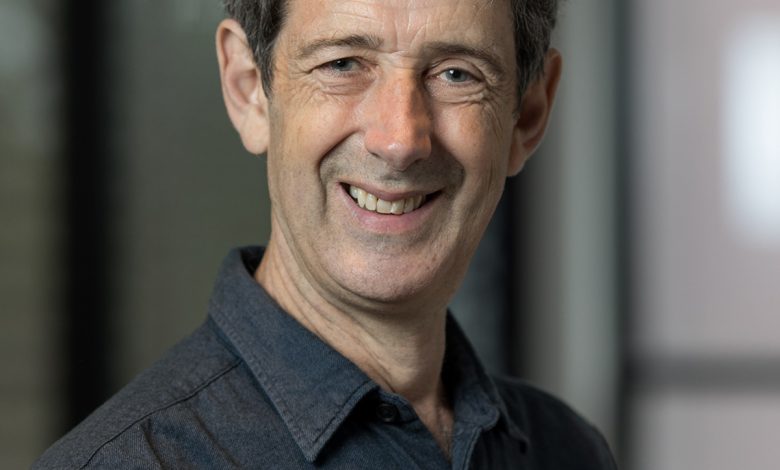
Alex de Waal
Last summer, after more than two years of horrific fighting, it appeared that the United States might finally have found a viable approach to ending Sudan’s civil war. Since the conflict erupted in April 2023, the Sudanese state has collapsed, and its people have been plunged into the world’s largest humanitarian crisis. Front lines have surged back and forth across the country, destroying the capital, Khartoum, and some twenty other cities. Today, the Sudanese Armed Forces (SAF), led by General Abdel Fattah al-Burhan, control Khartoum and areas east of the Nile, while their rival, the paramilitary Rapid Support Forces (RSF) led by Mohamed Hamdan Dagalo—known as “Hemedti”—largely control the western part of the country.
In June, the Trump administration convened a meeting of the “Quad,” comprising Egypt, Saudi Arabia, the United Arab Emirates, and the United States, to chart a path toward peace. These countries were not merely mediators: throughout the war, Egypt and Saudi Arabia had backed the SAF, while the UAE supported the RSF, despite Abu Dhabi’s denials. Given the decisive influence these regional powers wield over the conflict, there was hope that a strong agreement within the Quad could pave the way for a lasting ceasefire.
Those expectations—that President Donald Trump would inject new momentum into Sudan’s peace process—have yet to be realized. In September, the Quad announced a plan that included a ceasefire, humanitarian access, and political negotiations leading to a civilian government. But just one month later, as talks over implementation stalled, the RSF committed the worst atrocity of the entire war. After an 18-month campaign of brutal starvation siege, RSF forces overran the city of El Fasher in Darfur. In the course of taking the city, they killed at least 7,000 people, most of them civilians. As many as 100,000 others remain missing, though some have straggled into towns and villages hundreds of miles away, pale and struggling to find words for the horrors they witnessed. RSF fighters not only killed with impunity; they also circulated “souvenir” videos of themselves torturing and murdering their victims, hurling dehumanizing slurs as they did so.
Despite international outrage, the fighting did not abate in the three months that followed. The RSF is now besieging the city of El Obeid in North Kordofan and has shelled civilian targets, including a kindergarten. Meanwhile, both sides continue to receive weapons from their foreign patrons. Since October, observers have noted an increase in military cargo flights to airports controlled by the RSF, which has also begun deploying sophisticated Chinese-made drones alongside Colombian mercenaries. Investigators have traced these flights back to the UAE. With these new supplies, the RSF may even be able to threaten Khartoum, which it largely controlled in the early stages of the war before being pushed out by the SAF. At the same time, Egypt and Turkey are funneling additional arms to the Sudanese military.
The longer the fighting drags on, the greater the risk that it will ignite a broader regional conflagration. The war is already deeply entangled with Sudan’s African neighbors. RSF supply lines run through Chad, Libya, Somalia, and South Sudan, and could eventually extend to Ethiopia and Kenya. Its recruitment base—especially among rural and historically nomadic communities—stretches westward across the Sahel. Since the fall of El Fasher, reports have emerged of Arab pastoralist groups crossing borders from the Central African Republic and Chad to seize land recently emptied of its inhabitants. The Sudanese war also intersects with the volatile standoff between Eritrea and Ethiopia, which itself threatens to erupt into a major conflict.
By convening the Quad, Washington rightly recognized that the road to ending Sudan’s war runs through the Gulf. What many have not fully grasped, however, is that this conflict has become internationalized in a new and unprecedented way compared with Sudan’s previous wars. Across Sudan—and much of Africa and the Middle East—the nation-state is receding, replaced by borderless fiefdoms run by warlords answerable to wealthy foreign patrons. This reality has made the war, despite its deep unpopularity among Sudanese themselves and the misery it has inflicted on tens of millions, far harder to contain. Without more decisive intervention from the highest levels of the Trump administration, there is a real danger that Sudan’s war will plunge the Horn of Africa, the Nile Valley, and the Sahel into a vast zone of chaos.
A State-Level Massacre
Ending Sudan’s war would be difficult under even the best of circumstances. The massacre in El Fasher last October captured global attention for its exceptional brutality, but it was only the most visible episode in a pattern of atrocities that has scarred the country since the fighting began. What happened in El Fasher echoed the killings in West Darfur during the early months of the war—violence the U.S. State Department has described as genocide. The seizure of the city was also a concentrated version of the horrors inflicted on the capital in the war’s opening phase, when RSF fighters looted neighborhoods and killed and raped residents indiscriminately.
Along with his allies, Hemedti claims that his project aims to dismantle the “1956 state”—a reference to Sudan as it emerged after independence from British colonial rule on January 1 of that year. In the RSF narrative, Sudan’s state was hijacked by a narrow elite of military officers and businessmen—joined since the 1980s by Islamists—who ran the country as a closed club, exploiting the peripheries for personal gain. This, the argument goes, culminated in the 30-year rule of Omar al-Bashir (1989–2019), while Burhan’s forces merely represent the continuation of the “deep state.” This message has resonated with poor and marginalized communities in rural areas, particularly in Darfur, even though the RSF’s solution is not to reform the state but to loot it and prey on civilians.
After two years of extreme violence—looting, rape, and massacres in both rural areas and cities—Sudanese society is more polarized than ever. The venomous rhetoric on social media, often spilling into personal confrontations between supporters of the two sides, reveals an unprecedented level of bitterness, fear, and hatred, even for a country long accustomed to war.
Most Sudanese continue to support the goals of the 2019 revolution, when people across the country took to the streets in peaceful protests demanding an end to military rule, corruption, and perpetual conflict. A broad coalition of civil society organizations and political parties once hoped to build a genuine democracy with accountable institutions and a thriving economy. Those hopes were shattered when Burhan and Hemedti conspired to oust the civilian leadership—and then incinerated the democratic dream entirely when they turned on each other.
Since the war began, roughly six peace proposals have been floated, all envisioning a return to civilian rule while acknowledging that democrats are far weaker than the generals. In fact, a formal peace process has never truly begun. Within weeks of the outbreak of fighting, Saudi Arabia and the United States invited delegations from both sides to Jeddah in an attempt to broker a ceasefire. The parties signed a declaration pledging to protect civilians and facilitate humanitarian access, but it was honored only in the breach. Since then, mediation efforts have stalled, while each side secures foreign backing to supply the weapons for its next offensive. Even as the country slides toward famine, both the SAF and the RSF have the means to keep fighting.
The UAE Puzzle
As the war has continued, the role of the UAE in particular has grown increasingly complex. While Egypt, Qatar, Saudi Arabia, and Turkey support the Sudanese Armed Forces, substantial evidence indicates that the UAE is supplying the RSF with weapons for its ongoing campaigns. Because Abu Dhabi persistently denies its involvement, mediators have found it impossible to engage Emirati officials in discussions about their interests, strategy, or potential concessions.
Analysts and diplomats can only speculate about why the UAE would back such a brutal force. Most believe that UAE President Mohammed bin Zayed Al Nahyan (known as MBZ) has maintained a patron-client relationship with Hemedti for a decade, dating back to when RSF fighters were deployed to Yemen to fight the Houthis. In 2015, after the Houthis seized Sana’a in a lightning offensive, Saudi Crown Prince Mohammed bin Salman (MBS) led a coalition that pledged to roll back Houthi gains and restore the internationally recognized government. The UAE joined the effort, deploying its military and air force. But as the war dragged on without delivering victory, the Saudi-Emirati alliance fractured. While Saudi Arabia became open to a truce with the Houthis, the UAE focused on controlling strategic ports and maritime facilities, backing the separatist Southern Transitional Council. Just last month, the council launched an attack on its supposed allies in Yemen’s internationally recognized government, threatening another round of instability and deepening the rift between Abu Dhabi and Riyadh.
The UAE also differs from Saudi Arabia in its approach to Sudan’s Muslim Brotherhood, which backs the SAF. While Saudi Arabia and Egypt trust Burhan to contain the Islamists, the UAE refuses to tolerate their proximity to power. There are also commercial ties between the UAE and the RSF—Hemedti’s family company exports Sudanese gold to Dubai—but business interests alone do not fully explain this alignment.
The path to ending Sudan’s war runs through the Gulf.
The decisive regional factor in Sudan’s conflict is the intense rivalry between the UAE and Saudi Arabia—between MBZ and MBS—over who will emerge as the dominant power broker in the Arabian Peninsula and the Red Sea. As in Yemen, this rivalry now plays out in Libya, Sudan, Syria, and the Horn of Africa, where the two once-“brotherly” states increasingly find themselves on opposite sides.
When war broke out between Burhan and Hemedti in 2023, it was clear to anyone following Sudan that the UAE had to be part of any peace process. It was understood that any roadmap to ending the war would require high-level U.S. engagement with Abu Dhabi—at the level of the secretary of state, backed by the president. Yet throughout 2023 and 2024, as Sudan burned, the Biden administration failed to act at that level.
With the Trump administration taking office in early 2025, U.S. Secretary of State Marco Rubio moved where his predecessor had not. At his invitation, the Quad met in June and issued a statement in September. Another meeting was supposed to follow a month later to announce a ceasefire plan. But Burhan told his Egyptian patron that he was not ready—likely fearing resistance from factions within his divided coalition. The RSF interpreted this hesitation as a green light to attack El Fasher, which it did the very next day. Hemedti may have believed he could pin the blame on the SAF’s intransigence and did not anticipate that the sheer brutality of his fighters—broadcast by the RSF itself through shocking videos of torture and execution—would focus global attention on the war’s horrors.
At that moment, a firm private word from Trump to MBZ might have enabled the UAE to make a face-saving concession and allowed Trump to announce a deal backed by both Gulf states. Instead, after meeting MBS, Trump spoke publicly, saying, “His Majesty wants me to do something very strong regarding Sudan,” before adding, “What’s happening is terrible.” At that point, any Emirati move to endorse a joint plan would have looked like a retreat. Rather than reinforcing the Quad initiative, Trump undercut it.
A War Without Borders
As regional backers dig in, the war now threatens the entire Horn of Africa. Consider the explosive situation between Ethiopia and Eritrea, where the same regional patrons once again support opposing sides. The leaders of the two countries, Abiy Ahmed and Isaias Afwerki, were allies during Ethiopia’s civil war (2020–2022) against the Tigray People’s Liberation Front. Today, they are destabilizing one another and could slide into open war. Egypt, deeply alarmed by Ethiopia’s Nile dams, backs Eritrea, which has therefore aligned itself with the Sudanese Armed Forces.
Ethiopia has so far managed to stay out of direct involvement in Sudan’s war, but several flashpoints loom. One is the unresolved border dispute over the al-Fashaga triangle. Another is the presence of a brigade of Tigrayan fighters fighting alongside the SAF. Originally deployed as UN peacekeepers on the Sudan–South Sudan border, they refused to return home during Ethiopia’s war with Tigray and played a crucial role in defending eastern Sudan against the RSF. They remain stationed near the front lines. If war breaks out between Ethiopia and Eritrea, it is unclear what they would do. But if Abu Dhabi were to double down and use its influence over Abiy Ahmed to directly assist the RSF—perhaps by pressuring Ethiopia to open a base—this could ignite a dangerous confrontation.
South Sudan is mired in its own political crisis and has tried to balance between the RSF and the SAF, walking a tightrope. Burhan invited South Sudan’s army to secure Sudan’s largest oil field, Heglig, just north of the border. When SAF forces were forced to withdraw in early December under RSF attacks, South Sudanese troops chose to cooperate with the incoming force. Egypt and its partners understand President Salva Kiir’s predicament, but if he were to fully side with the RSF, they might back one of the many potential rebels in his country.
Egypt itself is already hemmed in by crises in Gaza and Libya and burdened by a stagnant economy; further destabilization from Sudan would only compound its problems. Cairo is also trying to balance its reliance on Emirati investment with its traditional support for the SAF and its hostility toward Ethiopia over the dam issue. And while Egypt now finds itself aligned with Turkey in backing Burhan, it remains wary of Ankara’s support for Sudanese Islamists.
Then there is Sudan’s Red Sea coast, whose strategic importance is growing. The Red Sea is a vital artery of global trade and an increasingly intense geopolitical arena. Twenty years ago, only France and the United States maintained military presences there, with neighboring bases in Djibouti, and maritime security was largely taken for granted. Since then, everyone has rushed in: China opened its first overseas naval base in Djibouti; the UAE controls a chain of ports, including on the strategically located island of Socotra; and Turkey signed a 99-year lease to develop Sudan’s port of Suakin, potentially paving the way for a naval base. For Israel, the Red Sea is a national security priority: in the early 2000s, Iran smuggled weapons to Hamas through Sudanese territory, and two years ago, when the Houthis began attacking international shipping, they did so in declared solidarity with the Palestinians.
The stakes rose even higher in late December, when Israel recognized Somaliland as an independent state separate from Somalia. The move intensified competition between the UAE—which brokered the Israel-Somaliland deal—and Egypt, Saudi Arabia, and Turkey, which oppose it. None of these players wants to see a rival—let alone a potential enemy—control a chokepoint capable of strangling this strategic waterway.
A Global Test
As the war reached its thousandth day on January 9, tens of thousands of Sudanese had been killed by violence, and many more had died from hunger and disease. Half of the country’s 46 million people now require emergency food aid, and a quarter have lost their homes. Entire cities have been destroyed, and the national economy has been set back by a generation. All of this devastation is collateral damage from Middle Eastern power struggles. In this contest for dominance, Africa is largely sidelined: Egypt and Ethiopia maneuver at the margins, while Saudi Arabia and the UAE are the decisive players. At this stage, the most likely outcome of any peace process is that Sudan—whether unified or divided—ends up subordinate to the Gulf states.
Beyond the region, the war also implicates Russia, which has long sought a foothold in northeastern Africa. When the conflict began, Russia’s Wagner Group had ties to the RSF but later shifted its position. Russia has commercial gold interests in areas controlled by the SAF and seeks access to a Red Sea port. It has also used its veto at the UN Security Council to affirm the Sudanese government’s “sovereign right” to control cross-border aid, obstructing assistance to Darfur.
The Sudan war underscores a harsh truth: there are no longer purely local wars in the Horn of Africa. A conflict may be sparked by local disputes and fueled by local grievances, but civil wars are no longer contained within national borders, nor can settlements be engineered solely among domestic actors. Sudan’s previous wars—the two north-south conflicts and the earlier Darfur war—spilled across borders and drew in neighbors, but the path to peace was ultimately internal. That is no longer the case. Peace in Sudan now requires negotiation as part of a regional—or even global—package.
The ingredients for peace in Sudan are well known.
To Trump and Rubio’s credit, they have not yet given up and continue to push for a ceasefire. But it is a long gamble. The immediate obstacle is not the UAE but Burhan himself, who struggles to control his aides. The test will be whether the White House has the appetite to broker a deal that yields no immediate gains; whether Egypt and Saudi Arabia can guarantee Burhan’s compliance; and whether the UAE will come to see restraint as a virtue. For any agreement to be more than a fleeting handshake, it will require patient diplomacy and coordination with multilateral institutions.
The United Nations and the African Union—once capable of shaping international diplomacy on Sudan—have been sidelined. Yet one lesson of recent history is that any deal will require peacekeeping forces to monitor a ceasefire and protect civilians. For two decades, the UN and AU provided that vital service, until the joint mission in Darfur was shut down six years ago. Reconstituting and deploying a similar force would be difficult and costly—but no more costly than allowing the war to burn on indefinitely. This is where multilateral institutions, and Africa as a whole, could reclaim their role.
With African peacekeepers on the ground, the peace process could be wrested from the hands of Arab strongmen, giving Sudanese a real chance to establish civilian rule and build a democracy. For a country that has endured more than its share of war, the elements of peace are now well understood after 25 years of learning what works and what fails. The harder task is compelling the international actors driving today’s conflict to apply that knowledge. As Sudan becomes a model of a new kind of internationalized war, it will also serve as a critical test of whether peace-making under such grim conditions is still possible.
About the author:
Alex de Waal is the executive director of the World Peace Foundation and co-author of Sudan’s Unfinished Democracy: The Promise and Betrayal of a People’s Revolution.