Sudan and the World’s Selective Morality

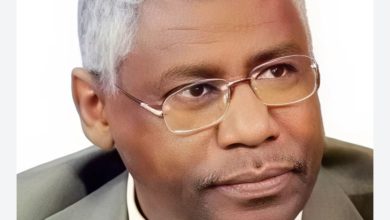
By Mustafa Abdelhaleem Mahmoud
Sudanese Diplomat
Amid the ongoing Sudanese crisis, which erupted in April 2023 following an armed rebellion by the Janjaweed genocidal renegade militia against the Sudanese government and its legitimate institutions, observers of the international response are confronted with a stark moral paradox. The gap between official rhetoric and concrete action has grown uncomfortably wide. While the world repeatedly speaks of protecting civilians and restoring stability, meaningful and effective intervention remains conspicuously absent. This silence persists despite the well-documented atrocities committed by the rebel militia, including mass killings, systematic sexual violence, forced displacement, and the deliberate destruction of civilian infrastructure. To understand this contradiction, it is useful to turn to an idea introduced more than a century ago by Max Weber (1864 – 1920), a German sociologist and political economist widely regarded as one of the most influential thinkers in the development of modern Western society.
Weber drew a clear distinction between two ways of thinking about ethics in political life (Weber, 1919). One is an ethic rooted in moral principles and noble declarations, where the purity of intention matters more than what follows. The other, which he described as the “ethic of responsibility”, holds that political leaders must be judged by the foreseeable consequences of their decisions, requiring them to weigh interests, risks, and outcomes before they act.
In its approach to Sudan, the international community claims to be guided by this second logic, the ethic of responsibility. In practice, however, what has emerged is not responsible action, but the invocation of political realism as a convenient excuse for paralysis. Despite repeated declarations about protecting civilians, supporting democratic transition, and securing ceasefires, international engagement has remained hesitant, delayed, and deeply selective. Humanitarian aid continues to fall well short of the scale of the catastrophe, diplomatic initiatives remain stalled, and millions of Sudanese are left exposed to mass displacement and indiscriminate violence.
This failure becomes even more striking when contrasted with the speed and resolve displayed by the international community in other crises, most notably the war in Ukraine, where unprecedented political and military support was mobilized in a remarkably short period. Such disparity cannot credibly be attributed to differences in values or principles. It reflects a more uncomfortable truth: international action is shaped less by the scale of human suffering than by the weight of strategic interest.
Weber warned explicitly against this kind of ethical distortion. He insisted that political actors must be judged not by the nobility of their intentions, but by the tangible consequences of their choices. By that standard, the effects of international silence on Sudan are unmistakable: a State under severe pressure that has nevertheless remained intact, national institutions that have continued to function, and an authority that has resisted fragmentation in the face of armed rebellion and sustained external neglect.
Viewed more broadly, the Sudanese crisis exposes the moral hierarchy embedded within the contemporary international system, one dominated by global power centers that define urgency not by universal principle, but by strategic convenience. These actors have progressively hollowed out the notion of collective responsibility, reserving decisive engagement for crises that intersect with their geopolitical interests while consigning others to prolonged neglect. Within this calculus, Sudan is not approached as a sovereign State confronting an armed rebellion that threatens both national cohesion and regional stability, but rather reduced to a peripheral crisis deemed unworthy of sustained international commitment, regardless of the profound political and human costs produced by such calculated indifference.
Ultimately, Sudan has become a decisive moral test for the international community, one that reveals not the weakness of the Sudanese State, but the depth of global abdication of responsibility. What this crisis has exposed is how the language of political realism can slide into strategic indifference, providing convenient cover for hesitation and inaction. Yet, despite this sustained neglect, the Sudanese State has demonstrated remarkable resilience. Its central institutions have remained intact, its sovereignty upheld, and its authority asserted against an armed rebel militia seeking to undermine constitutional order. In the face of prolonged external indifference, the state has neither fragmented nor collapsed, but has continued to function, resist disintegration, and preserve national cohesion. As Max Weber reminds us, responsibility in politics does not consist merely in the calculation of interests, but in bearing the moral consequences of silence. In Sudan’s case, that silence stands in stark contrast to a State that has endured, defended its unity, and maintained its foundational structures under extraordinary pressure.
The question therefore remains pressing and unavoidable:
Can the world overcome its selective morality and treat the Sudanese crises as a human catastrophe rather than a geopolitical footnote?
Or will the ethics of international politics continue to be invoked only when interests align, quietly set aside when the costs of action rise, leaving a sovereign country to defend its unity, stability, and people largely on its own?