Outrage on Social Media After the ICC Uncovers War Crimes by the RSF

Report – Sudan Events
A wave of anger and grief has swept across social media platforms following revelations by the International Criminal Court (ICC) of what were described as “serious” evidence pointing to the commission of war crimes and crimes against humanity in the city of El Fasher, in Sudan’s Darfur region. The disclosures came nearly three months after fighting subsided following the withdrawal of the Sudanese army from the city, a period widely regarded as one of the most brutal phases for civilians.
The ICC’s Deputy Prosecutor, Nazhat Shameem Khan, stated that the Rapid Support Forces (RSF) are accused of committing grave violations in Darfur, noting the availability of evidence indicating attempts to conceal crimes through the digging of mass graves.
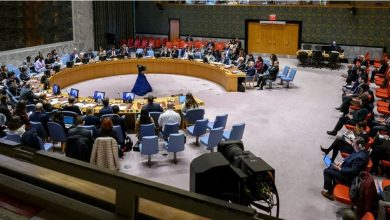
In a briefing delivered remotely after she was unable to obtain a visa to enter the United States, Khan explained that the prosecution relied on audio and video materials as well as satellite imagery. These materials, she said, point to mass killings and systematic efforts to erase evidence of crimes by burying victims in mass graves.
“Have Their Hearts Died?”
Violations against civilians in El Fasher have sparked widespread engagement on social media, part of which was monitored by Al Jazeera’s “Networks” program. In this context, a user identified as Ainar expressed shock, writing:
“How can a Muslim—or any human being—kill his brother in this way? Have their minds been washed? Have their hearts died? What were they promised—money and palaces?”
In another comment, Al-Qasimi questioned the role of the military institution, asking:
“Why does the Sudanese army fight if not to protect Sudan and its people? Why did it withdraw and leave civilians to face their fate at the hands of the Rapid Support Forces militia?”
For her part, Oumaima painted a grim picture of the humanitarian situation in the city, writing:
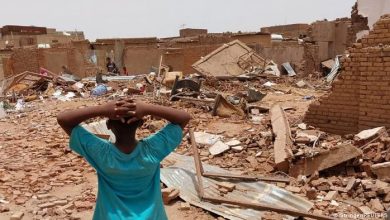
“I am from Sudan, and at the moment I write these words, some people are being killed by shelling and executions, while others are dying of hunger in the city of El Fasher. People are dying and being exterminated in the most horrific ways, with no path to escape.”
The Suffering of El Fasher’s Residents
El Fasher, the focal point of these accusations, is one of five state capitals that make up the Darfur region, alongside Nyala, El Geneina, Zalingei, and Ed Daein—cities that have all come under the control of the Rapid Support Forces. Throughout years of conflict, the Sudanese army maintained an organized military presence in Darfur. This situation changed in May 2024, when the RSF imposed a complete siege on El Fasher, cutting off supply routes. As ground assaults and shelling intensified, army units gradually withdrew from their positions inside the city, eventually losing full military control in October of last year.
These developments come amid an ongoing war between the Sudanese army and the Rapid Support Forces since April 2023, a conflict that has resulted in the deaths of tens of thousands and the displacement of at least 11 million people. It has also fueled a deepening hunger and displacement crisis that the United Nations describes as the worst in the world.