Diplomatic Escalation: Trump Withdraws Canada’s Invitation to Join the “Peace Council” in Response to Davos Criticism
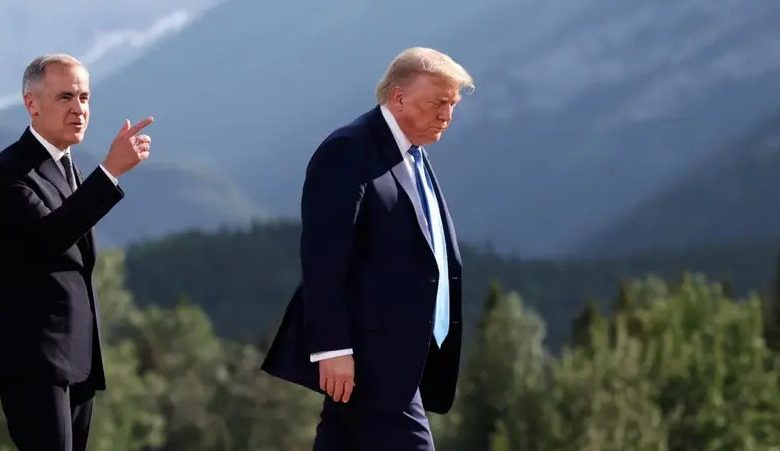
In a sudden development reflecting rising tensions between two long-standing allies, U.S. President Donald Trump announced the withdrawal of Canada’s official invitation to join the international “Peace Council” initiative, in a sharp response to remarks made by Canadian Prime Minister Mark Carney at the World Economic Forum in Davos.
The Letter: “Withdrawal of the Invitation”
Via his platform Truth Social, Trump addressed a brief and strongly worded message to the Canadian prime minister on Thursday evening (January 22, 2026), stating:
“Dear Prime Minister Carney: Please consider this letter as formal notice that the ‘Peace Council’ is withdrawing its invitation to Canada to join what will be the most prestigious and important council of leaders ever assembled, at any time. Thank you for your interest in this matter.”
Background of the Crisis: “The Illusion of the Global Order”
The U.S. decision came just hours after Carney delivered a speech in Davos in which he launched an unprecedented critique of the U.S.-led global order.
According to observers, Carney’s description of the rules-based international system as having become a “fiction” provoked strong displeasure in the White House. Carney stated that “the rules-based order has become a fiction, as great powers exempt themselves from the rules whenever it suits them,” pointing to what he described as a “fracture” in the global architecture—an implicit reference to U.S. protectionist and isolationist policies.
Trump’s Reaction: “Ingratitude”
Trump did not stop at withdrawing the invitation. He told U.S. media outlets that Canada “lives and survives thanks to the United States,” characterizing Carney’s remarks as an act of ingratitude in light of the economic and military protection Washington provides to its northern neighbor.
Canada’s exclusion from the “Peace Council”—a flagship diplomatic initiative Trump has promoted as a platform for uniting “the world’s strongest powers”—is seen as a serious indicator of the widening rift between Washington and Ottawa, raising questions about the future of cooperation on other files such as trade and collective defense.