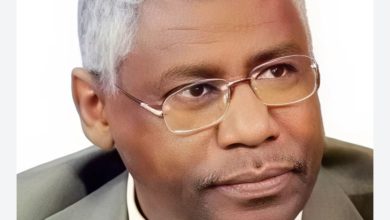
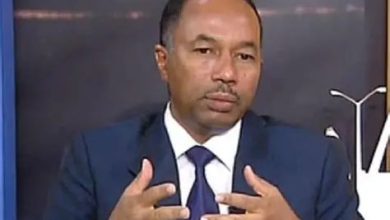
Lt. Gen. Mufaddal and the CIA Meeting
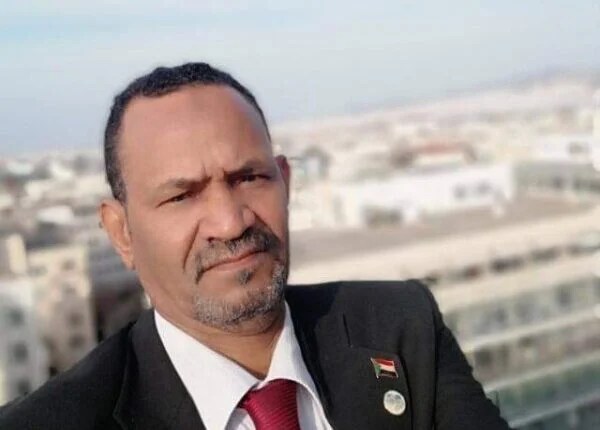
Abdelmalik Al-Naeem Ahmed
The recent visit by Lt. Gen. Ahmed Ibrahim Mufaddal, Director of Sudan’s General Intelligence Service, to the United States, where he met with officials from the Central Intelligence Agency (CIA), carries exceptional significance in both timing and substance.
It hardly needs saying that coordination between Sudan’s security and intelligence services and their U.S. counterparts—dating back to the era of Lt. Gen. Salah Gosh and his successor Lt. Gen. Mohamed Atta Al-Mawla—was strong and continuous, even during periods of political tension between the two countries. This was particularly evident in the areas of counterterrorism, human trafficking, and transcontinental smuggling. Former U.S. Secretary of State Gen. Colin Powell attested to this cooperation during his visit to Sudan and his trip to Darfur, as did events surrounding the Ocampo indictment against President Omar al-Bashir, at the height of its controversy.
However, Lt. Gen. Mufaddal’s visit on this occasion—at this specific juncture in Sudan’s trajectory and in his capacity as head of the General Intelligence Service under its new designation and expanded mandate—appears to carry different dimensions. Whereas U.S. interests in previous years were viewed primarily through the lens of counterterrorism and combating human trafficking, Washington is now beginning to focus on emerging threats to its interests in Sudan and the wider region. Chief among these are Sudan’s cooperation with Russia and Iran, as well as its relations with Turkey and China. Sudan’s bilateral ties with these influential powers have raised concerns in Washington and prompted the United States to reassess its footing in Sudan and across parts of the region.
The United States is now viewing Sudan’s relationship with Russia—particularly cooperation in the Red Sea region and proposals to establish Russian military bases—through the prism of perceived threats to its interests, including maritime and commercial security. Consequently, Washington appears keen to court Sudan’s favor, not necessarily in pursuit of Sudan’s interests, but rather to safeguard its own strategic and regional security concerns.
In terms of timing, the visit comes as the U.S. Congress prepares to debate and pass legislation aimed at curbing foreign interference in the internal affairs of states. Meanwhile, the U.S. administration continues to display what many describe as deliberate and conspicuous leniency toward developments in Sudan. At the same time, the administration’s recent action in abducting the Venezuelan president and detaining him in a U.S. high-security prison sparked widespread outrage among members of Congress, many of whom openly condemned what they viewed as violations of human rights, state sovereignty, and international law.
Discussions during Lt. Gen. Mufaddal’s visit and his multiple meetings emphasized the importance of full intelligence coordination between the two countries, particularly with regard to the flow of weapons to rebel forces, allegedly facilitated by the United Arab Emirates, and the cooperation of several neighboring African states in fueling the war in Sudan. The proposed humanitarian truce, officials argued, requires first holding the UAE accountable for financing and arming the rebellion, ensuring an end to arms transfers, and monitoring—and halting—launch platforms for drones targeting Sudan.
All of this, the article suggests, necessitates close coordination and cooperation between the intelligence services of both countries. And if such cooperation is not to be undertaken for Sudan’s sake—which, the author implies, it is not—then it should at least be pursued in line with Washington’s stated commitment to upholding international peace and security and defending human rights.
It can be said that the visit came at a critical moment. Lt. Gen. Mufaddal reportedly briefed U.S. intelligence agencies on the full scope of violations and abuses committed by the rebel Rapid Support Forces (RSF) and their mercenaries, as well as the UAE’s role in the war—presenting not only written reports, but also audio-visual evidence. This briefing came amid growing international condemnation of both the UAE and the RSF, including recent positions taken by Somalia and Saudi Arabia in response to their actions.
The question now remains: Will U.S. intelligence agencies honor their commitments, or will America remain—as it has long been known—unchanged?