Al-Burhan’s Visit to Doha: Diplomacy at the Heart of War and Multidirectional Sovereignty Messages
Report – Sudan Events
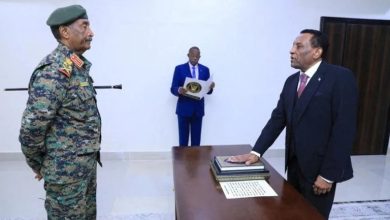
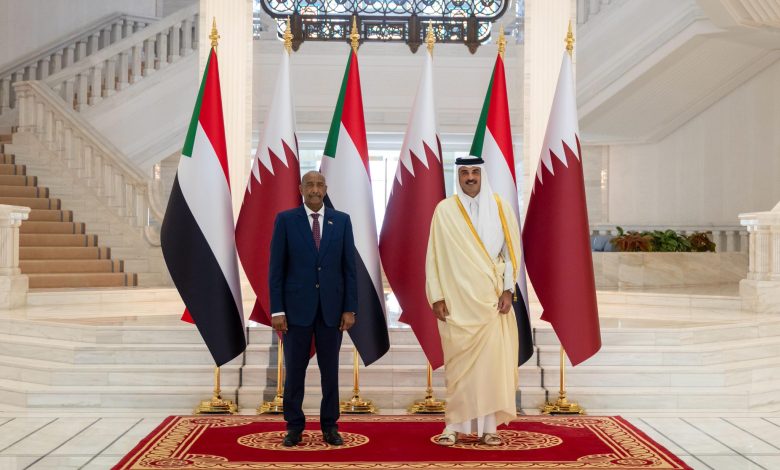
At a pivotal moment in the history of Sudan’s crisis, Chairman of Sudan’s Transitional Sovereignty Council, Lt. Gen. Abdel Fattah al-Burhan, paid an official visit to the State of Qatar, where he met His Highness Emir Sheikh Tamim bin Hamad Al Thani at the Amiri Diwan in Doha. The two sides discussed ways to support Sudan’s stability, unity, and sovereignty—during a visit whose political dimensions extend well beyond protocol.
The visit comes as Sudan endures one of the most complex phases of conflict since the outbreak of war in April 2023, amid rapid battlefield shifts and mounting regional and international pressure over the trajectory of the crisis.
Official Talks: Supporting Stability and Sudan’s Unity
According to an official statement from the Qatari Amiri Diwan, the meeting between Emir Tamim and al-Burhan addressed:
- Bilateral relations between the two brotherly countries
- Ways to support and develop cooperation across various fields
- Developments in the situation in Sudan
- International efforts to achieve security, stability, and peace
- Emphasis on respect for Sudan’s sovereignty over its entire territory
- Exchange of views on regional and international issues of mutual interest
The statement’s significance lies in its clear articulation of a Qatari position affirming Sudan’s unity and sovereignty, at a time when fears are growing over projects aimed at fragmenting the state—whether through backing armed militias or imposing political tracks that run counter to the will of the Sudanese people.
A Visit at an Extremely Sensitive Time
Al-Burhan’s visit to Doha did not occur in a political or military vacuum. It came amid an intricate set of developments:
- In recent hours, the Sudanese army succeeded in lifting the siege of the city of Dilling in South Kordofan State after fierce battles with the Rapid Support Forces (RSF).
- Continued intense fighting across the three Kordofan states.
- Escalating combat in the Darfur region, triggering large-scale displacement.
- Al-Burhan’s recent assertion that the Sudanese state is determined to end what he described as an armed rebellion and will not accept any settlement that legitimizes militias.
This concurrence renders the visit a calculated diplomatic move, aimed at shifting the struggle from the military arena alone to the political and diplomatic fronts.
Why Qatar? Reading the Choice of Destination
Selecting Doha as a diplomatic stop carries deep implications:
1. Qatar as a Non-Belligerent Actor
Unlike some regional powers accused of supporting armed factions inside Sudan, Qatar has maintained a clear distance from military intervention, preserving its role as a humanitarian and political supporter of the Sudanese state.
2. Qatar’s Diplomatic Weight
Doha wields broad influence across:
- International organizations
- Regional mediation efforts
- Humanitarian files
- Global political influence networks
This makes Qatari political backing particularly valuable to Khartoum as it seeks to restore its international standing.
3. The Search for Reliable Allies
Al-Burhan appears to be reordering Sudan’s external relations, moving away from partners whose credibility has eroded among the Sudanese public and toward states perceived as more respectful of Sudan’s sovereignty.
Beyond the Statement: Likely Issues Discussed
While official statements adhered to conventional diplomatic language, the political context suggests that deeper issues were likely addressed, including:
- The future of Sudan’s political process
- Rejection of any settlement that legitimizes armed militias
- Qatar’s humanitarian role in supporting displaced populations
- Positions on international pressure related to ceasefires
- Supporting Sudan within international institutions
- Countering attempts to internationalize the crisis in ways that undermine national sovereignty
Messages of the Visit: At Home and Abroad
To the Sudanese public:
- The leadership is moving politically, not only militarily
- Sudan is not isolated
- It still has influential allies
To the international community:
- Khartoum is rebuilding its alliances
- It seeks partners who respect its sovereignty
- It rejects externally imposed solutions
To regional actors implicated in the conflict:
- Sudan is opening alternative diplomatic paths
- Rebalancing its relationships
- And will not accept political coercion
Does the Visit Signal a Shift in the Crisis?
The visit does not mark the end of the war, but it does represent:
- A significant breach in the diplomatic wall
- The beginning of a foreign policy repositioning
- An attempt to regain initiative from abroad
- A reinforcement of the Sudanese state’s political legitimacy
It signals a gradual shift by Sudan’s leadership from reactive posture to proactive, organized political action.
Conclusion
Al-Burhan’s visit to Doha is far more than a ceremonial event. It is:
- A carefully calculated political step
- A clear assertion of sovereignty
- A move to rebuild a “clean” external support network
- An effort to restore Sudan’s natural place in the region
As the war continues with all its complexities, diplomacy is emerging as one of the decisive arenas of conflict—one in which Sudan appears to be moving with growing confidence.