What Ought to Be…!!
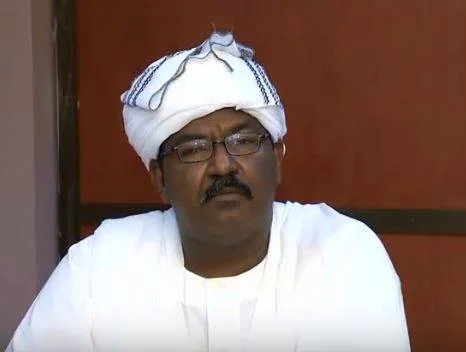
Al-Tahir Satti
Hamouda, the university barber, used to pick up terminology from students’ gatherings and then use it as he pleased, not as reason dictated. For example, a student once failed to cross a water channel and fell into it. Hamouda rushed to help him up, then reassured his friends, saying: “It’s okay, guys — your colleague here was betrayed by his expression.”
When I saw Mohammed Al-Faki Suleiman linking the return of Khartoum’s residents to their homes with the Quartet Committee, I was reminded of Hamouda and how he would force an expression into the wrong context. Al-Faki acknowledges that Khartoum’s residents need to return to their homes, yet he forced the Quartet into the narrative, saying: “They will not stabilize except through a political agreement via the Quartet platform.”
There are countless urgent events and issues unfolding in Sudan today. Yet Al-Faki found no suitable event to insert the Quartet into except the return of Khartoum’s residents to their homes. There is no connection between the Quartet and the safe and victorious return of families to their homes — a return made possible first by God’s grace, then by the sacrifices of their army and the honorable members of their people.
Al-Faki also claims that the mass return of Khartoum’s residents to their homes is driven by incitement from what he calls the “Port Sudan government,” which suggests he is not following events closely. Khartoum has been liberated, and its government returned before its residents did. Therefore, labeling it the “Port Sudan government” is no longer a relevant tool of political struggle.
The displacement of people from their homes through killing, rape, and looting — as carried out by the militia in Khartoum, Al-Jazira, Al-Fashir, and elsewhere — is something that occurs in conflicts between right and wrong. What is incomprehensible — except to Al-Faki’s mind — is the idea that displaced people are being forcibly returned or incited to return to their homes, as he claims.
A person returns to their home — the cradle of their childhood and the playground of their youth — out of longing and deep attachment. But the whims of political dogma do not only kill emotions; they blind both sight and insight from seeing things as they truly are. Had Al-Faki and his companions taken an honorable stance when people were displaced, they might have had the right to set conditions for their return — whether through a Quartet or even a Sextet.
But their positions on the occupation of people’s homes were not honorable. Instead, they were as follows:
(“Airstrikes forced them into the houses; stop the bombing so they can leave”) — Zeinab Al-Sadiq.
(“Leaving the houses is linked to stopping the war”) — Burma Nasser.
(“These houses were occupied — how can they just leave them like that?”) — Al-Nour Hamad.
And:
(“Reading the Jeddah Declaration as obliging the Rapid Support Forces to vacate homes is naïve — as if they were defeated and would just leave and hand them over to their enemy. Leaving this way is illogical. Withdrawal must happen through international or regional separation forces”) — Faisal Mohammed Salih,
who was once wise before he associated with them and followed their lead, instead of them following his.
The quotations above are merely examples. There are many failed positions and much incitement encouraging the Janjaweed not to leave people’s homes except under international supervision. Therefore, when the subject of people, their homes, and their living conditions arises, these individuals should show some shame — or at least, that is what their position ought to be.