How Sudanese Have Responded to Consultations on Forming a Transitional Parliament
Report – Sudan Events
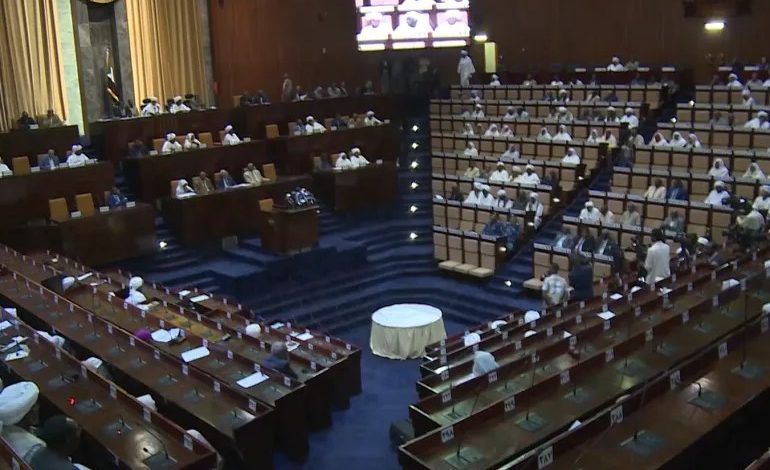
After a pause of nearly five months, Sudan’s Sovereignty Council has resumed consultations to form a transitional parliament, amid protests from pro-army groups who say they have been marginalized — a development observers warn could create fractures within the political factions supporting the military.
The first legislative institution in Sudan dates back to 1948, while the first parliamentary elections were held in 1953. Five parliamentary cycles followed until 1986, before being interrupted by the coup led by former President Omar al-Bashir in June 1989.
The 2019 Constitutional Document, adopted to govern the country after the revolution that toppled Bashir, stipulated the creation of a transitional legislative council to operate until elections are held. However, the council was never formed, and the transitional period itself was effectively ended by measures taken by Transitional Sovereignty Council Chairman Abdel Fattah al-Burhan in October 2021, when he dissolved both the Sovereignty Council and the Cabinet and declared a state of emergency.
Consultations Resume
Legislative functions during this period have been carried out by a transitional legislative authority composed of the Sovereignty Council and the Cabinet. In February 2025, the Constitutional Document was amended to establish an independent legislative authority formed through appointments, ensuring representation of peace process parties and other national forces, with a membership cap of 300.
Last August, the Sovereignty Council tasked several of its members — Shams al-Din Kabbashi, Yasser al-Atta, and Abdullah Yahya — with consulting political blocs and forces on how to form the transitional parliament.
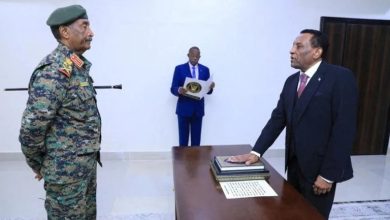
However, contacts stalled until last week, when Burhan invited several political blocs — including the Democratic Bloc led by Jaafar al-Mirghani, the National Movement Alliance led by al-Tijani Sisi, and the National Forces Coordination led by Mohamed Sayed Ahmed “Al-Jakoumi.” He briefed them on developments and asked them to submit proposals regarding the formation of the legislative council.
Sovereign sources told Al Jazeera Net — requesting anonymity — that Burhan tasked Prime Minister Kamil Idris al-Tayeb with leading discussions with political forces. Meetings with some blocs and organizations reportedly addressed several issues beyond the parliament file alone. Consultations are expected to include all national forces supporting the army, as well as independent figures, in the coming phase.
In response to not being invited to Burhan’s meeting, the Sudan Justice Alliance (Tasa), led by former Health Minister Bahr Abu Garda, stressed the need to preserve national unity and called on the Sovereignty Council to maintain equal distance from all political forces supporting the state.
In a statement, the alliance urged political leadership to be transparent on national issues and called for correcting what it described as the “flawed consultative path launched to form the parliament as quickly as possible.”
Concerns Over Political Balance
Mohamed Wadaa, head of the Coordination of Return to the Founding Platform, said no official statement was issued following Burhan’s meeting with some political forces. Leaked information, he said, resembles a “Democratic Bloc Plus” formula previously rejected by some forces within the bloc itself, and it remains unclear who is behind reviving the formula.
Wadaa told Al Jazeera Net the situation is confusing and presents an incomplete and distorted image of political forces, deepening divisions beyond disagreements over signing agreements, to mutual mistrust among political forces themselves and with Burhan.
He called for broad consultations on forming the parliament through a Sudanese-Sudanese dialogue, ensuring the legislative council reflects the widest possible base representing most political forces and social components.
However, he added that some forces reject dialogue and instead believe external pressure, political backing for the Rapid Support Forces, and mobilizing the international community are ways to overthrow the current system and establish their own state on the ruins of Sudan after depopulating it.
Wadaa said Burhan likely harbors no hidden agenda but may be frustrated by political disputes and seeking to narrow points of disagreement. However, he warned that meetings with select political groups do not reflect the political balance that has governed relations among these forces in recent years and may represent a setback from previous understandings with the Sovereignty Council and Cabinet.
Filling the Constitutional Vacuum
Former Justice Minister and constitutional law expert Mohamed Ahmed Salem said forming a legislative council is an urgent necessity to fill the current constitutional vacuum. He stressed the importance of carefully selecting its leadership and members, ensuring political will to create an effective oversight body, and preventing it from becoming merely a “decorative body for appeasement that costs the state money, effort, and time without benefit.”
Salem told Al Jazeera Net that establishing the council would end the “flawed” concentration of power in the hands of a limited number within the Sovereignty Council and Cabinet without broad institutional participation in decisions on war, peace, and the country’s future. He added that the council would provide popular backing and give decisions and policies political and constitutional legitimacy.
He also criticized the absence of constitutional provisions specifying which body forms the council, nomination mechanisms, or membership criteria, calling for consultations with all political and civilian forces and ensuring comprehensive representation of society, regions, and age groups.
“Lack of Political Vision”
Writer and researcher Ibrahim Shaqlawi said the absence of parliament since 2019 has left the state vulnerable to internal divisions, conflicts, regional pressure, and what he described as “international blackmail,” making every step toward peace or political transition dependent on building real institutions.
Shaqlawi told Al Jazeera Net that Burhan’s request for political forces to present proposals on the legislative council and its timeline is a necessary step long demanded by many to rebuild legitimate authority and protect national decision-making from external pressure.
However, he added that building a state cannot be achieved through parliament alone. Sudan needs a new social contract linking citizens to the state, defining clear boundaries between authority and society, and transforming institutions into mechanisms that protect national rights.
In contrast, political analyst Ibrahim Al-Siddiq argued that linking political activity to meetings with the ruling authority indicates a lack of political vision, saying parties have made participation in government institutions their primary battle instead of engaging with their grassroots and public opinion.
Al-Siddiq told Al Jazeera Net that, given its constitutional role, the armed forces are not meant to engage in political processes but rather to guarantee and safeguard political transition, not participate in it.
He added that political, civilian, and societal forces should determine governance choices, priorities, and phases, and that this should ideally occur through dialogue led by the prime minister and his team, while the head of state remains a sovereign symbol above political polarization.
He also noted that legislative functions at this stage, despite being limited, were agreed upon through a joint meeting of the Sovereignty Council and Cabinet, which he believes is sufficient for current needs. He argued that priority should instead be given to building governance structures at local and state levels and forming commissions mandated by the Constitutional Document.