Sudan Between Battlefield Peace and Political Whitewashing: The Washington Conference, Donor “Humanitarianism,” and the Crisis of Biased Mediation
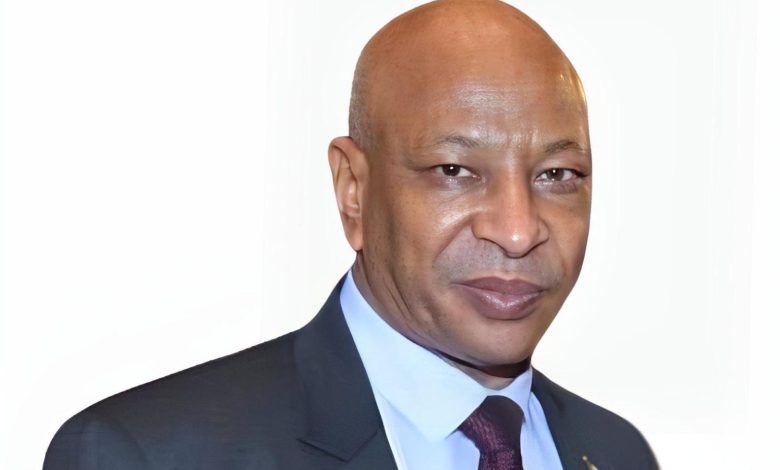
By Moawia Al-Tom
What took place in Washington under the banner of the “Sudan Peace Conference” cannot be read in isolation from its real context. It represents a belated attempt to recycle a crisis that has, to a large extent, already been settled on the battlefield—rather than a comprehensive, strategic peace initiative in the true sense of the term. The evidence is visible on the ground, most notably in the lifting of sieges through the reopening of the Dilling and Kadugli roads. When peace comes after a fundamental shift in the balance of power, it should consolidate justice and move beyond unfair false equivalences—not manage the confusion resulting from the collapse of a regional military project that failed on the ground due to resistance, resilience, and reconstitution.
Talk of a “ready-made document,” an “end to the war,” and the “entry of humanitarian aid,” after nearly three years of international silence, reflects less a genuine concern for peace than a late attempt to adapt to a new reality imposed by military developments. The Rapid Support Forces (RSF), previously marketed—under notions of “multiple parties”—as a force capable of imposing a fait accompli, has seen its core operational structure dismantled. Its leadership and tribal base have fractured; it has lost strategic cities, weapons depots, and supply lines, transforming from a coup project into a fragmented security liability.
At such moments, peace processes do not usually begin; rather, political rescue attempts for the militarily defeated do. This is the central dilemma of the Washington Conference. It did not stem from a realistic reading of the roots of the conflict, but from a desire to leap over its outcomes by reintroducing a collapsed militia into the political scene under humanitarian and diplomatic banners—reflecting the failure of the very actors that supported and sponsored the rebellion and, in many cases, continue to do so.
The danger in the conference’s discourse does not lie in its references to aid or a humanitarian truce, but in its attempt to manufacture a false equivalence between the Sudanese state—with its existing legitimacy—and a militia that has committed massacres, genocide, rape, looting, and forced displacement. These acts can only be described as crimes against humanity and have been condemned by credible international human rights bodies. The RSF is not a political party, a social force, or a legitimate negotiating entity. It is an armed organization outside the law, born of systematic violence, sustained by a war economy and external funding, and it possesses no moral, legal, or national right to sit at a table that determines Sudan’s future and system of governance after such a record of devastation.
Including such an entity in political negotiations does not constitute a settlement; it is a crime against the Sudanese people—a re-legitimization of criminality and an entrenchment of impunity. History has repeatedly shown that this logic does not produce peace, but rather lays the groundwork for more brutal and vengeful cycles of violence.
The most problematic dimension of this track, however, is the instrumentalization of humanitarian work as a tool for political whitewashing and the use of material influence to reward the perpetrator. When slogans of civilian protection and humanitarian access are raised while ignoring the naming of perpetrators, the halting of their arms supplies, and the accountability of their backers, humanitarianism shifts from an ethical value to a crude instrument of selective political pressure—revealing the failure of those involved.
This is where the stark paradox of the Emirati role emerges. The United Arab Emirates, which today presents itself as a “humanitarian donor” in Sudan, is the same actor that has faced multiple accusations—supported by journalistic and human rights reports and investigations—of providing direct and indirect support to the rebel RSF militia, whether through arms supplies, facilitating logistics networks, or fueling the war economy across the region. No serious ethical or political analysis can separate an actor that helped produce the catastrophe from its later claim to play the role of humanitarian savior.
The very notion of “humanitarian donors” loses its meaning when neutrality is absent and when humanitarian funding contradicts the source of the crime. Humanitarianism is not measured by the volume of shipments, but by the charters and principles that govern it—by standing with victims through clarity of vision, integrity of action, and a willingness to assume political and moral responsibility. When aid is used to launder roles or to politically recycle a defeated militia, what we face is politicized humanitarianism that serves neither victims nor justice, but trades their blood for regional balances and hollow courtesies devoid of any genuine human concern.
In the same context, one cannot overlook the problematic role played by the former U.S. Special Envoy for Sudan, Tom Perriello, and the current envoy, Massad Boulos. Their statements at various stages have been marked by clear bias in political assessment. Whenever the Sudanese state achieved tangible battlefield gains or carried out civilian actions that directly affected citizens, the envoy sought to downplay these developments or frame them as “escalation,” rather than as a restoration of state sovereignty—while repeatedly invoking the “Quartet” as the most appropriate framework for a solution, despite the state having already defined its positions and principles for engaging any party genuinely seeking peace.
In practice, however, events have overtaken this Quartet. It has proven incapable of producing a real settlement due to structural flaws present since its inception—most notably imbalance, conflicting interests among its members, the lack of neutrality of some parties, and its failure to name sources of violence or exert real pressure on the sponsors of the rebellion. Clinging to a framework whose failure is evident does not reflect a commitment to peace, but an inability to keep pace with realities on the ground.
Conversely, a new regional current has begun to take shape in recent months—a political safety net more consistent with the notion of genuine peace in Sudan. It includes countries such as Egypt, Saudi Arabia, Qatar, and Turkey. Despite differing motivations, this track is characterized by greater political realism, respect for Sudanese state sovereignty and existing institutions, rejection of false equivalence between a national army and outlaw militias, and a clear emphasis on Sudan’s unity and institutional integrity.
This shift does not signify ideological alignment as much as it reflects a growing awareness that any peace process not rooted in the state and the prevailing public mood—one that fails to address the roots of rebellion and to halt negative regional interventions—is merely postponed, temporary, or illusory peace.
As for talk of imposing a civilian government from abroad under vague slogans, it too reflects a superficial understanding of Sudanese realities and reproduces projects of external tutelage. The Sudanese people do not reject civilian rule as a principle; they reject guardianship and the recycling of elites that failed to build genuine popular legitimacy or became entangled with foreign agendas. Civilian governance is not a formula imposed through conferences or manufactured by envoys; it is a national, internal process that begins only after ending the rebellion, drying up its arms sources, holding its leaders accountable, and returning to constitutional legitimacy and the logic of a single state and a single army.
Any genuine settlement in Sudan must rest on a non-negotiable foundation: criminalizing the RSF as an outlaw militia, removing it entirely from the political and security landscape, disarming it, and holding its leadership accountable—then proceeding toward a civilian transitional path without imposed names or platforms. Handover and transfer, not forced partnership, is the cornerstone.
What is unfolding today in Washington is a test of Sudanese awareness before it is a test of international intentions. Either a national narrative rooted in justice and sovereignty prevails, or a fait accompli narrative is imposed—one that seeks to politically rescue a militia after its military and legal defeat. History teaches us that wars that end without justice do not truly end; they return in far bloodier forms. That is a repetition Sudan cannot afford once again.