Reuters, citing multiple sources and satellite imagery, has revealed that Ethiopia has begun constructing a large camp on its territory capable of accommodating thousands of fighters from Sudan’s Rapid Support Forces (RSF) militia—an development the agency described as a dangerous indication of regional involvement in the Sudanese conflict.
In an investigative report published on Tuesday, Reuters said Ethiopia is building a secret camp to train RSF fighters, effectively opening an eastern front in Sudan to ease pressure on the militia, which has suffered successive setbacks since the beginning of this year in South, North, and West Kordofan. These losses culminated in the Sudanese Armed Forces regaining control of the cities of Dilling and Kadugli.
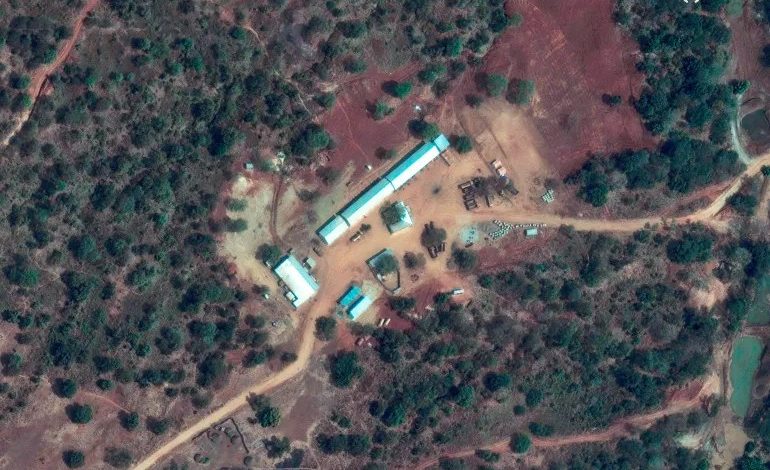
The Reuters investigation was based on analysis of satellite images that revealed the scale of the camp and details of its construction, as well as recent upgrades at Assosa Airport to accommodate drone operations. The report also cited sources from within the Ethiopian government.
Reuters further bolstered its findings by identifying funding sources for the camps, which—according to its sources—are supported by the United Arab Emirates. As in previous allegations regarding support for the RSF, the UAE denied any involvement in the Sudan war.
Summarizing its findings, Reuters said it had “determined that Ethiopia is hosting a secret camp to train thousands of fighters for the Rapid Support Forces, which are battling the Sudanese army, in the latest sign that one of the world’s deadliest conflicts is drawing in regional powers from Africa and the Middle East.”
The agency said the camp represents the first direct evidence of Ethiopia’s involvement in Sudan’s civil war, a potentially dangerous development as it would provide the RSF with a significant influx of new fighters amid escalating combat in southern Sudan.
Reuters added that the credibility of the report was strengthened not only by satellite imagery and expert analysis, but also by extensive sourcing from Ethiopian security and military circles—“eight sources, including a senior Ethiopian government official”—who confirmed that the UAE financed the camp’s construction and provided military trainers and logistical support. These claims were also contained in an internal Ethiopian security memo and a diplomatic cable reviewed by Reuters.
The agency noted it was unable to independently verify the UAE’s participation or the camp’s ultimate purpose. Responding to a request for comment, the UAE Ministry of Foreign Affairs said it is not a party to the conflict and does not participate “in any form” in the fighting.
Reuters reported speaking with 15 sources familiar with the construction and operation of the camp, including Ethiopian officials and diplomats, and analyzed satellite imagery of the area. Two Ethiopian intelligence officials provided information, alongside the imagery, corroborating details in the security memo and diplomatic cable.
The images show rapid expansion over recent weeks, including the construction of a ground control center for drones at a nearby airport. Satellite imagery indicates increased activity in October at the camp, located in the remote Benishangul-Gumuz region of western Ethiopia near the Sudanese border.
Spokespersons for the Ethiopian government, the Ethiopian military, and the RSF did not respond to detailed requests for comment. On January 6, however, the UAE and Ethiopia issued a joint statement calling for a ceasefire in Sudan and highlighting bilateral relations they said served the security interests of both countries. The Sudanese Armed Forces also did not respond to requests for comment.
In a related development, Al Jazeera reported in December 2025, citing Sudanese official sources, that Ethiopia had “allowed” the establishment of a training camp for RSF fighters and foreign mercenaries, prompting Sudan to prepare for a new military front in its eastern region. The unnamed sources said Ethiopian authorities were coordinating militarily with the RSF through supportive regional intermediaries, including agreements on supply routes, training camps, and airstrips.
According to the report, these claims were later substantiated. On Saturday, February 7, 2026, the RSF launched a violent attack on the Al-Salak area in Sudan’s Blue Nile region, targeting Sudanese army positions.
Reuters said that in early January, around 4,300 RSF fighters were undergoing military training at the site. An Ethiopian security memo reviewed by the agency stated that “the UAE provides them with logistical and military supplies.”
Six officials said the recruits were predominantly Ethiopian nationals, alongside citizens from South Sudan and Sudan, including members of the Sudan People’s Liberation Movement–North, a rebel group controlling territory in neighboring Blue Nile state.
The officials said the recruits were expected to join the RSF in fighting the Sudanese army in Blue Nile, which has become a key battleground in the struggle for control of Sudan. Two officials said hundreds had already crossed the border in recent weeks to reinforce the paramilitary forces.
The internal security memo identified General Getachew Gudina, head of military intelligence for the Ethiopian National Defense Forces, as overseeing the establishment of the camp. A senior Ethiopian government official and four diplomatic and security sources confirmed his role, though he did not respond to requests for comment.
Satellite images and a diplomatic cable showed the camp was built in a wooded area known as “Menge,” about 32 kilometers from the border, at a strategic tri-border point between Ethiopia, Sudan, and South Sudan. Initial activity began in April with land clearing and the construction of metal-roofed buildings north of the main site, with full construction commencing in the second half of October.
The diplomatic cable, dated November, described the camp as having capacity for 10,000 fighters and said activity began with the arrival of dozens of Land Cruiser vehicles, heavy trucks, RSF units, and Emirati trainers. Reuters did not disclose the origin of the cable to protect its source.
Two officials said they saw trucks bearing the logo of UAE-based logistics company “Gorica Group” traveling through Assosa toward the camp in October. The company did not respond to requests for comment. Reuters matched the timeline in the diplomatic cable with satellite imagery.
Images from Airbus Defence and Space show tents filling the area from early November following initial site preparation, as well as the presence of multiple excavators at the location.