The Militia Is Enraged… Saudi Arabia Reorders the Deck
Report – Sudan Events
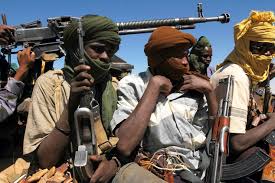
Immediately after the Rapid Support Forces (RSF) militia shelled a humanitarian aid convoy—and amid a wave of international and regional condemnations, foremost among them the Saudi statement that called things by their proper names and explicitly condemned the militia’s actions—media rooms known for backing the militia, along with the allied “Sumoud” Coordination, moved swiftly to target Saudi policy and leadership. They sought to portray the criticism issued by Sumoud and the militia as the voice of Sudanese public opinion and as representative of Sudanese people at large. This is one of the familiar tactics employed by these actors in an attempt to hijack public voices and present their own vision as the national consensus.
The reality, which requires little effort to discern, is that the groups managed by the United Arab Emirates in Sudan—including political and economic networks—have become unacceptable to the wider public. Sudanese citizens have come to distinguish clearly between patriots concerned with their country’s interests and agents who pursue their own interests and those of the states that bankroll them. Sudanese campaigns against the UAE have succeeded in conveying the voices of millions of victims to the world and in highlighting the bloody role of the UAE leadership as the principal sponsor of the RSF militia—providing tools of violence, financial backing, mercenaries from South Sudan, Chad, Ethiopia, and elsewhere, as well as logistical support. Reports also indicate that even members of Emirati security forces took part in the war and were killed in Darfur after arriving to assist in attacks on civilians and the violation of Sudanese lives.
Amid the widespread circulation of images and videos documenting abuses—particularly those emerging from El Fasher following the militia’s occupation—some Emirati media outlets and official social media accounts disabled comment sections, while others filed complaints with Meta, the parent company of Facebook, against Sudanese comments that exposed the UAE’s role in Sudan. Several of these images were published by international newspapers, shocking global public opinion. At the same time, Sudanese diaspora communities in a number of Western cities and in the United States organized protests outside Emirati embassies, further drawing attention to the UAE’s role in Sudan’s war.
Dr. Osama Hanfi, Professor of Political Science at the University of Sudan, said: “The truth has a voice and it will reach people no matter how much the world tries to conceal it. As for the Emirati role in Sudan, its exposure spread because this war has reached people’s homes, their dignity, and their property. Most of those affected are civilians—unarmed and non-ideological—and they are now the ones disseminating the reality of what is happening. Their numbers are large, and what they publish is real. That is why the world engaged with them, and major news agencies carried their videos.”
He added: “The UAE contracted public opinion firms and employed them to lead extensive disinformation campaigns about Sudan, which initially succeeded in confusing global opinion. But matters are now becoming clearer.” He continued: “As the RSF themselves published evidence of rape, killing, and looting, it became obvious that no party could justify what is happening. As a result, most supporters of the militia sought refuge behind slogans of ‘stopping the war’ under the guise of neutrality—a false neutrality by nature. How can one be neutral while watching militia fighters throw village children into bodies of water alive before their families? How can one be neutral while watching videos of rape, identity-based killings, and other atrocities?”
Regarding the latest incident that drew strong international condemnation, Dr. Hanfi said: “I believe the militia is stunned. The international community, which remained silent over the killing of thousands in El Geneina, Khartoum, Al-Jazira, and El Fasher, has reacted forcefully simply because a humanitarian aid convoy was shelled. They cannot comprehend why the world is angry now. This is not the first time they have attacked aid convoys or detained UN staff—they have done so before without any international outcry. Why, then, is the international community speaking now? Why are firm statements being issued against the militia? And where is the protection that the UAE used to provide for the massacres and systematic killings committed by the militia?”
He concluded: “These are questions the militia is unable to address rationally. At the same time, the UAE and Sumoud understand that attempts to distract the public with diversionary issues, to accuse the army, and to distribute blame among military factions fighting alongside it will be futile—especially in light of regional shifts affecting a pivotal state in the region. This shift, and its support for the army and the legitimate government, cannot be ignored; it represents a change with significant political and military impact.”