Africa on the Scales of National Sovereignty
Report – Sudan Events
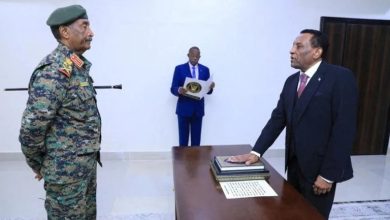
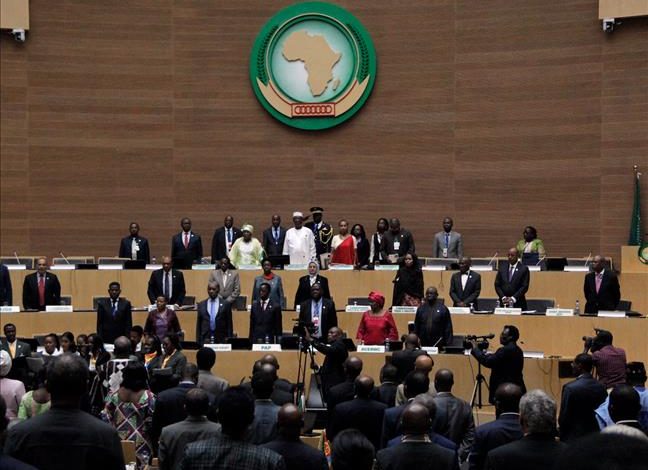
In a solemn political scene that held observers spellbound in Ethiopia’s capital, Addis Ababa, the 39th African Summit posed a fundamental and consequential question: Is Sudan on the verge of returning to its continental fold? The issue gained momentum following a pivotal address by Foreign Minister Dr. Mohi El-Din Salem, who described the decision to suspend Sudan’s membership as a political misstep of historic proportions.
A Historic Responsibility
The foreign minister placed Africa’s leaders before what he framed as a moment of historic accountability, dismantling the premises upon which the October 25, 2021 decision was based. He asserted that the events in question did not constitute a coup, but rather a corrective movement aimed at safeguarding the state. As such, he argued, rigid positions that led to the continent’s institutional detachment from Sudan’s realities must now be reassessed.
The Sudanese address did not stop at defense; it advanced into diplomatic offense. It laid out a case against the rebel militia, emphasizing that the government had never closed the door to peace. Instead, it pursued every avenue consistent with preserving sovereignty, while the militia expanded the geography of terror and engaged in documented violations that no cosmetic rhetoric could conceal.
A Roadmap Forward
Sudan presented a clear national roadmap for resolving the conflict, urging the African Union to adopt it as the sole viable framework for ending the war. Analysts have characterized this appeal as a genuine test of the continent’s will to support legitimacy—free from external dictates that previously rendered the continental body part of the crisis rather than its solution.
A Moment of Truth
Journalist Maki Al-Maghribi described the session as “majestic,” noting—according to the Sudanese news outlet Sudanese Echoes—that the foreign minister presented compelling arguments for the immediate lifting of the suspension. He criticized proposals to dispatch a fact-finding mission at this late stage, questioning why such a mission had not preceded what he termed the unjust freeze.
Beacons of Support
Amid what some observers described as a troubling African silence, the positions of Egypt and Algeria emerged as beacons of support for Sudanese legitimacy. Cairo called for Sudan’s immediate reinstatement to its vacant seat, stressing that regional stability is intrinsically linked to Khartoum. This stance pierced the wall of reluctance maintained by certain continental actors perceived as partisan.
Indicators of Strength
For his part, Major General (Ret.) Dr. Amin Ismail Magzoub, also cited by Sudanese Echoes, expressed optimism regarding what he described as newfound diplomatic strength—particularly in light of militia setbacks in Kordofan and the approaching resolution of the battle in Darfur. These developments, he argued, restore Sudan to a position of leadership grounded in both military and political weight that cannot be overlooked.
Institutional Isolation
Sudan’s address blended diplomacy with clarity. Dr. Magzoub contended that the African Union now finds itself constrained by its own hasty resolutions, having forfeited the initiative and relegated itself to the role of spectator in the tragedy of a state that ranks among the founding pillars of the Organization of African Unity.
The Greatest Loser
In the calculus of gains and losses, observers suggest that Africa stands to lose the most from Sudan’s absence. Sudan serves as the continent’s gateway to the Red Sea and a reservoir of resources. In its absence, continental mechanisms have stiffened, while Sudan has maneuvered with flexibility across Arab and international spheres, operating beyond what critics describe as the bureaucratic constraints of Addis Ababa.
Establishing the Case
Reports indicate that the minister effectively underscored Sudan’s commitment to the Jeddah track and its provisions, contrasting this with the militia’s disregard for agreements. The argument, observers note, placed African leaders before a moral reckoning: parity cannot be drawn between a national army defending its territory and a rebel militia targeting civilians.
Strategic Alternatives
The address also linked Sudan’s national roadmap to international investment prospects, asserting that the country possesses broad economic alternatives. Sudan’s return to the African Union, it argued, serves the continent’s interest by minimizing external interference. The Peace and Security Council, the speech stressed, is now called upon to move beyond routine statements of concern and passive anticipation.
National Sovereignty
Despite intensified diplomacy, the primary wager in Khartoum remains on the will of the people and the army. Sudan, the address implied, does not await absolution from institutions whose agendas have become externally tethered. Rather, it asserts its standing through the sacrifices of its sons in the field, affirming that true membership is inscribed in the ink of sacrifice and unalloyed national sovereignty.
A Forum of Candor
The Sudanese speech did not shy away from referencing the involvement of regional actors in fueling the conflict, transforming the consultative session into a forum of frank disclosure. Lines were drawn between those supporting stability and those financing rebellion—an exposure that unsettled parties who had presumed Sudan’s silence would endure.
Dawn’s Early Signs
Proceedings of the 39th summit carried what many described as signs of a new dawn for Sudanese diplomacy. The continental ice appears to be thawing under the force of argument, and it has become evident that the policy of suspension failed to fracture the state’s resolve. Instead, it strengthened Sudan’s determination to forge new alliances in what it frames as a battle for dignity.
A Singular Choice
Sudan remains a pivotal actor in the continental equation, steadfast in the peace initiative advanced by its leadership. The African institution now faces two choices: return to the spirit of its founding principles and render justice to Sudan—or remain in isolation, distant from a crisis it was once expected to help resolve.