Sudan: Ramadan Essentials — Hardship Measured in Numbers
Report by Hafiya Nouraldeim
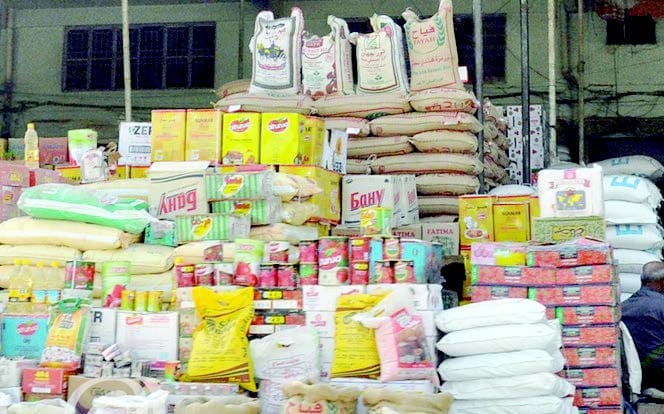
Scenes of crowding and half-empty shelves are repeated daily in the markets of Omdurman and Sabreen, where the movement of shoppers blends with anxious glances and careful calculations. From sugar and cooking oil to legumes, commodity prices have become daily indicators of the mounting pressures facing households as the holy month of Ramadan approaches.
This year, Ramadan in Khartoum State is no longer a season of early preparation. Instead, it has become a daily exercise in adaptation, with families managing their needs according to limited budgets and steadily declining purchasing power, amid continuous increases in prices and living costs.
A Close-Up: “Ramadan Has Become a Month of Calculations”
At Omdurman market, Fatima Abdullah, a housewife, stands recalculating her purchases for the third time. She says that before the war, her family’s Ramadan essentials cost around 200,000 Sudanese pounds. Today, the total ranges between 400,000 and 500,000 pounds, while the family’s monthly income does not exceed 300,000 pounds.
“Ramadan has become a month of calculations, not preparation,” she says with visible sorrow.
Crowded Markets, Limited Purchasing Power
Despite noticeable congestion in Khartoum’s markets—particularly in Omdurman and Sabreen—the actual volume of purchases appears limited.
Mohamed Al-Amin Yousif, a trader, explains that prices of essential commodities have risen sharply. Current prices include:
- A 50 kg sack of sugar: 154,000 Sudanese pounds
- 10 kg of sugar: 31,500 pounds
- 5 kg of sugar: 16,500 pounds
- 36-pound container of cooking oil: between 120,000 and 150,000 pounds
- 18-pound package of oil: 72,000 pounds
- Quarter sack of lentils: 30,000 pounds
- Quarter sack of corn flour: 20,000 pounds
- Quarter sack of onions: 5,000 pounds
“Entering the market is easy,” he remarks, “but leaving with full quantities has become difficult.”
Household Goods: An Additional Burden
Price increases have not been limited to food items. Household utensils, cooking tools, and storage containers have also risen by approximately 40 percent compared to previous seasons.
Amina Mohamed Ibrahim, a displaced resident living in East Nile, says: “Even the simplest daily-use utensils have become more expensive. We don’t know how to cover all the household needs.”
Rising Production and Transport Costs
Traders attribute the price hikes to escalating operating costs.
Ali Osman Mohamed, a wholesale trader at Omdurman market, says transportation costs have increased by more than 50 percent, in addition to higher service fees and exchange rate fluctuations. These factors, he explains, have directly affected the prices of foodstuffs, consumer goods, and household items, despite weak purchasing demand.
Inflation Outpacing Incomes
Dr. Mohamed Ibrahim Al-Badawi, professor of economics at the University of Khartoum, believes that what is unfolding in Omdurman and Sabreen markets reflects a clear imbalance between inflation rates and income levels.
In remarks to Elaph, he said that the surge in Ramadan commodity prices results from overlapping factors, most notably rising transport and production costs, weakened supply chains, and declining purchasing power.
“When household spending exceeds 60 percent of monthly income on food and consumer goods, it is a worrying economic indicator,” he said. “It places additional strain on other essential needs such as education, healthcare, and housing.”
He added that the visible congestion in markets does not reflect genuine purchasing power, as many families enter merely to compare prices or to purchase only the bare minimum.
Charitable Initiatives Under Pressure
Community initiatives have not been spared from the impact of soaring prices. Sara Osman, a volunteer with one of the Ramadan food basket initiatives, says the cost of a single basket has risen from 50,000 to nearly 100,000 Sudanese pounds. As a result, the number of beneficiaries has declined despite growing demand, particularly among low-income families and displaced persons.
Ramadan in the Spirit of Patience
Amid these figures, families in Khartoum State are welcoming Ramadan with resilience but limited means. A month once marked by early preparation is now managed through daily budgeting and strict consumption control, as households attempt to adapt to mounting economic pressures.
Interventions Needed
The Ramadan essentials market in Khartoum offers a stark reflection of citizens’ hardship, as preparing for the holy month has turned into a difficult equation between nearly fixed incomes and rising costs. Between soaring prices and financial strain, there is an urgent need for economic and social interventions to ease the burden on families—so that Ramadan does not become an additional season of pressure rather than one of peace and reassurance.