Hemedti in Uganda… The Season of Distributing Falsehoods
Report – Sudan Events
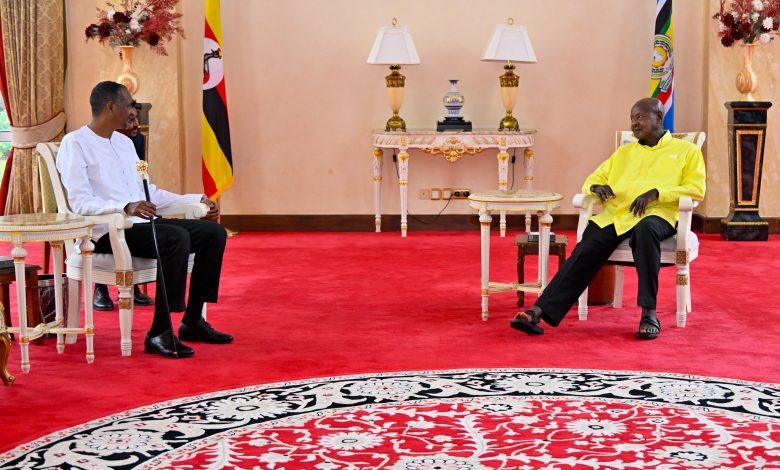
A widely circulated visit by the commander of the Rapid Support Forces militia, Mohamed Hamdan Dagalo, to Uganda has sparked varied reactions regarding its timing and objectives. The militia leader, during a speech addressed to what was described as the Sudanese community in Uganda, touched on several issues, including the ongoing war, mediation efforts, and behind-the-scenes developments.
Dagalo appeared visibly frustrated as he declared that “from this moment on, we are Sudanese and Africans, and the cap they once placed on our heads no longer fits us,” an apparent reference to Arab states he suggested he was leaving behind in favor of forging agreements with African nations. He added, “Were it not for the United Arab Emirates, there would have been no agreement in Juba, as it covered all the expenses and initiated several development projects in Darfur. However, Minni (Arko Minnawi) halted them in favor of his own projects by virtue of his position as regional governor.”
Recycling familiar talking points, Dagalo reiterated claims of the influence of Ali Karti and Islamists over the war, alleging they had ignited the conflict. As has often been the case, he did not conclude his remarks without providing statements that many interpreted as self-incriminating. He acknowledged that his forces had enlisted ten Colombian mercenaries to operate drones, admitted they had been expelled from Khartoum, and conceded that army drones had stalled their advance. He further said public resentment toward the militia stemmed from what he described as “looting.”
For his part, Darfur Governor Minni Arko Minnawi wrote on his Facebook page that Uganda’s reception of an RSF delegation in the presence of Dagalo—who stands accused of committing grave violations and widespread crimes against civilians in Darfur and other regions, including acts amounting to genocide—constitutes implicit recognition and could be read as a painful continuation of the cycle of violence and absence of justice.
Minnawi addressed a message to Ugandan President Yoweri Museveni, stating: “You are among the senior leaders of the African Union—where, then, is Africa’s position on these serious crimes?” He stressed that silence in the face of tragedy is not neutrality, asking: “International, regional, and human rights organizations have spoken clearly—when will Africa speak with one responsible voice?”
In the same context, former U.S. diplomat Cameron Hudson said Dagalo’s presence in Uganda was not surprising. “I noted only days ago that they would increasingly rely on Uganda for resupply. The same applies to Kenya, which we now know has granted the RSF diplomatic passports,” he said. Hudson added that more African states appear to be sliding into willing participation, while Gulf states maneuver from a distance. Meanwhile, both the African Union and the Arab League, including within the Quartet framework, issue separate statements rejecting foreign interference and calling for an end to the fighting they themselves help facilitate. “The war appears profitable for everyone except the Sudanese people. What is most unbearable is the hypocrisy,” he concluded.
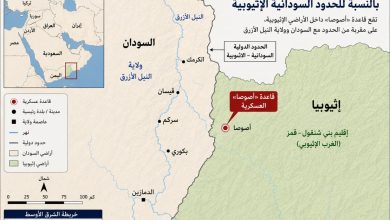
Political researcher Mohammed Yaqin said what surprised him most was Dagalo’s admission of employing Colombian mercenaries and his acknowledgment of the impact of drones in disrupting his forces’ advance. He noted that Dagalo even floated the idea of returning to combat on horseback and camelback—an indication, he argued, of severe shortages in vehicles and fuel and of the army’s success in cutting supply lines. “His forces are facing clear battlefield setbacks, resounding defeats, and notable defections,” Yaqin said, adding that the speech seemed primarily directed at remnants of withdrawing fighters and served as a message to his allies in the “Somoud” coalition that he would secure their return to Sudan. He described the move as an attempt to construct an external opposition narrative reminiscent of failed past coalition experiments. According to Yaqin, this appearance may effectively inaugurate a new phase of fighting from within Ethiopian territory. “The speech carried overlapping and at times contradictory messages, underscoring that the militia survives largely on falsehoods,” he said.
Dr. Osama Hanafi, professor of political science at Sudan University of Science and Technology, said Dagalo’s decision to speak out and visit Uganda was driven by a need to secure supply lines and to exert pressure through announcing a new African orientation. “This indicates, to a large extent, that he lacks a clear vision and is implementing the policies and ideas of others, inserting himself into conflicts he does not understand—such as the Saudi-Emirati rivalry,” Hanafi said. He noted that Dagalo attacked Saudi Arabia for the first time, despite the strategic cost, apparently to appease the UAE.
“When attempting to portray the UAE as virtuous, he cited only its financial support for the Juba Agreement—ironically an agreement he later criticized, saying he did not want a similar deal,” Hanafi added. “He is a simple man cast by fate into the unknown, appearing naïve by volunteering dangerous admissions and incriminating himself in unusual ways—such as acknowledging the recruitment of mercenaries and describing his own soldiers as looters. Each time he appears publicly, he further burdens his militia.”