Khartoum’s Markets… Attempts to Restore Life
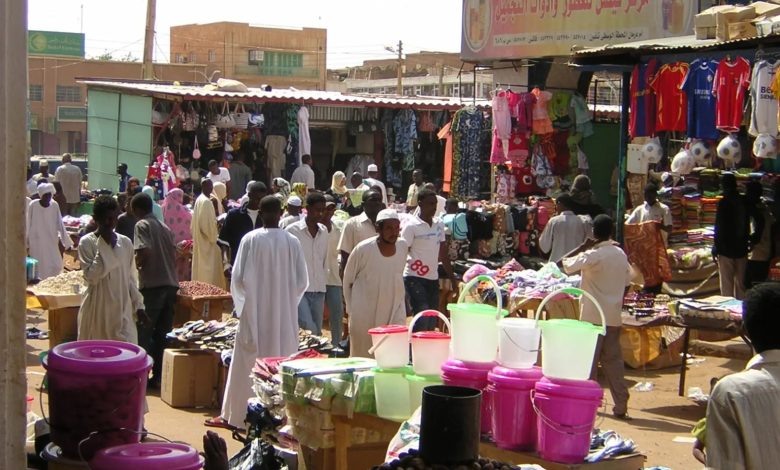
Report – Sudan Events
An expanded meeting in Khartoum Locality has issued a series of decisions aimed at regularizing the status of markets affected by the war and determining their suitability to resume operations following engineering, legal, security, and administrative assessments.
The meeting, chaired by the locality’s Executive Director and attended by representatives of the specialized markets committee, approved a package of measures addressing land ownership of occupied plots, the status of traders and market workers, and the verification of their legal documents. It also called for incorporating residents’ views regarding the location of these markets within residential neighborhoods, assessing the need for them, and exploring the feasibility of establishing alternative markets offering the same commercial activities.
The meeting further directed that engineering studies be conducted on markets that were completely destroyed or burned down to determine whether they should be permanently removed, rehabilitated, or rebuilt, while ensuring suitable alternatives for those who work there. Participants emphasized the importance of cleanliness, public health, and the general appearance of markets, and resolved to conduct field visits to war-affected markets to assess the damage firsthand.
The committee tasked with reviewing war-affected markets operates under the directives of the Higher Committee for Environmental Preparation to facilitate citizens’ return to the capital, Khartoum. However, the efforts of this and other committees working to normalize life and revive markets appear unlikely to yield tangible progress. This is due to the limited vision of local authorities, the control of certain influential figures over these markets, and the inability to propose practical and viable alternatives for traders. It is unrealistic to build markets in remote areas lacking services and security, then expect traders to relocate there.
Imad al-Din al-Mahjoub said that several committees had visited them in Souq Omdurman, along with locality officials, all of whom made promises that were never fulfilled, particularly regarding service improvements and sanitation.
“What gets implemented,” he said, “relates only to revenue collection for the localities. As for service provision, I believe it will not happen unless traders themselves pool funds — for example, to restore electricity and water or contract a company to remove piles of garbage blocking the streets.”
He added: “This is merely media talk. They view these markets only as revenue-generating spaces. That was the case before the war, and now they are not thinking about developing markets at all. As traders, we do not expect any services or improvements from the localities. They come, tour the area, listen to demands — and nothing happens.”
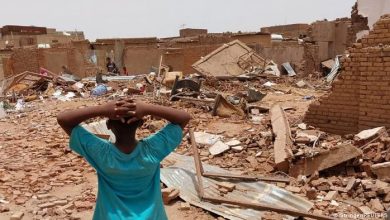
Regarding the market committee, he said it effectively dissolved with the outbreak of war, and most of its members have not returned — much like many traders who are seeking alternatives after the market was looted and bulldozed when the Rapid Support Forces militia entered. Battles raged there for years, and not a single trader found anything left in his shop.
“They looted and burned shops and warehouses,” he said. “Most of the market still has no electricity, and even where power has returned, it is too weak to run electric fans. As you can see, garbage fills the market. There are also disputes between traders and shop owners, who are demanding astronomical rents. A small shop like this now rents for two billion Sudanese pounds per month, and some rents have reached five or six billion per month — despite a clear slowdown in sales.”
He continued: “Most of these shops are inherited properties. Those working here are tenants only. So such committees neither benefit nor harm us, because what they discuss usually concerns the property owner, not the business operator. If they truly wanted to help us and support commercial activity, they would organize the market, improve security, remove debris, and set reasonable rent benchmarks. What traders are doing now is simply adding rent costs onto the price of goods, which drives prices up.”
Al-Baqir Ali al-Akkam, a wholesale hardware trader, said that all Khartoum markets — with the exception of Sabreen Market, for example — were located in areas occupied by militia forces and are currently unfit for operation, with most either destroyed or looted.
“What have these committees actually done?” he asked. “Can they provide viable alternative areas that spare us from these suffocating markets, which cost us billions each month for nothing?”
He added: “The militia destroyed and looted these markets and transported their goods elsewhere. When the areas were liberated and we returned, we expected the local authorities to work with us to help restore our businesses. Instead, we were disappointed. The localities are now pursuing us with extremely high and unreasonable financial demands, while shop owners impose astronomical monthly rents. I believe many will not return to these markets, which have reduced us to mere numbers for fee collection and rent payments without profit.”
He concluded: “What they are talking about is merely a routine procedure that will make no difference on the ground.”