Sudan Log (113): From Mustariha, El Geneina, Ed Dueim and Kassala

Sudan Events – Agencies
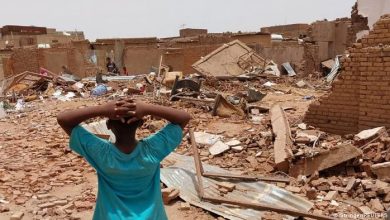
A drone affiliated with the Rapid Support Forces (RSF) launched intensive strikes last Sunday evening on the Mustariha area in North Darfur State, killing and injuring civilians who had gathered at a condolence house. The attacks also destroyed the area’s only hospital and the guesthouse of the leader of the Mahamid clan and head of the Revolutionary Awakening Council, Musa Hilal, according to eyewitnesses who spoke to Atar.
On the morning of Monday, February 23, RSF forces tightened their siege on the Mustariha countryside using combat vehicles and armored carriers under the command of a field leader identified as Hamdan Mohammed Kajak. The ground encirclement was accompanied by drone strikes, followed by a heavy ground assault. Local armed groups confronted the attack from the western flank and initially repelled the advancing forces, forcing them to retreat.
The RSF subsequently reinforced its troops and began artillery shelling, expanding the assault to multiple fronts. The forces later entered the area, where they allegedly carried out killings inside homes, targeting women, elderly people and children, and set houses ablaze. An eyewitness told Atar that the attackers assaulted women “with beatings and humiliation in scenes suggesting prior planning of these crimes.”
Videos circulated on Facebook showed RSF forces storming the area, burning homes and looting civilian property. A separate clip documented the killing of Haidar Musa Hilal, son of Musa Hilal.
Mustariha is considered the stronghold of the Mahamid clan and its leader Musa Hilal. It lies between northeastern Kabkabiya and the outskirts of Kutum, and includes four main settlements: Mustariha Market, Hijer Mous, Al-Mudaib and Kangour. Surrounding the area are numerous villages stretching westward toward Kabkabiya, southwest to Qargo, north to Wadi Bari, and east to Baraka Saira.
Eyewitnesses reported widespread looting. One survivor told Atar: “As we were leaving our homes amid the invasion of the village, with the sound of heavy artillery deafening us, we saw RSF elements from the southern direction carrying citizens’ belongings — even beds and mattresses, and women’s household utensils.”
Another survivor said everything was looted: “House doors were torn off, and residents were stripped of all they owned.” In a neighboring village, similar violations were reported. A local source said the forces executed village elder Al-Tijani Sharif before overrunning the village and seizing its property.
Other survivors said the RSF looted the market and then burned it completely.
Local sources reported at least 38 people killed and 167 missing, with the entire population of the area displaced to unknown destinations. A granddaughter of Musa Hilal told Atar she had lost contact with her family since the attack but later learned that Musa Hilal was safe and would appear soon in a secure location.
Sources in Kutum and Kabkabiya localities reported large waves of displacement toward both towns. One arrival in Kabkabiya said: “Large numbers of women and children are wandering in open land without food or water.” He added: “All the villages we passed joined us in fleeing when they heard what happened. Everyone fears the same fate.”
A local source said RSF forces remain stationed in Qoz Al-Mahlab and villages north of Mustariha, preventing entry into the area. On Thursday morning, the source added that forces prevented a small number of residents — who had been unable to flee during the shelling — from leaving.
The Sudan Doctors Network announced that more than 3,000 displaced persons had fled under extremely difficult humanitarian conditions. A source from the North Darfur Emergency Room estimated the number of those fleeing Mustariha and surrounding villages at over 9,000.
Speaking to Atar, Abdel-Baqi Mohammed Hamed, humanitarian affairs coordinator for the Darfur Regional Government affiliated with the Sudanese government, said the large-scale displacement had exacerbated the humanitarian situation and called on concerned authorities and international organizations to urgently provide food, shelter and healthcare.
El Geneina: Hardship After Strike on Adeikong Crossing
Shelling by a drone belonging to the Sudanese Armed Forces targeted the Adeikong market near the Sudan–Chad border, about 22 kilometers west of El Geneina in West Darfur State, leading to a partial closure of the crossing and sharp increases in basic commodity prices in El Geneina, a resident told Atar.
The resident, who requested anonymity, said prices spiked the day after the strike and continue to rise. The price of one kilogram of flour rose from 5,000 to 8,000 Sudanese pounds; a five-kilogram bag of sugar from 19,000 to 22,000 pounds; and a gallon of gasoline from 14,000 to 17,000 pounds. He warned that further increases were likely if crossings remained closed.
Adeikong market, near the Sudanese–Chadian border, had served — along with the Adré crossing — as a safe corridor for thousands fleeing violence in El Geneina. The market has been struck multiple times, most recently in December.
An eyewitness said the attack came in two waves, killing four people and injuring six in the first strike, followed by a second strike that killed two more and wounded others, all civilians. Some injured were transported to El Geneina, while others were transferred to Chad for treatment.
The El Geneina Emergency Room described the incident as a “fully fledged crime” and a violation of international humanitarian law. Médecins Sans Frontières (MSF) confirmed that its teams in the Chadian city of Adré received wounded civilians, including women and children.
A Sudanese military source told Atar the area was being used by the RSF to sell looted goods and purchase fuel. The source denied targeting civilians, stating that the strike hit a fuel collection point used by RSF forces and described the operation as “very successful.”
Ed Dueim: Drone Strikes Spark Fear
The city of Ed Dueim in White Nile State was hit last Friday by two drone strikes that injured military personnel and triggered widespread fear among residents. Local sources said the attack targeted an army checkpoint in the Al-Hafr area west of the city.
Residents reported explosions around midday that shook homes, cracked walls and forced worshippers in a nearby mosque to flee. Medical sources at Ed Dueim Hospital confirmed receiving injured soldiers, including one officer who later died. Shrapnel caused the injuries.
Healthcare services resumed the following day, though attendance declined amid lingering anxiety. Commercial activity in Ed Dueim market also slowed for several days before gradually recovering.
Kassala: Forced Evacuation of Al-Karama (2) Camp
Armed groups from the Rashaida tribe in Kassala State forcibly evacuated Al-Karama (2) camp west of the airport in mid-February, following directives issued in late January by state authorities to clear displacement camps, citing the “end of the causes of displacement.”
The eviction left dozens of families facing an uncertain fate, as many were unable to return home due to widespread destruction. Some families relocated to rented plots in western Kassala, while others moved near Onion Factory Camp or to neighborhoods within the city.
Witnesses said armed men stormed the camp, intimidated residents, destroyed tents and looted property. Aid organizations withdrew following the state’s decision.
Volunteers reported that approximately 350 families had been residing in the camp, down from around 600 last October. As of publication, there was no confirmation of any official investigation into the incident.
Source: Atar