A British Journalist Compiles Evidence and Concludes: “Sudan Was Destroyed Because of the UAE”
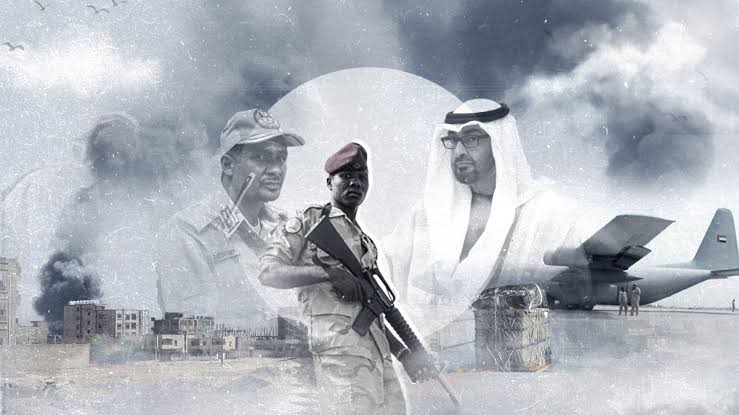
Report – Sudan Events
British journalist prepared a report for the in which he assembled tangible, material evidence obtained from multiple sources, including items collected by the Sudanese army and General Intelligence from the battlefield. These included weapons, missiles, artillery, munitions, intrusion-detection systems, drones, and more.
I have followed and summarized articles written on this subject since the beginning of the war—ranging from newspaper reports and media coverage to analyses by intelligence and military research centers in the Middle East, Asia, the European Union, and the United States. This has enabled me to form a clear picture of this report, which I found to be among the most compelling and evidence-rich journalistic accounts on the issue. Perhaps this is because the journalist had the opportunity to verify the evidence firsthand. Credit is due to the Sudanese army and intelligence services for making this material evidence available to the international press.
This article elevates the issue to a new level: from deniable accusations to irrefutable proof.
According to Poole’s findings, nothing is more incriminating than the arrival of tools of war crimes still bearing traces of the crimes themselves. Among shipments of missiles, shells, and mortar rounds seized from the —a Sudanese paramilitary group widely accused of massacres and rape—were boxes clearly stamped with markings from the . One crate contained a Kornet anti-tank missile labeled “Abu Dhabi.” Another bore a sticker reading “Joint Logistics Command, United Arab Emirates.” A defining feature of the report is its reliance on photographs and physical proof, including serial numbers, military markings, insignia, and clearly documented identification tags.
The British journalist emphasizes that in a war like Sudan’s—rife with rumors, denials, and propaganda—such details carry particular weight and significance. Poole recounts that during his visit, the weapons were displayed at the headquarters of Sudan’s Central Intelligence apparatus. Officers had been tasked with tracking the flow of weapons into the country, and they now say they have reached a clear conclusion they want the world to know: a significant portion of the arms that transformed the Rapid Support Forces from a chaotic militia into a formidable military force were secretly supplied by the United Arab Emirates.
He adds that while standing amid the seized arsenal, Colonel Mohammed Ahmed told him the weapons on display were not isolated examples but part of a much larger pattern. Quoting the Sudanese official, Poole writes: “The evidence has accumulated, and now we know. Sudan was destroyed because of the UAE.”
Providing background on events preceding the war, Poole explains that the Rapid Support Forces opposed plans to integrate into the army, and what was meant to be a transition to democratic rule devolved into a bitter power struggle. In April 2023, the RSF launched a rapid offensive, seizing large parts of . The conflict quickly escalated, with airstrikes, street battles, severe food shortages, and the displacement of the city’s five million residents.
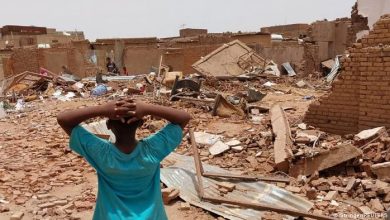
Poole describes widespread destruction across Khartoum today. Streets once filled with cars are now abandoned, entire neighborhoods lie empty, and nearly every major building bears bullet marks. Hospitals have been so extensively looted that electrical wiring has been stripped from walls for copper.
He recounts examples of militia atrocities: at a center for treating rape survivors, staff described how RSF fighters abducted women for sexual slavery. The center’s director said they had supported more than 300 women who became pregnant as a result. According to a recent report by , rape has become a “hallmark” of the conflict and “part of daily life” in some areas of Sudan.
The scale of the catastrophe is immense. Around 14 million people have been displaced. Famine was declared in 2024, and 21 million people face food insecurity. In January, the UN High Commissioner for Human Rights warned that the country had fallen into an “abyss beyond comprehension.” Yet international attention remains intermittent, even as the country teeters on the brink of collapse.
The surprise attack stunned the government and the regular armed forces, forcing state institutions and foreign embassies to relocate eastward to .
Since then, Sudanese officials have grappled with a critical question: how did the militia acquire the weapons that enabled such a rapid offensive?
The task of finding answers was assigned to Major General Abdel Nabi Al-Mahi, head of counterintelligence in the Sudanese army, and his team. They concluded that most of the weapons were smuggled into Sudan through old tribal routes after being supplied by the UAE to the RSF. “Had the UAE not done this,” he said, “the war would have ended.”
To support these claims, he arranged displays of seized weapons and presented photographs of additional ammunition allegedly originating from the UAE.
Military intelligence also displayed identification cards reportedly collected from Colombian mercenaries recruited and sent to Sudan, along with video footage from captured or killed fighters from Colombia and neighboring countries such as Chad, Libya, and South Sudan. The footage appeared to show foreign fighters shooting Sudanese civilians after they had surrendered.
About thirty miles outside the capital, further evidence was presented in a former industrial complex. Around forty four-wheel-drive vehicles were stored there, alongside Land Cruisers and ambulances seized from militias. Inside a damaged Tiger vehicle—still bearing RSF stickers—a steel plate indicated it had been manufactured by Nimr Automotive in 2016, with the client listed as the United Arab Emirates. Sudanese officials see a clear chain: foreign supplies originating from the UAE, fueling militias, and leading to atrocities.
Of course, other possibilities exist. Equipment could have been diverted, stolen, or planted. Abu Dhabi categorically denies any involvement, firmly rejecting allegations that it supplied, funded, transported, or facilitated any weapons, ammunition, drones, vehicles, guided munitions, or other military equipment to the RSF, directly or indirectly.
In reality, the notion of UAE involvement—given its global image as a symbol of modernity, ambition, and stability—can seem almost implausible. Even the recent crisis, in which Dubai and Abu Dhabi were targeted by missiles and drones following tensions between and , has reinforced perceptions of vulnerability rather than brute military power.
Sudanese officials are not alone in making these claims. Two U.S. lawmakers publicly stated last year, following a White House briefing, that the UAE had supplied the RSF. UN investigators are also examining how Bulgarian mortar shells—originally exported to the UAE—ended up in RSF convoys.
reported that Chinese-made guided bombs and artillery used in Sudan were likely re-exported from the UAE to the militia.
Researchers at the analyzed satellite imagery and flight data, which they say showed an Il-76 cargo aircraft flying over RSF-controlled territory along a supply route originating in the UAE and passing through neighboring Chad.
Nathaniel Raymond, the lab’s executive director, urged the United Nations to “question the UAE and investigate why this aircraft was in an active war zone, what its purpose was, and who was operating it.”
On the ground, Sudanese armed forces have gradually regained territory, and signs of normal life are returning. Last year, RSF forces were pushed out of Khartoum. In February, the city’s airport reopened after its runway was cleared of unexploded ordnance and a temporary terminal was established. Some residents have returned to what remains of their homes, though the population is still roughly half its pre-war level.
Used weapons now pile up in a park along the Nile in central Khartoum—a stark reminder of the destruction caused by fighting between the Sudanese army and the RSF.
Salwa Adam Banya, Sudan’s Humanitarian Aid Commissioner, warned that recovery will take years. “The militias did not just want to control Sudan—they wanted to destroy it,” she said, adding that many citizens have lost everything. “No one knows how many have died.”
Although RSF forces have been expelled from Khartoum, they remain entrenched in and active in . The army’s recent advances have not ended the war; rather, they have intensified it and made its ethnic and genocidal dimensions more explicit, heightening the urgency of understanding how the RSF acquired its weapons.
The commander of the Rapid Support Forces, General —widely known as Hemedti—has deep roots in Darfur. Born there, he rose from a camel trader to a warlord, portraying himself as a champion of Arab nomadic communities in the region against the dominant Nile Valley elites.