April 6… Could What Happened Have Been Avoided?
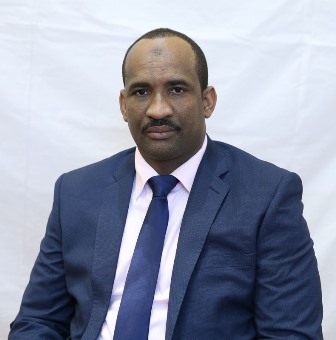
Dr. Yasser Yousif
On this day in 2019, shortly after the noon prayer, we met President Omar al-Bashir at his residence inside the General Command, accompanied by a number of colleagues (whose names I prefer not to disclose).
In fact, we had difficulty entering the house despite being escorted by a high-ranking figure. This was due to changes in the security protocols around the airport, the General Command, and the president’s residence. Even when the late Major General Yasser Bashir, Director of the President’s Office, arrived while we were at the gate adjacent to the presidential airport, the soldiers assigned to guard it refused to carry out his instructions to allow us in—until he contacted another general tasked with the mission. That general arrived, consulted with Major General Yasser Bashir, and only then permitted our vehicle to enter.
The first thing we noticed in the guest house was the strong smell of tear gas. We learned from the general that protesters had stormed the president’s residence, forcing them to use tear gas.
We entered the main sitting room to meet the president. He was wearing a spotless white jalabiya and a cap. He appeared calm and smiling—perhaps noticing our tension and trying to ease it with a few light remarks. Shortly afterward, Lieutenant General Salah Gosh, Director of the National Intelligence and Security Service, joined us and delivered an oral briefing to the president about what had happened (I will withhold the details). Based on that, the president requested that Lieutenant General Awad Ibn Auf and Lieutenant General Kamal Abdelma’rouf be summoned. While waiting for their arrival, we stepped outside with Salah Gosh into the courtyard and discussed our assessment of the situation. I recall that we disagreed with his evaluation, as we believed the step taken was extremely dangerous and would have serious consequences (I will also withhold the details of that discussion). At that moment, Ibn Auf and Kamal arrived and went in to meet the president, while we took our leave.
Regardless of the details of the final days, the regime was suffering from three major problems, each of which alone could have led to its downfall.
The first was internal: a persistent exhaustion within the leadership ranks, resulting from years of grappling with both internal and external challenges. This was compounded by the impact of internal disputes that had taken hold within its party and institutional structures, becoming particularly destructive after the events of 2013. Despite the adoption of a comprehensive reform document and the broad changes implemented at the time, it was clear that the damage had grown too extensive to be repaired through conventional measures.
The second was external: ongoing plans and pressures that had never ceased since the regime’s inception. However, in the years following what became known as the Arab Spring, these pressures shifted from distant external actors to closer regional forces, backed by vast financial resources and wary of any experience with an Islamic orientation. These external actors succeeded in penetrating well-protected areas at the heart of the regime, significantly contributing to the spread of suspicion, erosion of trust, and the stirring of grievances—ultimately influencing and preparing public opinion.
The third was the exploitation of economic crises—some chronic and longstanding, others more recently manufactured. The accumulated experience of the opposition was mobilized and unified around a clear objective: “Just fall, that’s all.” What the regime failed to recognize was that organized political work within civil society and among youth—through networking and the strategic use of social media—had been ongoing and increasingly focused since the failure of the 2013 events. Meanwhile, party institutions and mass organizations were gradually turning into bureaucratic bodies at the expense of their mission and grassroots engagement, allowing carefully cultivated public resentment to spread among the population.
In any case, although protesters could not have reached the General Command without the first and second factors, it would have been difficult for the regime to continue in that manner regardless. The opportunity we, as Sudanese, lost was that we might have achieved a smooth transition that preserved the country and fulfilled the aspirations of many for genuine democratic change.
I conclude with two points which, in my view, were significant enough that, had they been implemented, events might have unfolded differently:
First, if state institutions—the presidency and parliament—had agreed to cancel the constitutional amendments being debated in parliament during the president’s February address, rather than delaying their rejection until the third reading to give the appearance that parliament had fulfilled its role—would that have changed the course of events?
Second, if Engineer Omar al-Digair had received President al-Bashir at his home after his release from detention, and had not politely declined—but instead accepted the presidency’s offer to assume the position of prime minister (which was later given to the late Elia)—would that have altered what followed?