The April 15 War in Its Fourth Year: Facts and Narratives
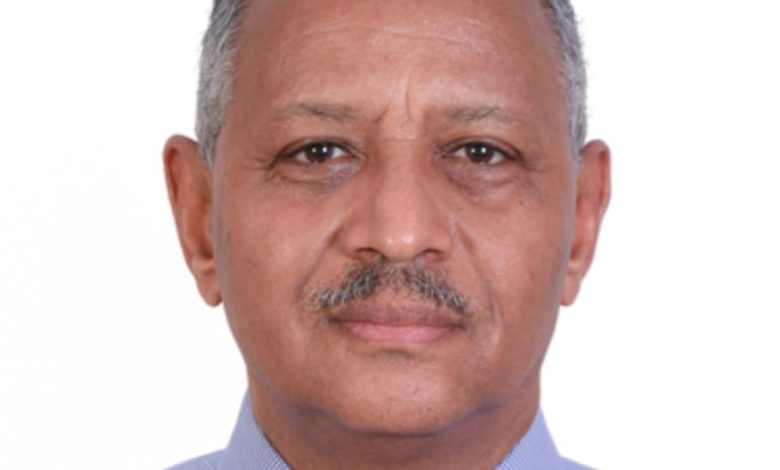
Al-Obeid Ahmed Marowih
In the first part of this article, we reviewed the key facts surrounding the April 15, 2023 war, particularly those related to the Rapid Support Forces (RSF), over the past three years. We concluded that there is virtually no war crime or crime against humanity—whether defined under Sudanese law, international law, or international humanitarian law—that was not committed by the RSF.
The victims of these crimes were not confined to a specific region but were spread across all of Sudan. However, residents of Khartoum, Al-Jazira, Sennar, and White Nile states, as well as the regions of Kordofan and Darfur, were the direct victims of these violations. Incidents of displacement, enforced disappearance, looting, killing, rape, sexual slavery, starvation, torture, and ethnic cleansing—all forms of violations recognized under any legal framework—occurred in these areas.
In this part of the article, we focus on the “narratives” adopted and promoted by the planners and instigators of the war, and how attempts were made to frame and present events to both domestic and international audiences.
Before doing so, it is necessary to recall certain relevant facts that preceded the outbreak of war. I personally heard testimonies from more than one Sudanese ambassador who accompanied a UN official or a European envoy to meet the Deputy Chairman of the Sovereignty Council, Mohamed Hamdan Dagalo (Hemedti), during the height of the internal crisis over the Framework Agreement. These ambassadors reported that the RSF leader told his foreign guests that the agreement would be implemented, and that if Abdel Fattah al-Burhan opposed it, his fate would be arrest, trial, or even death.
This relates to the first pre-prepared narrative: that the “lightning strike” intended to seize power within three hours on a Saturday morning was aimed at “restoring civilian rule” after it had been “overthrown by the army and the RSF” in October 2021. It is known that the RSF commander had publicly expressed regret for his role in that coup and declared his intention to “correct the mistake.”
Following his return from the city of El Geneina—where close associates claimed he had stayed for about three months—he was joined there by Volker Perthes, head of the United Nations Integrated Transition Assistance Mission in Sudan (UNITAMS), who spent several days meeting him privately. Notably, no representatives from relevant ministries, especially the Ministry of Foreign Affairs, were present. After returning from El Geneina, the Deputy Chairman of the Sovereignty Council traveled to the United Arab Emirates, where he remained for eleven days before returning.
The three hours passed, then three days, and the rapid “corrective coup” failed. It became clear that the war might be prolonged, prompting the activation of alternative scenarios and narratives. One explanation deemed acceptable to external actors—some of whom had prior knowledge that “something was going to happen” and were ready to support change and restore civilian rule—was that the army was under the influence of Islamists, and that remnants of the former regime were fighting alongside it, thereby undermining the “corrective effort.”
This gave rise to the narrative of a hidden Islamist role. The public witnessed how Dr. Mohamed Ali Al-Jazouli and retired Major General Anas Omar were abducted and forced—under threat of death—to give false confessions claiming that the National Congress Party and the Islamic Movement had planned to ignite the war and derail the Framework Agreement. Thus, the “Islamist narrative” was added to the “restoration of civilian rule” narrative.
By the end of the first week of the war, its planners realized that the “lightning strike” had failed and that the conflict could be prolonged. Then–U.S. Secretary of State Antony Blinken, whose country had prior knowledge that change was coming in Sudan and that some regional allies were involved, contacted both the Chairman of the Sovereignty Council and the RSF leader to request permission to evacuate diplomatic missions from Khartoum. He then told the media that the war was a power struggle between “two generals.” This became the third narrative layered onto the previous two.
Blinken later sent Assistant Secretary of State for African Affairs Molly Phee to Saudi Arabia to initiate mediation between the army and the RSF, followed by the appointment of his envoy to Sudan, Tom Perriello. What many do not know about the Jeddah talks is that Perriello reportedly advised the Sudanese Armed Forces delegation that “it would be better for you to stop the war to preserve what remains of your army,” to which they replied: “You do not know the Sudanese army.”
The Jeddah platform focused on two urgent issues at the time: a temporary ceasefire—referred to as a “humanitarian truce”—and allowing the flow of humanitarian aid to civilians. Because aid could only reach rebel-held areas through state-controlled ports and crossings, the United States insisted that such aid pass as “transit,” meaning Sudanese authorities—including the Ministry of Foreign Affairs, the Humanitarian Aid Commission, and customs authorities—would have no knowledge of its contents or distribution.
When this was rejected, the United States and international organizations advanced a fourth narrative: that the Sudanese Armed Forces were “obstructing humanitarian aid,” thereby increasing pressure on their leadership. Meanwhile, arrangements were being made for another type of “aid” to flow through Sudan’s western neighbor.
In the Chadian town of Amjarass, near the Sudanese border, the airport was quickly prepared, and aircraft from the UAE Red Crescent landed carrying tents and a field hospital said to serve Sudanese refugees. It soon became clear, however, that the hospital was treating wounded RSF fighters, and that the airport—located hundreds of kilometers from areas where refugees had fled—was in fact a logistical hub through which weapons, supplies, and provisions were transported.
Over the three years of war, additional narratives were introduced, while the prominence of others declined. The narrative of restoring civilian rule and democratic transition is now used selectively, while the Islamist narrative has been expanded—portraying Islamists at times as mobilizing fighters, at other times as controlling army decisions, and at times as forming terrorist groups fighting within its ranks—primarily for external audiences.
Additional narratives include allegations of the use of prohibited weapons and the targeting of civilians, all aimed at placing the army and the RSF on equal footing, so that any call for ending the war or resolving the crisis would be directed at “both parties.” For domestic purposes, narratives of grievance, marginalization, dismantling the post-independence state, and anti-Islamist rhetoric were amplified to mobilize more fighters.
What we learn from this is not merely a retrospective of three years of war. As the country enters its fourth year of conflict, it is important to emphasize that those who ignited and managed this war have conducted a parallel “war of narratives” with the same intensity as battlefield operations. While weapons and fighters—both local and foreign mercenaries—flowed into the conflict, narratives were simultaneously shaped in international media, reinforcing diplomatic efforts that presented the militia and its supporters as equals to the state and its institutions.
Just as there is offense and defense on the battlefield, the same has occurred in the media arena. Despite documentation by the Yale Humanitarian Research Lab, and reporting by major outlets such as The New York Times, The Washington Post, Agence France-Presse, France 24, and Sky News, detailing crimes and violations, and despite statements from countries such as Bulgaria, China, Canada, and the United Kingdom denying that they supplied weapons to Sudan—while indicating that drones, armored vehicles, and munitions found in Sudan had originally been sold or licensed to the United Arab Emirates—the UAE continues to deny these claims, describing them as mere allegations.
In conclusion, while the adversary’s performance has been consistent and integrated across military, media, and diplomatic fronts, our own performance—unfortunately—has been modest in the media and external engagement arenas. This is not only in comparison to military performance but also in relation to the many opportunities that were not seized.
The scale of crimes against the Sudanese people and the damage inflicted on the state should have been widely known and thoroughly documented for future generations through eyewitness accounts. If the world—led by the United States and the United Nations—estimates that the war in Sudan has resulted in 150,000 deaths and 14 million displaced persons and refugees, then there are 14 million stories that deserve to be told and 150,000 stories that can be documented, in addition to the stories of public and private institutions and homes that were looted or destroyed.
What has been done so far? And what can still be done now—as the war, God willing, approaches its end?