Geopolitical Intersections and National Sovereignty: Protecting Wealth and Identity on Our Path Toward a Productive State
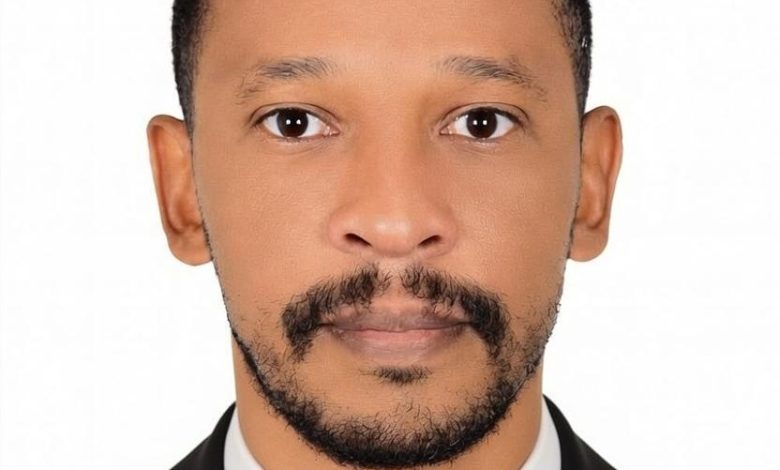
Dr. Al-Haytham Al-Kindi Yousif
As we seek to address structural distortions and manage the transition from a “state of spoils” to a “state of production,” the issue of Sudan’s strategic location and abundant natural resources inevitably comes to the forefront. Sudan’s geographical position and its western coastline along the Red Sea have made it a crossroads linking Africa with the Arab world. Likewise, its wealth of agricultural, mineral, and oil resources, which should have been a source of strength and prosperity, has instead turned the country into a focal point for international and regional ambitions.
Understanding these geopolitical intersections and analyzing their dimensions is the key to unpacking the causes of the current war and determining how we should respond to it. The war devastating our country today may appear, on the surface, to be a conflict between internal forces (a legitimate authority and a rebellious force), but in essence it reflects the overlap of foreign agendas seeking dominance over the country’s resources and capabilities.
When examining the situation from a historical perspective, we find that the West—particularly the United States and Britain—has consistently adopted hostile positions toward Sudan. This historical pattern is evident in several areas:
- Support for rebellion: These powers encouraged insurgent movements against the government, provided them with support, and overlooked the violations they committed. The experience of the Rapid Support Forces militia and the crimes and abuses it has perpetrated stand as a clear example.
- Sanctions and embargoes: They continuously monitored and pressured the government through economic sanctions and embargoes that ultimately harmed ordinary citizens.
- Targeting economic capabilities: Historically, they intervened to halt vital development projects such as Sudan’s oil sector, deprived Sudan of Western technology, and encouraged the secession of South Sudan, resulting in the loss of oil revenues that once accounted for more than 70% of the national budget.
- Media and diplomatic warfare: International media platforms and multilateral forums were mobilized to support opposition movements and armed groups, while persistent accusations were directed against the Sudanese state.
- Military targeting: At certain points, this escalated into direct aggression, such as the American and Israeli strikes on the Al-Shifa pharmaceutical factory and the Yarmouk Military Industrial Complex.
The overall picture suggests that Sudan faces a longstanding hostility aimed at controlling its resources, undermining the will of its people, and imposing policies and laws that are inconsistent with Sudanese social norms and beliefs. Our vast economic resources and strategic location have made us the subject of envy, and these powers will not easily allow us to fully harness our own wealth, because genuine control over our affairs would transform Sudan into an influential and independent state in international decision-making, free from dependency.
But does this reality mean that our dream of transitioning to a “state of production” has become impossible?
Quite the opposite. This challenge should instead motivate us to reorder our priorities and invest in the very resources over which these powers compete. Such investment must benefit the regions that possess these resources, thereby ending historical marginalization and laying the foundation for a strong economy. This, in itself, offers a solution to Sudan’s crisis and a means of combating the centralization that has burdened the country with decades of failure. Accordingly, we embrace a vision that utilizes Sudan’s geographic and human diversity as follows:
- Eastern Region: In addition to its geostrategic importance, it possesses vital ports and strong agricultural and mining potential, making it a key commercial gateway to the world.
- Central Region: It represents the country’s breadbasket and contains major infrastructure projects as well as extensive agricultural and industrial capacities.
- Western Region: Rich in livestock, promising mineral resources, and vast grazing lands, it can significantly contribute to the national economy.
- Northern Region: It contains gold, currently the Sudanese economy’s most important resource, in addition to fertile lands irrigated by the Nile and groundwater, and it has a long history as a center of transit trade.
As we have stated, utilizing these advantages for the benefit of the people of each region is the most effective way to eliminate the marginalization that has fueled conflict. When citizens see the wealth of their region reflected in improved living standards and employment opportunities, narrow loyalties will evolve into a broader national belonging. This, in turn, can create a sense of social satisfaction that encourages consensus around shared national principles and helps forge a social contract capable of lifting the country out of its crises and placing it on the right path toward a state of sufficiency and production.
Addressing geopolitical intersections requires adopting a balanced foreign policy founded on equality, mutual respect, and shared interests, free from blind dependency. This necessitates the following:
- Safeguarding national decision-making: Sudanese decision-making must remain independent and protected by the will of the people and their institutions.
- Conditions for cooperation: Sudan can cooperate with various international powers in fields such as investment, trade, infrastructure, energy, and technology transfer, but only under conditions that preserve state sovereignty, uphold the dignity of citizens, and protect national resources from exploitation.
In our pursuit of a productive state, some may assume that modernization requires abandoning identity or traditional references. This is a limited understanding that contradicts the nature of Sudanese society.
Our identity and our religious and national values are not obstacles to development; rather, they are the safeguard of our social and moral cohesion. This means that we must strive to build a “state of sufficiency” without sacrificing our identity or abandoning our customs and traditions. Economic and technological advancement should integrate with our values—not replace them.
The road toward a productive state is filled with challenges, but it is not impossible. A deep understanding of how to navigate regional and international dynamics, combined with strategic investment in the strengths of our regions and a firm commitment to our identity, are the foundations that can lead Sudan out of its crises, preserve its sovereignty, and enable it to harness its wealth while safeguarding the rights of future generations.