Sudan and the Security Council: The Technical Extension Between Buying Time and Reshaping Voting Dynamics
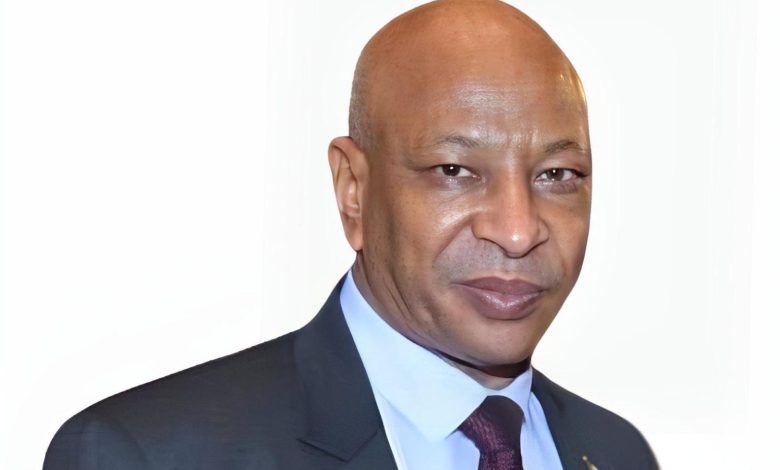
Ambassador Dr. Muawiya Al-Bukhari
A forward-looking analysis of the implications of a two-month extension, the possibility of reintroducing a comprehensive ban on flights over Sudan, and the impact of anticipated changes in Security Council membership
An assessment of the outcome of the Security Council session on Sudan should not stop at the two-month technical extension, as has often been the case, nor should it simply characterize the outcome as a diplomatic victory or a retreat from the proposed comprehensive ban on flights over Sudan, as some circles have suggested. The more important question is whether the extension has closed the door on the proposal or merely postponed a final decision until more favorable political conditions and voting dynamics can be secured for its adoption.
From this perspective, the possibility that the countries that pushed for a comprehensive ban—the United States, Denmark, and the United Kingdom—may return to the proposal at a later date, after the Council’s composition and the balance of understandings among its members have changed, warrants serious consideration. This requires distinguishing between what actually happened, what can reasonably be inferred from it, and what remains a possibility that must be assessed against further evidence and indicators.
First: What Does the Outcome of the October 8, 2026, Session Mean?
The Council unanimously adopted Resolution 2830, extending the Sudan sanctions regime until December 11, 2026, and the mandate of the Panel of Experts until January 11, 2027. The Security Council itself described the measure as a short-term extension intended to allow more time for negotiations.
This outcome carries three principal implications:
- A postponement of the decision, not a resolution of the dispute: The necessary consensus on the substantive amendments proposed by the United States was not achieved, but the proposal to expand the scope of sanctions was not definitively withdrawn.
- The dispute over the substance of the resolution remains ongoing: The disagreement concerns not merely the date for renewing sanctions, but also the geographical scope of the restrictions, the parties subject to them, and the treatment of drones, their components, and dual-use technologies.
- The issue remains open to bargaining: The short extension means that Council members will soon return to negotiations, amid political, military, regional, and international developments that could influence their positions.
A briefing by Security Council Report confirms that the US proposal encountered objections from the three African members of the Council, as well as China, Pakistan, and Russia, to expanding the sanctions regime beyond Darfur. Accordingly, describing the outcome as a diplomatic victory requires specifying the criteria for victory: does it mean preventing the proposed expansion from being adopted at this session, or ensuring that it will never return? The first objective was achieved in practice, but the second cannot be established by the voting outcome alone. The debate remains open.
Second: The Possibility of Reintroducing the Proposal After Changes in Council Membership
In my analytical assessment, this is one of the most important issues to consider when examining future developments. One plausible hypothesis is that the country sponsoring the proposal may deliberately be waiting for certain members to leave the Council, counting on their replacements to create a more favorable voting balance.
1. The End of Pakistan’s and Somalia’s Terms
Pakistan’s and Somalia’s terms on the Council end on December 31, 2026. Both have consistently supported Sudan. Their departure will change the Council’s composition and could mean that Sudan loses some of the support reflected in their positions. However, diplomatic positions can persist or shift through other states or through the permanent members.
2. Reshaping the African Trio
The current African trio consists of the Democratic Republic of the Congo, Liberia, and Somalia. In 2027, Zimbabwe will replace Somalia, while the Democratic Republic of the Congo and Liberia will remain members until the end of the year.
The confirmed change, therefore, is the replacement of one member of the trio. This creates the possibility of a shift in the African position, although it does not necessarily mean that the trio’s existing position will collapse.
3. Changes in Europe and Latin America
Denmark and Greece will leave the Council at the end of 2026, to be replaced by Portugal and Austria. Panama’s term will also end, with Trinidad and Tobago taking its place, while Kyrgyzstan will replace Pakistan. These countries will begin their terms on January 1, 2027.
These changes create an opportunity to reassess positions, but they do not, by themselves, reveal the likely direction of future voting. The policies of the incoming members and their publicly stated positions on Sudan’s sovereignty, sanctions, and civilian protection must be examined.
Bahrain, meanwhile, will remain a Council member until December 31, 2027, making its position important in the next round of negotiations. Although Bahrain represents an Arab voice on the Council, experience has shown that its actual position on the wording of resolutions and proposed amendments must be assessed on its merits, rather than inferred solely from its regional affiliation. This makes diplomatic engagement with Bahrain essential, with an approach capable of balancing the pressures it faces.
Third: Could the Technical Extension Become a Gateway to Imposing the Ban?
It is essential here to distinguish between two different legal and political tracks:
- Expanding the arms embargo and sanctions to cover all of Sudan: This is the core of the US proposal documented in reports on the negotiations, including provisions covering all parties and addressing drones and their components.
- Imposing a comprehensive no-fly zone over Sudan: This is a different measure in terms of its nature, scope, and legal and operational implications. The technical extension alone is insufficient to conclude that the Council has approved such a measure or that its adoption is imminent.
If the argument is that Washington may reintroduce its proposal when the Council’s composition is more favorable, this remains a plausible political scenario that merits close monitoring. It is also consistent with concerns about US intentions, as reflected in actions such as preventing the President of Sudan’s Transitional Sovereignty Council from participating in the 81st session of the United Nations General Assembly.
The significance of this possibility lies in the fact that replacing five elected members could allow the US sponsor to rebuild consensus around a revised text, divide the proposal into phased measures, or introduce new wording designed to overcome previous objections.
At the same time, changes in membership alone cannot guarantee the adoption of any proposal. The positions of the permanent members, particularly China and Russia, remain decisive factors in any substantive resolution. Securing their support or at least addressing their objections may prove more consequential than relying solely on assembling nine votes.
Fourth: Possible Scenarios in the Coming Months
Scenario One: Reintroducing an Expanded Proposal
This possibility warrants close monitoring.
The sponsoring country may return with a revised proposal after January 2027, taking advantage of the new Council membership, developments on the ground, and any new reports issued by the Panel of Experts. The amendments could be introduced gradually rather than through an attempt to impose a comprehensive ban all at once.
Key indicator: The emergence of a new draft expanding the scope of sanctions, or intensive consultations targeting countries about to join the Council.
Scenario Two: Another Extension Amid Continued Bargaining
The division between supporters and opponents of expanded sanctions may persist, leading to another short-term extension or a limited compromise that leaves the disagreement over geographical scope unresolved.
Key indicator: Continued objections to extending the restrictions across all of Sudan, with no consensus emerging around an alternative formula.
Scenario Three: A Partial Settlement More Likely to Secure Adoption
Negotiators may separate the renewal of existing sanctions from the expansion of the criteria for adding individuals and entities to sanctions lists, while addressing the issue of drones independently. This could allow certain measures to be adopted without agreement on every element of the original proposal.
Key indicator: The emergence of consensus on specific measures while disagreement continues over a comprehensive geographical expansion of the restrictions.
These scenarios should not be treated as certain predictions or as a ranking of the likelihood of victory or defeat. Rather, they are possible courses of action that must be tested against official texts, public statements, and the positions of Council members.
Fifth: What Should Sudanese Diplomacy Do?
If Khartoum’s assessment is that the extension has provided additional time before the proposal returns, the value of that time will depend on how it is used. Success cannot be achieved simply by relying on certain countries remaining on the Council or others leaving it. It requires building a coherent diplomatic and legal case.
The principal practical steps are as follows:
1. Engage Incoming Members Early
Sudan should not wait until formal negotiations begin in 2027. Instead, it should provide the five incoming members with documented briefings on the nature of the war, its implications for the country, the effects of the proposed expansion, and the risks of imposing broad measures without balanced safeguards.
2. Maintain a Cohesive African Position
Sudan should work with the Democratic Republic of the Congo, Liberia, and Zimbabwe without assuming that their positions will automatically align. The preferred approach would be to establish common ground based on respect for Sudan’s sovereignty, avoiding measures that undermine the state’s ability to protect civilians, and rejecting measures that lack an objective and balanced assessment, particularly amid uncertainty surrounding the African Union’s position.
3. Broaden Consultations Beyond Africa
Particular attention should be given to Bahrain, the incoming European members, Trinidad and Tobago, and Kyrgyzstan. Sudan should present legal and practical arguments that go beyond political alignments and explain the potential consequences of each provision in the proposed text.
4. Prepare a Legal Position on Drones
Sudan should develop a detailed position distinguishing between military uses of drones and the state’s defensive capabilities, on the one hand, and measures that could obstruct civilian protection or undermine Sudan’s sovereignty, on the other, particularly in the context of the support provided by parties sponsoring the rebellion.
This position must be grounded in the actual text of the proposal, rather than in the assumption that all proposed forms of restriction are identical.
5. Address the Gaps on Which Opponents of Sudan’s Position Rely
Sudan should document violations, demonstrate the measures it has taken to protect civilians, strengthen humanitarian cooperation, and pursue evidence-based investigations into external arms supply networks.
The more the Sudanese case is supported by verifiable facts, the greater the diplomatic capacity to challenge any proposal based on a one-sided narrative.
6. Distinguish Between Renewing the Sanctions Regime and Expanding Its Scope
Negotiating the continuation of the existing sanctions regime is not the same as accepting its expansion to cover the entire country. These two issues should not be conflated in diplomatic messaging or in media assessments of the outcomes of Council sessions, while all possible developments remain under consideration.
Sixth: Strategic Conclusion
The significance of the October 8 session lies not in resolving the dispute over sanctions, but in keeping it open until December, with multiple dimensions and possible outcomes still in play. Meanwhile, the Panel of Experts’ mandate extends into January 2027, beyond the start of the new Council membership. This overlap in timing makes the end of 2026 and the beginning of 2027 a period requiring particularly close scrutiny.
The hypothesis that the US sponsor may be waiting for a change in the Council’s composition before reintroducing the proposal is therefore a strategic possibility worthy of attention. It should not be presented as an established fact before indicators of renewed action emerge, although it remains a plausible scenario.
Sudan’s challenge is to ensure that the technical extension does not become a period of passive waiting, and that the failure of a proposal at one session is not mistaken for a guarantee that it will fail at subsequent sessions. Changes in Council membership do not automatically change the interests of the states involved, just as the sponsor of a proposal can revise its text and build new coalitions around it.
The strategic lesson is this:
In the Security Council, a technical extension may give a state additional time, but it does not necessarily provide diplomatic security. A resolution that cannot be adopted today may return tomorrow with different wording, new alliances, and a reconfigured balance of votes within the Council.
The real victory, therefore, is not merely to postpone a decision, but to prevent that postponement from becoming an opportunity to revive the proposal under terms that would be more damaging to the country’s interests. Sudan has an opportunity to work toward stopping such a proposal at an early stage, given its potentially high costs and its association with Chapter VII of the UN Charter, despite the termination of the mandate of the African Union–United Nations Hybrid Operation in Darfur (UNAMID) in 2020.