Neutrality in the War in Sudan: Between Institutional Legitimacy and Political Calculations

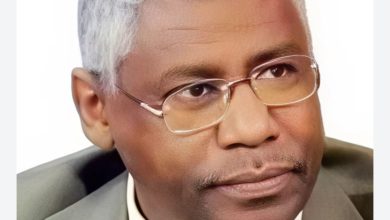
Dr. Osama Mohamed Abdelrahim
Since the outbreak of the war in Sudan on April 15, 2023, the conflict has given rise to a political phenomenon that deserves careful study and analysis. This phenomenon is reflected in the adoption of a position of neutrality by a number of political leaders and prominent figures, along with the entities and organizations behind them, and even some ordinary citizens. Their stated position is that they do not side with either the Sudanese Armed Forces or the Rapid Support Forces (RSF) militia. At first glance, this position may appear to express a rejection of war and an alignment with peace. However, examining it from political and legal perspectives reveals a deeper dilemma concerning the concept of the state, the nature of legitimacy, the limits of political neutrality, and the extent to which such neutrality is consistent with the principles underpinning national institutions.
The problem begins with the fundamental difference in the legal and institutional nature of the two parties to the war. The Sudanese Armed Forces are an institution of the Sudanese state, whose existence and functions are grounded in the constitutional and legislative framework governing state institutions, foremost among them the Armed Forces Act of 2007, as amended. Their structure and performance are governed by military laws and regulations. By contrast, although the existence of the Rapid Support Forces was regulated under a 2017 law, their rebellion and subsequent armed confrontation with the Armed Forces and the state brought about a fundamental transformation in the nature of their relationship with public authority. This raised questions about the continued validity of their legal status and the legitimacy of their existence as a parallel armed force—an issue to be determined in accordance with the legislation and decisions issued by the competent authorities.
This raises a question that goes beyond immediate political positions: Is it reasonable to remain neutral between an institution that forms part of the state’s legal structure and an armed formation that has rebelled against its authority and waged war against it? Answering this question requires distinguishing between refraining from siding with either party in the fighting and treating both parties as equal in their legal status and institutional legitimacy. Rejecting the war or declining to endorse the leadership of either side does not necessarily mean recognizing them as having the same status. However, rhetoric that obscures this distinction may undermine the concept of the state and its legitimate monopoly over armed force, paving the way for multiple centres of power and the erosion of national sovereignty.
Perhaps one of the most prominent flaws in Sudanese political discourse is the tendency to conflate the military institution with the individuals who lead it, or with the policies and practices issued in its name. The army is a permanent national institution, whereas its leaders and personnel succeed one another in positions of responsibility and remain subject to legal accountability. The institution may suffer from structural, operational, or political shortcomings in its relationship with civilian authorities. Some of its members may also commit violations that warrant accountability. However, such shortcomings must be addressed through legislation, oversight, institutional reform, and the enforcement of the law. The legal legitimacy of an institution’s existence is distinct from the political legitimacy of its leadership’s decisions, just as both are distinct from the legitimacy of actions committed by individual personnel during military operations, which remain subject to national law and the rules of international humanitarian law.
The fundamental principle is that public institutions should not be reduced to the mistakes of some of their members, just as the integrity of their personnel does not grant them immunity from criticism and scrutiny. Society does not reject the medical profession because a doctor makes a mistake, engineering because an engineer is negligent, or education because a teacher fails to fulfil their responsibilities. Nor does it reject other professions because some practitioners deviate from professional standards. This analogy helps illustrate the principle of separating an institution from its individual members, while recognizing that the military institution is distinguished by its sovereign responsibilities and its authority to use armed force. These characteristics impose stricter obligations of discipline, accountability, and constitutional oversight. Military professionalism is both an honour and a responsibility, while institutional reform is the means of preserving the military’s standing and the public’s confidence in it.
This distinction is particularly important in Sudan, where military coups and political interventions have left deep marks on public consciousness, leading some political forces to adopt a negative attitude towards the military institution itself. However, opposing military intervention in politics and demanding that the army be subordinated to constitutional civilian authority are fundamentally different from hostility towards the army as an institution responsible for defending the state. Political forces have every right to demand military reform and the army’s withdrawal from partisan competition, while acknowledging its necessity for the survival of the state and the protection of its sovereignty.
There are several possible motives behind the decision by some political forces to adopt a position of neutrality. For some, it may stem from historical positions towards military rule or concerns that supporting the army could be interpreted as granting its leadership a political mandate. Other positions may be driven by calculations relating to the future distribution of power, political alliances, and post-war balances. Still others may be motivated by a principled rejection of armed violence and a call to protect civilians. Despite their differences, these motives require those who hold them to clarify their position on the legitimacy of state institutions, the future of weapons outside state authority, and the guarantees needed to prevent the re-emergence of parallel military formations.
Closely associated with this position is the widespread use of the slogan “No to War” in the discourse of some neutral political forces. On the surface, the slogan expresses a legitimate desire to end the fighting and protect human lives. However, it raises an important question about the distinction between war as a means of competing for power and the use of armed force to defend the state and its citizens.
The Armed Forces were established under the Constitution and the law and entrusted with defending the country, protecting its sovereignty and safeguarding its security. They were granted the authority to use armed force precisely to confront threats and acts of aggression against the state and society. Under certain circumstances, war may be imposed upon a state, making the use of force necessary to repel aggression, protect lives and property, and restore rights, provided that the law and the principles of necessity, proportionality, and distinction between civilians and combatants are respected. Accordingly, calls to end the war acquire greater political and moral clarity when accompanied by a clear explanation of how acts of aggression will be halted, citizens protected, state authority restored, and the conditions that led to the outbreak of fighting prevented from recurring.
A political paradox that deserves attention emerges here: some forces that advocate a civilian state and unified national institutions may adopt rhetoric that effectively places the army and the militia on an equal footing in terms of legitimacy, without offering a coherent explanation of how a civilian state that monopolizes weapons and military decision-making can be established under such circumstances.
A civilian state is founded on the subordination of the Armed Forces to constitutional authority and the rule of law, the unity of the military institution, and the prevention of independent armed formations operating outside its command. Any political project that disregards these foundations faces a contradiction between its declared objectives and the means it adopts to achieve them. This calls for a reassessment of its proponents’ position on the nature of the state they claim to seek to build.
As for the Rapid Support Forces militia, the current war has taken the issue beyond mere disagreement over the nature of its formation or the circumstances surrounding its establishment. The United Nations Independent International Fact-Finding Mission for the Sudan, alongside international human rights organizations, has documented grave violations against civilians committed by the RSF militia, including killings, sexual violence, forced displacement, and attacks on property. Violations attributed to other parties to the conflict have also been documented. These facts necessitate legal accountability based on individual and command responsibility and underscore the dangers of allowing armed formations to continue operating outside a unified military command.
The experience of the Rapid Support Forces militia has exhausted the justifications for its continued existence as an institution. The future of its members has now become a matter of justice, accountability, and security and legal arrangements, while ensuring that a parallel military structure outside the state is not recreated.
Nevertheless, objectivity requires distinguishing between the different forms of neutrality declared by political forces. Some refuse to align themselves with either military leadership while acknowledging the legitimacy of state institutions. Others adopt rhetoric that may equate the army and the militia in terms of legal status and institutional legitimacy. Still others use neutrality to express their rejection of war and their call for the protection of civilians. These positions differ in their underlying motivations and consequences. It is therefore incorrect to regard a refusal to take sides, in itself, as evidence of hostility towards the state or recognition of the legitimacy of rebellion. Rather, each position should be assessed according to its actual substance and the vision it offers for national unity and the future of state institutions.
The strategic danger lies in allowing political neutrality to become a gateway for legitimizing multiple centres of armed power, with direct implications for arrangements to end the war and rebuild the state. Settlements that disregard the principle of a unified military institution and the state’s monopoly over weapons may succeed in temporarily halting the fighting, but they leave the underlying causes of the conflict unresolved and establish fragile power balances that could reproduce the conflict under new political and security labels.
Conversely, supporting the Armed Forces in carrying out their constitutional duties does not require granting their leadership an unrestricted political mandate. Similarly, rejecting rebellion does not deprive citizens of their right to demand good governance, civilian oversight, and legal accountability.
As Sudan confronts one of the gravest crises in its modern history, it needs a political awareness capable of distinguishing between the state and the government, between an institution and its leadership, between legitimate criticism and institutional hostility, and between peace that rebuilds the state and a settlement that redistributes armed power outside its authority.
Political forces have a responsibility to present a clear vision for the future of the army and the state, and to make reform, accountability, and military unity the cornerstones of any national project.
Neutrality in the struggle for political power is a legitimate political position open to debate. Neutrality towards the very principle of the state’s survival, the unity of its institutions, and its legitimate monopoly over the use of force, however, strikes at the foundations upon which political life itself rests.
Without a state that upholds the law and is itself subject to it, politics will have no institutions through which disputes can be resolved, and peace will have no guarantees to sustain it.