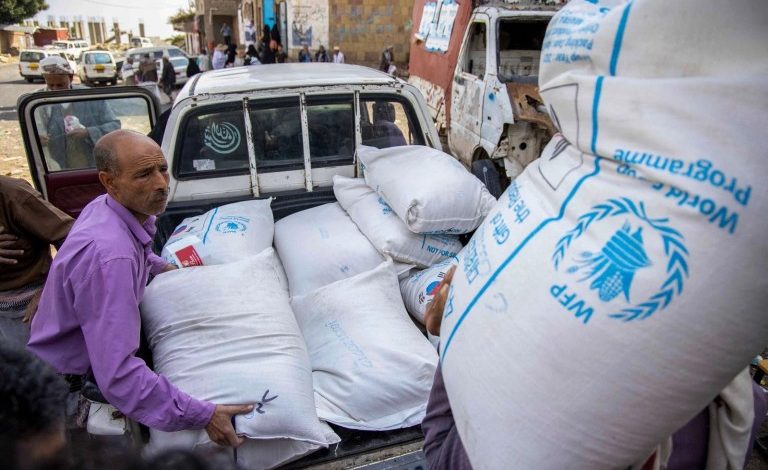
The United Nations World Food Programme (WFP) said on Friday that it plans to provide assistance to fewer people next year due to funding constraints, despite warning of the possibility of a global food crisis on a scale comparable to the one that followed the war in Ukraine.
The WFP, which has been headed by American Luke Lindberg since last month, has launched a $12 billion funding appeal for 2027, aiming to assist 91 million people worldwide, down from the 110 million it had targeted for assistance in 2026.
This target represents only one-third of the 266 million people facing acute and severe hunger, at a time when the conflict with Iran is driving up food and shipping costs, while a powerful El Niño phenomenon threatens agricultural production, creating famine risks in places such as war-torn Sudan.
“Funding shortfalls are forcing us to make difficult decisions,” said Laura Turner, a WFP director, during a press briefing in Geneva. She added that the programme’s $13 billion funding appeal for 2026 is only 50 percent funded.
Another programme official warned that a new food crisis is likely in 2027 and that the agency will be forced to concentrate its resources on the most vulnerable populations.
“We may be on the brink of a third global food crisis in six years,” said Matthew Hollingworth of the World Food Programme, pointing to sharp price increases during the COVID-19 pandemic and following Russia’s invasion of Ukraine in 2022.