Transitional Justice (2/2)
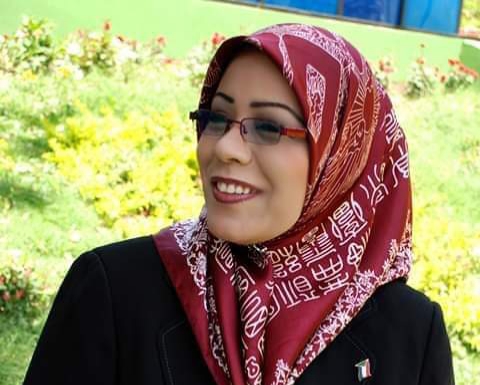
Dr. Inas Mohamed Ahmed
There is always controversy surrounding the priorities of implementing transitional justice in a country following a war. Should the focus be on achieving calm and stability after the war, or should it be on prosecuting human rights violators and war criminals?
The main driving force behind transitional justice is its ability to hold perpetrators accountable and address all forms of violations, as well as repair their effects, which traditional justice systems sometimes fail to do.
Although the concept of transitional justice is relatively new, several countries experienced tragic events at the end of the 20th century and the beginning of the 21st century, leading them to adopt transitional justice to overcome the consequences of those events. The experiences that resulted from implementing transitional justice in these countries have led to the establishment of a clear international framework, as seen in Argentina, Chile, South Africa, Peru, El Salvador, Guatemala, Honduras, Brazil, Bolivia, Paraguay, Ecuador, Panama, Costa Rica, Colombia, Rwanda, Sierra Leone, Uganda, Poland, Hungary, Libya, and Syria recently. All of these experiences have enriched the practical approach to applying transitional justice.
Transitional justice is not a special type of justice; rather, it is an approach to achieving justice after periods of war or oppression in order to establish truth. It is a set of arrangements aimed at calming the emotions following crimes and violations, preparing society for a new phase. It also requires judicial independence to enforce the law, protect witnesses, and ensure public trials. No criminal should be immune from prosecution, and crimes against humanity or war crimes do not lapse over time. The goal is to restore trust in judicial institutions and the law. Transitional justice also requires the formation of truth commissions, fact-finding committees, and reconciliation bodies.
In addition to the above, some countries have adopted oral storytelling, where recounting the truth and the perpetrator’s confession becomes a tool for healing the victims’ wounds and achieving reconciliation based on forgiveness among the parties. This, in itself, is a challenge.
However, the real challenge for transitional justice lies in its correct and proper implementation based on the positive results of past experiences and avoiding deficiencies or shortcomings in its application.
Therefore, international law scholars have focused on developing the concept of transitional justice and have eagerly researched it due to its intellectual appeal and research value. Several old and new theories have emerged, including the theory of John Rawls, who believes that transitional justice is the ability to rehabilitate people in order to help a society overcome a hardship, with both the community and the authorities working together towards overcoming this hardship through swift measures. On the other hand, Amartya Sen, an Indian-American, gave a broader vision to transitional justice, stating, “We do not need ideal theories for implementing transitional justice, but we need practical plans, laws, and measures that are feasible in an objective manner to overcome the hardship.”
As a result of these modern theories, countries that have undergone devastating wars have adopted transitional justice principles in their laws to restore rights, compensate victims, and even constitutionalize some principles as fundamental laws to prevent a return to the painful past. This occurred in Rwanda, where a peace and security sustainability agreement was made, and the 2019 transitional justice plan set common standards for transitional justice processes. It also provided guidelines on how governments can effectively use these processes to help African countries overcome painful pasts.
The Rwandan experience confirmed the African Union’s joint action plan to commit to condemning and rejecting impunity.
In Asia, Cambodia’s experience was notable with the Khmer Rouge’s seizure of power under Pol Pot in 1975, resulting in the deaths of around 1.7 million Cambodians due to hunger and mass killings. In 2006, hybrid courts supported by the United Nations prosecuted the senior Khmer Rouge leaders for their responsibility in the genocide and war crimes committed, enacting laws to prevent a return to violence and war.
From these models, the question that arises during implementation is: Is it transitional justice or a transitional policy?
In any case, the correct understanding of transitional justice must be followed by its correct implementation in order to achieve satisfactory results, transitioning from occupation to independence, from oppression to freedom, from compensation to reconciliation, and from societal harm to community harmony, preparing everyone for the stage of construction and development.
This requires the implementation of key steps:
1. Arresting those involved in crimes against humanity and war crimes and charging them.
2. Upholding integrity and combating corruption in state institutions.
3. Supervising the establishment of national transitional justice mechanisms for amnesty, reconciliation, and building the rule of law.
4. Legal and constitutional reform in the state and activating national judicial bodies.
5. Disarming civilians who have experienced the painful realities of war.
6. Providing national media messages that carry the principles of transitional justice to strengthen societal values and promote national reconciliation, away from violence and conflicts, ending animosity, and acknowledging the victims’ rights and compensating them.
In all international transitional justice experiences, the constant aim has been towards stability, building both society and the state, achieving development, security, and peace, and closing the painful chapter of the past.
But, what about our country? Does Sudan need transitional justice after the long war that its army and people have fought and are still fighting together?
What form and type of transitional justice are required and suitable for Sudan and its people?
In any case, countries are only built by the hands of their citizens, and their wounds are healed only by peace, security, and stability.