Sudan in Seville: Firm Legitimacy and Renewed Partnerships
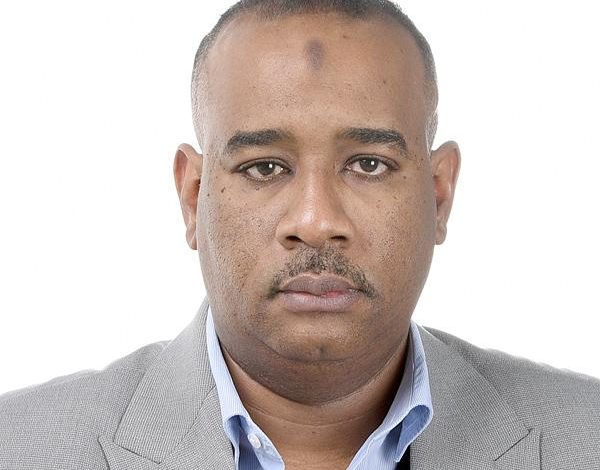
By: Muhannad Awad Mahmoud
Sudan’s participation in the Fourth International Conference on Financing for Development (Seville, Spain) was not merely ceremonial; it carried profound political and economic significance at this critical juncture in the country’s history. This conference—organized under the auspices of the United Nations and hosted at a high level by Spain—serves as a global platform for fostering solidarity and international cooperation in financing sustainable development. It reaffirms that Sudan remains an integral part of the international landscape despite the devastating war ignited by the rebel militia since April 2023.
The joint invitation extended to General Abdel Fattah al-Burhan, President of the Transitional Sovereignty Council, by both the Prime Minister of Spain and the UN Secretary-General, was not incidental. It clearly reflects Sudan’s deserved position as an active member of the United Nations and as a nation whose people are viewed as part of the Global South—peoples whose issues are prioritized in sustainable development agendas. This dual invitation is, in itself, a message: Sudan—through its legitimate government and transitional institutions—continues to enjoy recognition and respect, regardless of attempts by certain voices to propagate alternative forms of legitimacy or promote parallel entities that lack both legal grounding and popular support.
Despite the extraordinary circumstances facing Sudan—an aggressive war that has destroyed its infrastructure, drained its economy, and displaced millions—the response by Sudan’s leadership to this invitation, and its active participation through a high-level delegation, underscores the state’s determination to remain open and engaged, rejecting isolation. It reflects a firm belief that real solutions to Sudan’s major crises cannot be achieved without regional and international cooperation, and integration with global development partners.
What further enhances the importance of this participation is the wide range of attendees, including heads of state, governments, finance ministers, experts from regional and international organizations, major financial institutions, private sector representatives, and civil society organizations. This diversity presents Sudan with a golden opportunity to recalibrate its relationships and forge new partnerships—whether through official meetings in the general sessions or via side meetings, which are fertile ground for discussing debt relief, reactivation of development support programs, and attracting investment for reconstruction. It is also a chance to build joint positions with Global South countries and unify voices on reforming the global financial system in a way that ensures justice for developing countries in terms of access to resources and participation in decision-making.
This participation also serves to shut down debates about the legitimacy of the Sudanese government. It definitively confirms that any entity wishing to engage with the Sudanese state must do so through its legitimate government and official institutions—not through opposition groups like the “Samood” (Steadfastness) group, the political arm of the Rapid Support Forces, which is merely a front for known agendas and will never succeed in replacing a state with deep roots, sacrifices, and legitimacy derived from the will of its people.
General Abdel Fattah al-Burhan’s speech at the conference reflected a deep awareness of the challenges facing Sudan and the region, and a firm commitment to rebuilding Sudan, completing its civil institutions, and advancing the democratic transition—despite the ongoing war. His speech also conveyed a message of hope: that the Sudanese people remain steadfast in their pursuit of peace and development, no matter how prolonged the conflict. Furthermore, he stressed the need to reform the global financial system to make it fairer, more inclusive, and more representative of the interests of the Global South—calling for partnerships based on mutual respect, national sovereignty, and shared interests, far from paternalistic attitudes or conditionality.
Sudan’s presence at this major international forum stands as evidence that the Sudanese state endures, despite adversity; remains resilient, despite conspiracies; and is determined to rebuild what the war has destroyed—through cooperation and strategic partnerships. It is a message to all those still betting on the collapse of state institutions: Sudan will remain—with its identity, its legitimacy, and the unified will of its people.
In conclusion, every meeting and every international platform Sudan participates in restores part of its rightful place, gives voice to its issues in decision-making circles, and sends a message of hope to its people—that the future will be built through sacrifice, resilience, and openness to the world.
Source: Al-Muhaqiq website



