Sudanese Army Repels Major RSF Attack on El Fasher
Sudan Events – Agencies
Intense clashes broke out on Sunday afternoon in El Fasher, the capital of North Darfur state in western Sudan, following a major offensive launched by the Rapid Support Forces (RSF) targeting positions held by the Sudanese Army and the Joint Forces of the Armed Struggle Movements. The attack came less than 24 hours after a UN call for a temporary humanitarian truce to facilitate aid delivery to besieged civilians.
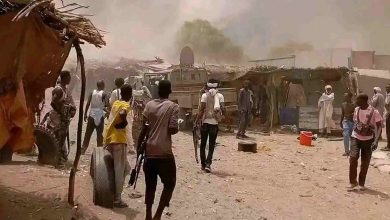
According to military sources who spoke to Al Jazeera Net, the assault began with heavy artillery shelling that targeted the eastern and southeastern neighborhoods of the city, followed by a ground incursion using armored vehicles and drones.
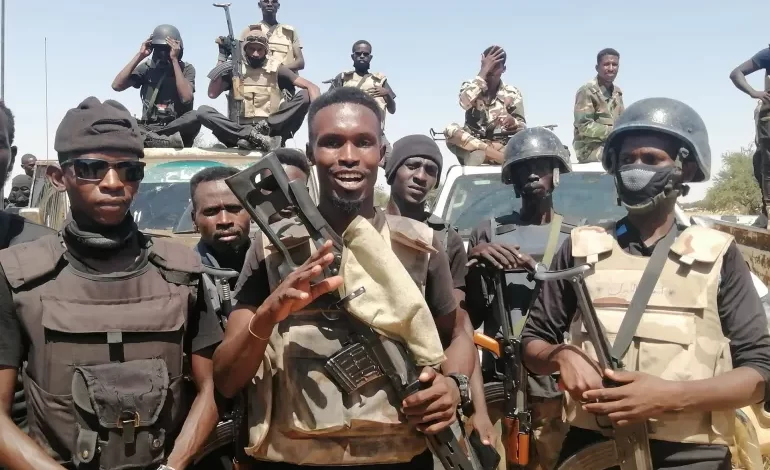
The sources said the Sudanese Army and the joint forces repelled the attack using artillery and medium weapons, managing to destroy several vehicles and seize weapons and ammunition.
They added that the attackers suffered heavy losses in both personnel and equipment, and the assault ended with a “disorganized retreat from the targeted fronts.”
Eyewitnesses reported that the shelling hit populated areas, most notably the Abu Shouk neighborhood and the adjacent IDP camp, sparking panic among residents and causing widespread destruction to homes and public facilities.
Tragic Conditions
Amid the clashes, the city is experiencing dire humanitarian conditions, with an almost complete lack of food, medicine, water, and fuel, while indiscriminate shelling of residential areas continues.
Relief activist Mohammed Adam told Al Jazeera Net that artillery shells struck the Abu Shouk IDP camp and the western neighborhoods of the city, confirming that the situation is “catastrophic,” with great difficulty in reaching victims and no safe humanitarian corridors in place.
In an exclusive statement to Al Jazeera Net, Colonel Ahmed Hussein Mustafa, spokesperson for the Joint Forces of the Armed Struggle Movements, said:
“Our forces are fighting alongside the army to repel the treacherous attack carried out by the RSF at dawn.”
Mustafa explained that the attack aimed to breach the city’s defenses from the eastern axis, but reconnaissance units and artillery foiled the plan. He added, “We observed a panicked retreat of the attackers after they suffered heavy losses. We are committed to defending El Fasher and will not allow it to fall.”
A Suspended Truce
On Saturday, the Transitional Sovereignty Council announced that its head, General Abdel Fattah al-Burhan, had received a phone call from UN Secretary-General António Guterres, who called for a temporary humanitarian truce in El Fasher to facilitate aid delivery and alleviate civilian suffering.
Burhan welcomed the initiative and affirmed his commitment to forming a technocratic government. Guterres expressed support for appointing Kamal Idris as Prime Minister, describing the move as an encouraging step toward resuming the political transition.
However, the RSF launched its offensive just hours after the UN initiative was announced, accompanied by statements from some of its advisers who openly rejected the truce, claiming it was an attempt to supply the besieged army with weapons and ammunition.
RSF adviser Basha Tabeek wrote on social media:
“Talk of a humanitarian truce is a cover for smuggling military supplies,” stressing the rejection of any initiative that does not serve what he called “genuine humanitarian work.”
Clear Rejection
Observers believe this stance, coupled with the military escalation, clearly reflects the RSF’s rejection of the UN initiative and undermines the chances of de-escalation amid ongoing fighting and deteriorating humanitarian conditions in the besieged city.
In a comment to Al Jazeera Net, Abdel Nasser Salim Hamid, senior researcher and director of the East Africa and Sudan Program at the Focus Center – Sweden, and a specialist in crisis management and counterterrorism, said:
“The RSF’s rejection of any humanitarian truce in El Fasher clearly shows how the group views international initiatives as tools for deception, not opportunities to protect civilians.”
He added:
“The reality is that the RSF relies on total warfare and deadly sieges as tactics to subdue cities and impose a new military reality before any settlement. For them, even a temporary ceasefire means losing momentum and giving the army a chance to regroup or receive aid that could save thousands of besieged people—something that completely contradicts their strategy of maximum pressure.”
Hamid noted that:
“The RSF advisers’ own statements clearly show their rejection of any humanitarian move that doesn’t align with their battlefield goals. They see civilians as leverage to weaken the army—not as a priority—despite the humanitarian catastrophe facing tens of thousands in El Fasher.”
In related news, the World Food Programme (WFP) said Monday that more than 4 million Sudanese refugees have fled to neighboring countries seeking food, shelter, and safety since the war erupted in April 2023. The WFP warned of the risk of further hunger and malnutrition among them.
The warning comes amid a significant decline in life-saving food aid due to funding crises.
Source: Al Jazeera