Delay in Government Formation… Impact on the Wheel of the Sudanese Economy
Report by: Nazik Shummam
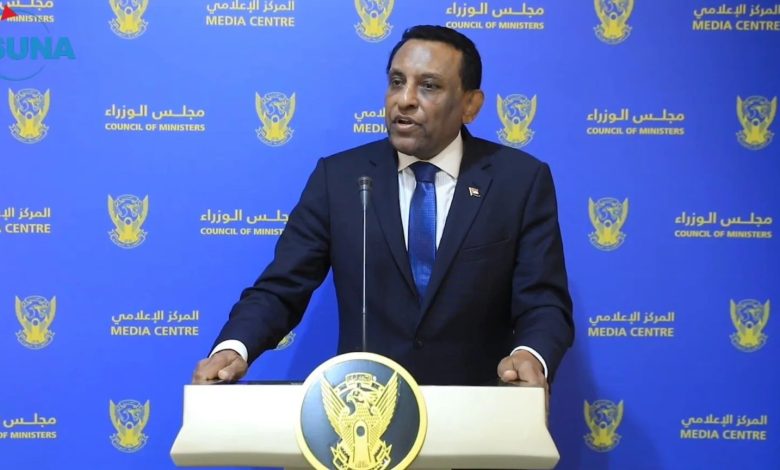
On June 1st, Sudanese Prime Minister Dr. Kamal Idris announced the dissolution of the government and assigned secretaries-general and ministry undersecretaries to carry out duties until a new government is formed.
Since then, Sudan has been experiencing an executive vacuum amid extremely complex security conditions, further worsening the already deteriorating economic and social situation.
Since taking the oath, the Prime Minister began consultations to form the new government. However, disagreements have surfaced, contributing to the delay in forming the cabinet.
Sudan’s Sovereign Council President, General Abdel Fattah al-Burhan, stated at the Fourth Development Finance Conference in Spain that Sudan has taken significant steps toward civilian stability by appointing a civilian Prime Minister for the transitional government.
He added that this appointment reflects Sudan’s firm will to complete the formation of state institutions and advance the democratic civilian transition to build a better future for the Sudanese people.
Initial Steps Toward Formation
As a start, Idris issued a decision last week appointing Lieutenant General Hassan Dawood Kabron Kayan as Minister of Defense, and Police Lieutenant General Babiker Samra Mustafa Ali as Minister of Interior. However, the ongoing executive vacuum is disrupting the functioning of state machinery and severely impacting the wheel of the national economy.
Project Approvals Delayed
The effects of this vacuum have become apparent, notably through the disruption of services for the economic sector due to the absence of structured procedures in several departments.
A businessman, who preferred to remain anonymous, confirmed the stagnation of operations at the Ministry of Investment and the suspension of project approvals.
Speaking to Al-Muhaqiq (The Investigator), he said the Ministry of Investment halted issuing investment project approvals due to the absence of a minister in recent weeks.
He explained that no one was delegated to sign approvals in the minister’s absence and that technical issues with the ministry’s financial system further complicated the situation.
He noted that the ministry only began issuing some old approvals the day before yesterday, adding that continued delays in forming a government would cause confusion and bureaucratic slowdowns, negatively affecting the investment climate—already fragile due to ongoing conflict.
Economic Consequences
Economic journalist Sanhouri Issa believes the delay in forming a government will have numerous economic consequences. These include securing supplies of goods and services, maintaining strategic reserves of essential goods—especially in states affected by the rainy season due to road closures and rising transportation costs—and preventing price speculation and market exploitation.
Issa told Al-Muhaqiq that the delay will also hinder preparations for the upcoming agricultural season. “Agriculture is time-sensitive,” he explained, emphasizing the importance of securing the necessary inputs for both rain-fed and irrigated sectors to ensure a successful season.
Loss of Revenue
He further stated that disruption of government operations is directly affecting the collection of public revenue. This includes customs duties, taxes, and fees collected by service ministries such as Health, Education, Higher Education, Agriculture, Commerce, Livestock, Industry, Interior, Foreign Affairs, Minerals, and Ports, in addition to the impact on import/export operations and reconstruction efforts in war-affected return areas.
Issa also highlighted the loss of revenue due to smuggling—particularly of gold, livestock, gum arabic, minerals, and camels—as well as the psychological toll on citizens who had pinned hopes on the new government, which now faces a difficult birth and political disputes over key positions.
Wide Divergence of Views
Political analyst and economic expert Dr. Mohamed Torshin said the delay in forming the government is highly complex, with significant divergence in viewpoints among the stakeholders expected to participate, especially armed movements that signed the Juba Peace Agreement.
Speaking to Al-Muhaqiq, Torshin stated, “These divergences have complicated the urgency of forming the government, and this will negatively affect its future performance.”
He added that this could result in a government that lacks cohesion and fails to align with the roadmap presented by the Prime Minister, making its implementation nearly impossible.
Torshin concluded that optimism about the future of Kamal Idris’s government might be far from reality, as early signs of discord and delays are already apparent.
Source: Al-Muhaqiq Website