Greek Newspaper: How Germany Became Entangled in Sudan’s War
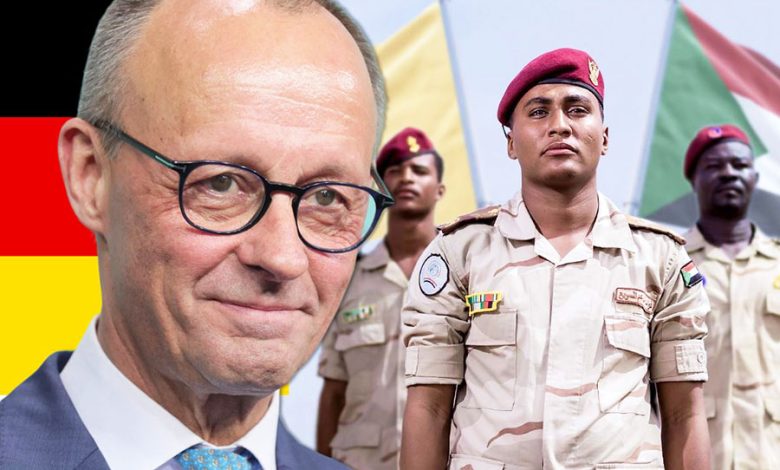
Sudan Events – Agencies
Far from the eyes of the Middle East, Berlin continues — with money and weapons — to commit a crime that has cost the lives of millions of civilians in Sudan. All this, supposedly, for the “interest” of Europe.
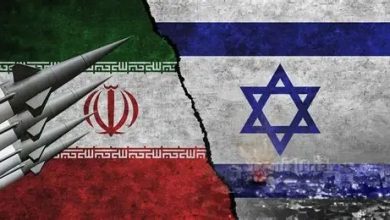
Even Germans could hardly believe their ears when Chancellor Friedrich Merz declared a few days ago that Israel was “doing the dirty work” on behalf of the West by bombing Iran. Torsten Frei, the Minister of the Chancellery, described Iran as a “terrorist regime!” At the same time, Berlin is “doing the dirty work” on behalf of Europeans in Sudan.
Following the ousting of dictator Omar al-Bashir in 2019, major powers — especially Germany and the European Union — played a significant political, military, and economic role.
As reported by EUObserver, German involvement went beyond rhetoric, including the indirect transfer of weapons via third countries, funding anti-migration programs that empowered armed groups, and channeling development aid through disorganized government institutions to criminal networks.
But all of this helped pave the way for today’s war.
German Weapons to Sudan
Despite the official arms embargo imposed on Sudan after the Darfur conflict, multiple reports confirm that German weapons — especially those produced by Heckler & Koch — have continued to appear in Sudan through intermediaries.
Germany has exported weapons worth billions of euros to Gulf countries and Egypt, both of which are directly involved in the conflict — a fact Berlin is fully aware of.
Egyptian journalist Shaimaa Sami notes: “Through these channels, German weapons and military equipment found their way into Sudan’s battlefields, indirectly pointing to Germany’s involvement in arming both sides.”
It is worth recalling that during the Cold War, West Germany closely cooperated with Sudan, leading to the establishment of infrastructure like the Fritz Werner ammunition factory near Khartoum in the late 1960s — a legacy that, according to some analysts, shaped aspects of Sudan’s militarization.
European Funds for Terrorists
In 2014, the European Union launched the “Khartoum Process” to curb illegal migration from the Horn of Africa, with Germany playing a key role in financing related implementation projects.
In reality, the Rapid Support Forces (RSF) — accused of committing crimes against humanity — benefited from EU-backed border monitoring programs such as the “Better Migration Management” initiative, led by the German Agency for International Cooperation (GIZ), according to Shaimaa Sami.
EUObserver reported: “These programs effectively strengthened the RSF’s role in monitoring Sudan’s borders, raising concerns about indirect European support for abusive actors.”
Ultimately, Europe outsourced part of its border control to Sudanese forces, including the RSF, funding programs that provided surveillance equipment like cameras, scanners, servers, communication systems, and vehicles such as Toyota Hilux and Land Cruisers.
While this equipment was intended for border management under EU-funded initiatives like the Better Migration Management (BMM) program, the RSF reportedly used it — as Sami notes — to suppress internal protests.
For example, in June 2019, at least 186 civilians were killed during a sit-in protest in Khartoum.
Development Aid and Financial Agreements
After Bashir’s fall, Germany and its European partners rushed to support Sudan’s transitional government through international donor conferences and generous funding pledges.
However, most of these funds were channeled into infrastructure and institutional support — through state apparatuses still controlled by the military or allied technocrats.
According to Oxfam, only 3% of the EU’s Emergency Trust Fund for Africa was allocated to support local communities or safe migration pathways. The overwhelming majority went to border control and security systems.
Twenty Years of Criminal Policy
Sami notes: “Over the past twenty years, European — particularly German — policy toward Sudan has been marked by short-term pragmatism: a focus on migration control and stability rather than responsibility and reform.”
This approach has empowered the warring parties — whether through indirect arms transfers, security cooperation, or opaque aid flows.
Germany’s and the EU’s responsibility extends not only to what was done, but also to what was neglected: failing to impose sanctions after the 2021 coup, lacking pressure to disarm militias, and being unable to protect Sudan’s fragile transition from military interference. Today, Sudanese civilians are paying the price — through displacement, sexual violence, mass killings, and state collapse.
This, in some ways, softens the sense of commitment felt by the German Chancellor — herself a descendant of a Nazi official — toward Israel’s criminal occupying forces and their actions in the Middle East.