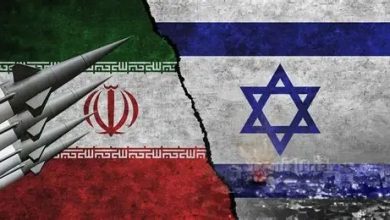
Israel and the RSF: Hidden Cards at the Sudan-Libya Border
Sudan Events – Agencies
“This war is not the Dagalo family’s war; they are merely hired guns used to ignite the entire region.” – Al Jazeera (paraphrased)
Official and public anger in Sudan has escalated following the incursion of the Rapid Support Forces (RSF), backed by forces loyal to Libyan warlord General Khalifa Haftar, into the border triangle connecting Sudan, Egypt, and Libya.
Opening a New Front
This sudden hostile move forced the Sudanese army to evacuate the triangle area under what it called “defensive arrangements to repel the aggression,” effectively meaning that the rebel forces have occupied this strategic area, thus opening a new front toward Sudan’s Northern State and, indirectly, southwestern Egypt.
The aim of this military operation was to seize the Al-Awainat area and several border points that control trade routes and the flow of weapons, as well as a region rich in mineral resources and groundwater. This triangle is a critical hub for access to three countries simultaneously.
For the first time, the Sudanese army directly accused Haftar’s forces of blatant aggression against Sudanese territory, particularly through the deployment of the Salafist Battalion—also known as the Ways of Peace Battalion—overseen by Saddam Haftar, son of the retired Libyan general. This battalion is reported to supply RSF with weapons, fuel, and foreign mercenaries, while also being involved in human trafficking.
Targeting Military Objectives
Eastern Libyan forces not only denied involvement in the attack but also shifted blame onto the Sudanese army, accusing it of “repeated violations along the Libyan border” and declaring their right to respond—signaling an intent to enter the war on the side of the rebels.
Meanwhile, Haftar’s forces failed to explain how RSF troops reached the border triangle, which is practically under their control on the Libyan side. Even more perplexing: where did Hemedti’s forces get the heavy weapons, fuel, and armored vehicles used in the operation?
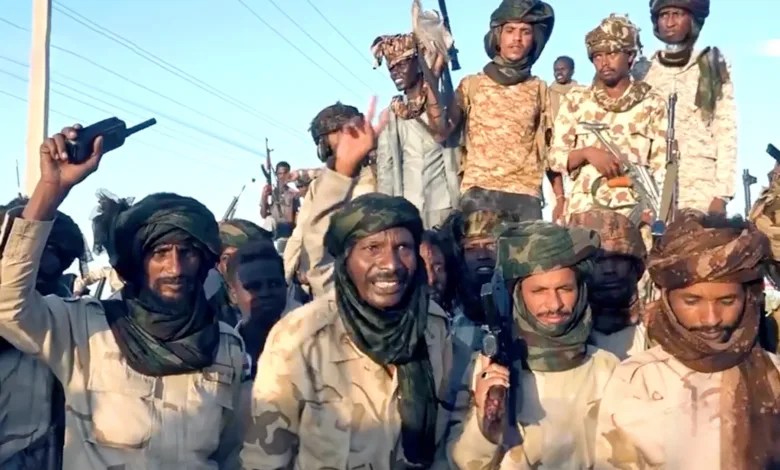
Videos show Libyan forces alongside RSF fighters, clearly demonstrating that the Haftar-Hemedti alliance has reached a high level of coordination, involving joint offensives, shared targets, and likely support from a powerful foreign sponsor seeking to destabilize the region and reassert control over it.
Hired Guns
A crucial question must be asked: if not for Israel, then who is Haftar truly working for?
This expansionist operation doesn’t merely target Sudan—it also poses a direct threat to Egypt, especially given RSF’s hostility toward Cairo since the very beginning of Sudan’s civil war. Notably, the RSF abducted a group of Egyptian soldiers who were conducting joint military exercises with Sudan at Merowe Airport in the early days of Hemedti’s rebellion.
This raises strong suspicions that the RSF, with Israel’s backing, is involved in a plot to create security flashpoints along the borders and destabilize the entire region.
By all measures, this is not the Dagalo family’s war. They are mercenaries operating under a professional contractor determined to ignite the whole region and use the chaos of war to achieve colonial objectives, including establishing an organized military corridor through the desert as a launchpad to invade multiple states.
Stretching Sudan’s Defenses
More importantly, this marks a shift to a “stretch and divide” strategy after the failure to strike at Sudan’s core. This operation may also aim to distract and divide Sudanese army efforts, especially as forces push deeper into Darfur. The RSF had hoped to make the city of Nyala the capital of its planned breakaway government, but it is no longer safe due to effective Sudanese airstrikes, which have knocked it out of the military and political equation.
Adding to the RSF’s challenges, Chad has recently drawn closer to Sudan’s government. Similarly, the Central African Republic sent its intelligence chief to Port Sudan just days ago to reset relations. Ethiopia is also making moves in the same direction, and efforts to drag South Sudan’s army into the conflict have so far failed.
Although Haftar’s so-called Libyan National Army has not formally declared intentions to invade Sudan, its past behavior, power plays, and shady foreign relations suggest it is not acting independently.
Clearly, Haftar has been drawn into this phase of dismantling the Sudanese state—motivated by personal ambition to exploit the security vacuum and expand his influence. In doing so, he has disregarded a prior agreement among Sudan, Egypt, and Libya to deploy joint forces to secure the border triangle. By violating this agreement, he has betrayed all parties and challenged both the legitimate Libyan government in Tripoli—which condemned the aggression—and international consensus.
A Broken Dictator Image
There’s no doubt that Haftar is deeply involved in fueling Sudan’s conflict. Since his coup attempt and his failure to subdue Libya by force, he has relied heavily on Sudanese rebel groups, especially some Darfur factions that helped him seize the oil crescent.
Still, he has failed to emulate Gaddafi—the leader he tries in vain to imitate. Once a prisoner of war in Chad, Haftar inherited Libya’s old army after Gaddafi’s death, only to destroy what remained of the Libyan state. A sworn enemy of the Libyan revolution and a conspirator against neighboring countries, he often acts as a puppet for foreign powers.
New Chapters of Conspiracy
This conflict, while draining Sudanese military resources, also threatens Egyptian national security and entangles Libya in foreign wars—exacerbating its internal instability.
There is thus an urgent need to enhance military and security coordination among Sudan, Egypt, and Libya to confront common threats.
What should concern Sudanese citizens most is the growing greed for their country’s resources and the disappointment in some neighboring states. This demands internal unity, setting aside political differences, and regaining control of the strategic border triangle as swiftly as possible. Haftar and Hemedti’s forces must be expelled, and Sudan must prepare for a long war—one marked by evolving acts of aggression and foreign conspiracy.