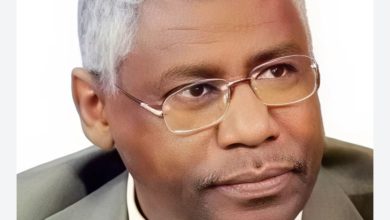
Government of Hope… The Repercussions of Delay…
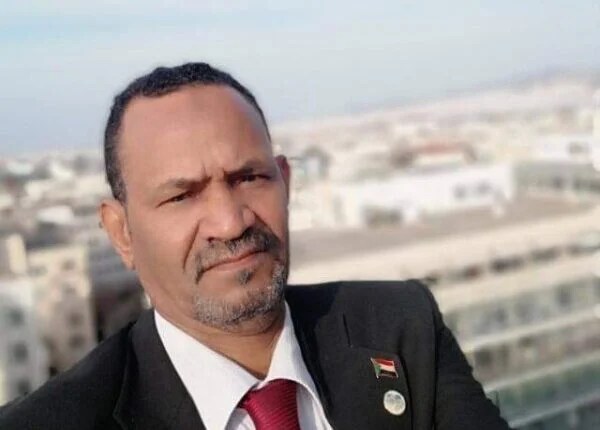
By: Abdelmalik Al-Naeem Ahmed
Before Sunset.
More than a month has passed since he was sworn in and delivered his address outlining the program of the Government of Hope — yes, that is its name, meant to bring reassurance to the downtrodden citizen and to convince society that a real transformation has taken place in Sudan. Yet, after all this time, during which the people waited for their hopes to be fulfilled, Dr. Kamal Idris, the Prime Minister, has now announced only five ministries in his government out of more than twenty.
It is clear that this piecemeal, “sector-based” approach to announcing the government — to borrow a term from commerce — indicates the presence of an internal crisis regarding how the cabinet is being formed and what criteria are being used. Some aspects of this crisis are evident and known to everyone, particularly the ongoing dialogue between the Chairman of the Sovereignty Council and the Prime Minister on one side, and the leaders of the Juba Peace Agreement on the other, concerning their share in the government. Other aspects of the crisis and the reasons behind the delay remain hidden, but it is apparent that they relate to the criteria for selection — which, unfortunately, have become a matter of dispute.
The Prime Minister, who returned from abroad, appears to be surrounded by a group whose role in delaying and confusing the formation process outweighs their assistance and support in helping him overcome obstacles.
Even if we assume that the dispute over ministries allocated to the signatories of the Juba Agreement has not yet been resolved — what about the rest of the ministries? I understand that the Prime Minister might be trying, during negotiations, to get the Juba factions to accept ministries they were not initially interested in. However, this reflects flawed thinking on their part and shows that they are more concerned with revenue-generating ministries than with selfless service to the nation — even though they signed an agreement that should ensure their inclusion in the government regardless of the position.
But clearly, that is not the case. Hence, this intransigence and delay have come at the expense of previously made commitments and have already opened many gaps that may further derail the cabinet formation. This is unfortunate and harmful to the country, which is in urgent need of a functioning government.
One of the negative consequences of this delay — caused by the insistence of the Juba Peace Agreement factions on more than what they are entitled to — is not just their demand for a specific number of ministries, but their insistence on certain ministries in particular, even though the agreement did not stipulate such a condition. This was a result of the leniency shown by those implementing the agreement in its previous round, which ended with the dissolution of the government.
This stubbornness and delay have even led some of the other signatories to the Juba Agreement, particularly the group led by Al-Jakoumi, to submit a memorandum to the South Sudanese mediator, who had sponsored the agreement, demanding their rightful share in the government — just as the armed factions were granted ministries. This group had not initially demanded positions, perhaps out of consideration for the country’s fragile situation, or perhaps due to their lack of leverage since they do not possess weapons like the armed groups do.
However, the insistence of these armed groups on certain ministries and their failure to respond to the needs of the current phase has apparently forced Al-Jakoumi’s group to take this step and make their demand — a demand that is entirely within their rights, given the differing interpretations of some provisions of the agreement and the perception that the Juba Peace Agreement belongs exclusively to the armed factions. These factions behave as though only they have the authority to interpret the agreement in ways that serve their own interests — evidenced by the fact that one of their leaders recently stated that the memorandum submitted by their partners to the South Sudanese mediator does not concern them in any way, as long as their own share in the cabinet is guaranteed.
In my opinion, the delay in forming the government — regardless of the standards or the names involved — is certainly not acceptable to the Sudanese public. This is understandable, as Sudanese people are naturally critical and opinionated about everything.
Therefore, the Prime Minister should not expect to win the approval of the entire population with his new government — because that simply won’t happen. Even the announcement of the Minister of Health sparked lengthy debate, while the appointments in Higher Education and Agriculture received relatively positive reactions — likely due to the selection criteria and qualifications of those appointed, as well as their lack of known political affiliations.
Accordingly, the Prime Minister must not delay the announcement of his full cabinet any longer than he already has — because the cost and consequences of further delay may be worse than the backlash that might come from announcing a government that does not enjoy full consensus. Announce your government, Honorable Prime Minister — today, not tomorrow — and let the people judge the ministers based on their actual performance, not their names or past affiliations. That would be better and more beneficial for the country — and for you, as the head of a government from whom much is expected.