Challenges of Government Formation… and the Return to Khartoum!
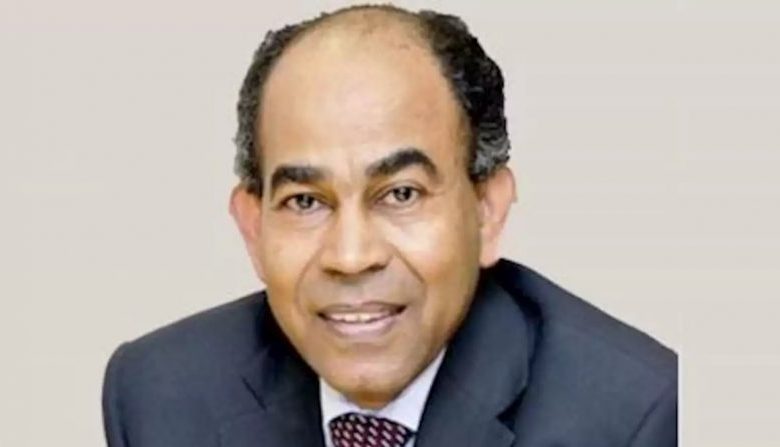
By Othman Mirghani
A heated debate is raging among Sudanese over two pressing issues: the delay in the formation of the government by Prime Minister Dr. Kamal Idris, and the return of people to Khartoum — with public opinion split between those who see the necessity of returning despite the hardships, and those who oppose the idea, citing various excuses and obstacles.
The delay in forming the government is drawing increasing criticism, as the situation in the country does not allow for procrastination. People are anxiously awaiting the restoration of basic services and the launch of the long and arduous journey of reconstruction. The delay has also caused discontent due to some Darfur movements, signatories to the peace agreement, who have triggered a crisis by insisting on specific ministries — most notably Finance and Minerals — misinterpreting the agreement that granted them 25% of ministerial portfolios without specifying particular ministries.
Worse still, some of these movements — chiefly the Justice and Equality Movement led by Jibril Ibrahim and the Sudan Liberation Movement led by Minni Arko Minnawi — have either hinted at or actively used their participation in the fighting alongside the army as a bargaining chip to secure their demands in the government formation. Many view this as outright political blackmail.
Kamal Idris has found himself in the same trap that previously ensnared Abdalla Hamdok — the stumbling block of trying to form a technocratic cabinet in the face of demands by armed movements and political pressure. A key example is Jibril Ibrahim’s insistence, since joining the government four years ago, on holding the Ministry of Finance. He views the ministry as a strategic post for implementing what he considers the “financial entitlements” of the Juba peace movements, based on the ministry’s central role in resource allocation and its ability to direct funds accordingly.
To resolve the impasse, Sovereignty Council members Lt. Gen. Shams al-Din Kabbashi and Lt. Gen. Yasser al-Atta met with Kamal Idris. Kabbashi also met with leaders of the “Darfur Track” movements. It was agreed that the movements would retain their share in the government, with some adjustments in portfolios, but they would keep the Finance and Minerals ministries — unless last-minute developments derail the agreement. This comes amid reports that the Prime Minister is considering separating the departments of Economic Planning and International Cooperation from the Ministry of Finance.
This compromise may not satisfy many who were angered by the movements’ tactics. However, political realism dictated the need to overcome the crisis in order to avoid further delays in forming the government and to prevent disruption to military efforts — especially as battles rage in Darfur and Kordofan, and the army prepares for what is being described as a comprehensive offensive.
The crisis also offers important lessons. One is that the issue of the proliferation of weapons needs a final resolution — arms must be confined to the state alone, ending the phenomenon of militias, parallel armies, and political bargaining through armed coercion.
If the armed movements insist on implementing the parts of the peace agreement related to ministerial quotas, why isn’t there equal insistence on implementing the clauses regarding the disarmament and integration of these forces into the national army under regulated terms — a process that has been delayed for far too long?
Another key lesson is that the government must seriously pursue a broad-based dialogue aimed at reaching national consensus that can pave the way for the anticipated elections at the end of the transitional period — so that governance and ministerial appointments stem from the ballot box, not the barrel of a gun.
This government faces numerous urgent and complex files, most of which cannot be delayed if Sudan is to embark on a path of reform and reconstruction. The pressing question now is: Will the government continue to operate from Port Sudan, or will it act on the “Hope” slogan it adopted, and send a strong signal by announcing its return to Khartoum?
Khartoum’s recovery requires the government to return and begin its work from there, setting an example and sending a strong message of leadership by action. It makes little sense for officials to call on citizens to return while they themselves remain in the relative safety of Port Sudan. True, a notable number of people have already returned to Khartoum despite the difficulties, but many others remain hesitant, influenced by the stream of negative reports and voices urging against return.
No one denies the challenges and hardships on the ground. But on the other hand, there are ongoing efforts, signs of hope, and a growing realization that reviving life in Khartoum requires its people to come back — no one from outside will come to repair their homes and city for them.
Failure to return will only deepen the security crisis, as depopulated areas create a vacuum ripe for lawlessness and crime. It will also worsen the national economic situation and render reconstruction a distant dream. Khartoum, with its three cities, holds symbolic and strategic importance as the political and economic capital of the country. Its pre-war population was estimated at around 10 million, roughly a fifth of Sudan’s total population, reflecting the nation’s ethnic diversity.
The ball is now in the government’s court to give a strong push for return and breathe life back into Khartoum’s arteries.
Published in Asharq Al-Awsat