Sudanese Pound Continues to Plummet, Prices Soar… Food Becomes a Luxury for the Poor

Report by Yasser Abdullah
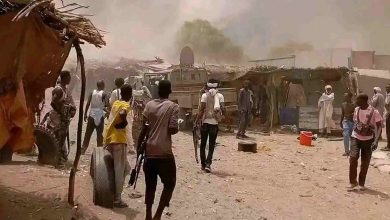
In a country rich in fertile land and livestock, accessing a balanced meal has become a distant dream for the majority of citizens, who are crushed under the weight of a brutal war and total economic collapse. Markets are paralyzed, and in homes, people struggle to afford two meals a day—barely enough to survive—as the value of the Sudanese pound continues to deteriorate with no real solutions or clear political horizon in sight.
In its latest report, the World Bank revealed that the Sudanese economy contracted by an additional 13.5% in 2024, following a nearly one-third shrinkage in 2023. The same report projected that the proportion of the population living in extreme poverty could reach 71% amid ongoing conflict and the absence of a functioning state. These are not just statistics—they reflect a harsh reality experienced daily by citizens caught between hunger, helplessness, and the endless struggle to survive.
“I work 12 hours a day to make less than $10, barely enough to cover two meals for my family of six,” says Iqbal Mohamed, a lab technician in Shendi, north of Khartoum. “Before the war, I needed around 5,000 Sudanese pounds for our daily expenses. Now, some goods have increased in price by over 1,000%.” Iqbal is not alone. Millions of Sudanese are facing similar realities—where basic foodstuffs have become inaccessible luxuries, and putting a meal on the table has become a daily battle.
Market Recession and Agricultural Decline
Markets across towns and villages are in a state of stagnation. “People aren’t buying. Everything has doubled in price, and most customers just look or buy only the absolute necessities,” says Badreldin Ahmed, a vegetable seller in Shendi.
He attributes the market slowdown to a shrinking agricultural sector, especially in Al-Jazirah State, which used to be a key food basket for the country. According to the FAO, agricultural production has declined by over 40%. The sector accounts for 35% of Sudan’s GDP and employs over 40% of the workforce.
Traders are also suffering. “I stopped selling canned and imported beverages because people no longer buy them,” says Mohamed Abdel Hamid, a 60-year-old merchant. “Sales have dropped significantly, and demand is limited to lentils, sugar, oil, and cleaning supplies.” Everyone is losing in this equation—from producers to consumers.
Under such conditions, illness or accidents become even harder to bear. “Sometimes we survive on just one meal a day. We don’t buy meat or vegetables, and the worst is when someone in the family gets sick—healthcare is unaffordable, and traditional remedies are our last resort,” says construction worker Abdullah Warraq.
Currency Collapse and Wages Eroded
One of the most visible signs of economic collapse is the freefall of the Sudanese pound. Since the war began in April 2023, the pound has fallen from 600 per dollar to 2,679 on the black market, while the official bank rate stood at around 2,100 by mid-2025.
This devaluation has had a direct impact on wages. A recent study by the Sudanese Teachers’ Committee in July estimated that the monthly cost of living for a family of five ranges from 354,000 pounds in stable areas to 2.8 million pounds in conflict-affected states. Yet, public sector wages only cover 8% of these expenses—meaning over 90% of employees live below the poverty line.
Sumaya Abdel Rahman, a nurse and mother of four, says: “I work at both a clinic and a lab, but my income only covers a third of our needs. Two of my kids are university students, and I take loans every month just to get by.” This is a common story across thousands of households, where even two jobs aren’t enough to meet basic needs.
According to the World Bank, unemployment rose from 32% in 2022 to 47% in 2024 due to widespread business closures and a total collapse of the job market.
Economic Insights and Postponed Solutions
Economist Dr. Hussein Al-Quni identifies three main causes for the currency collapse: declining production, lack of exports, and surging demand for dollars due to mass emigration.
He notes that the absence of a functioning executive branch has made the dollar a scarce commodity, and the unclear political landscape has discouraged any real foreign support. “The damage to the economy is immense, and no one wants to risk investing in a country with no clear future,” says Al-Quni.
Meanwhile, Professor Kamal Ahmed Youssef, Dean of the Graduate School at the University of Neelain, sees agriculture as a quick path to generating revenue—but only if there’s electricity, solar power, secure land, and functional infrastructure. He calls for rebuilding roads and bridges, and restoring essential services like water, healthcare, and education as key conditions for return and recovery. He also urges encouragement of domestic investment, lowering customs duties on imports, and signing agreements with neighboring countries to facilitate access to essential goods.
He also warns that some states continue to use the old currency despite a replacement order issued over a year ago, which opens the door to corruption and worsens the ongoing cash crisis.
As Sudanese citizens fight a daily battle against inflation, hunger, and illness, hope now rests on a promising agricultural season and a political breakthrough that could restore a minimum level of state functionality—before the economy collapses entirely and hunger becomes the norm, not the exception.
Source: Al Jazeera Net