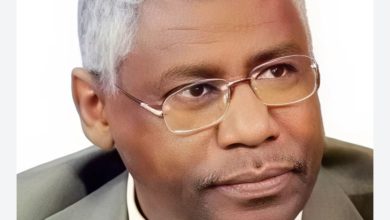
Babiker Faisal and the Impossible Democracy
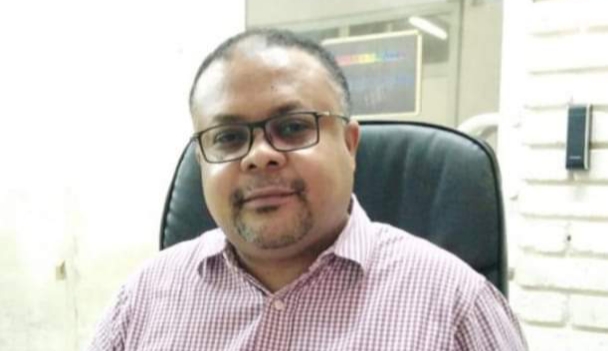
By: Othman Jalal
(1)
When Al-Waleed ibn Al-Waleed ibn Al-Mughirah came to Medina to declare his conversion to Islam—having been preceded by his brother Salama—the Prophet (peace be upon him) asked him: “And where is Khalid?”
In other words, why was Khalid still on the wrong side of history? Was it due to narrow-mindedness or limited vision?
Al-Waleed then sent a gentle, profound message that resonated deeply with Khalid’s conscience and convinced both Amr ibn Al-As and Uthman ibn Talha. All three converted to Islam. The Prophet remarked, “Mecca has cast forth its very core.” From that historic moment, the great conquests of Islam began to flow—demonstrating how pivotal great individuals can be in shaping the course of history.
(2)
Since the December 2018 uprising, I have participated in intellectual and political dialogues—both publicly and privately—with many leaders of the Forces of Freedom and Change (FFC), foremost among them Brother Babiker Faisal, head of the executive office of the Federal Gathering. My discussions with them focused on the need to root the revolution’s values and slogans within the social fabric, and to move away from the destructive binary of “we are the revolutionaries” versus “they are the enemies of the revolution.”
I emphasized the slogan “We are all with the revolution,” and called for inclusive dialogue involving all political forces on issues of nation-building and democratic development. I urged them to avoid dragging identity and governance legitimacy debates into the transitional period to prevent vertical splits in society. I advocated for achieving peace with the armed movements, ending the culture of using weapons as political tools, and entrusting the transitional government to independent national technocrats—while political parties focus on rebuilding their institutions and conducting horizontal dialogues to reach consensus on elections and lay the groundwork for a sustainable democratic national project.
(3)
I also stressed the importance of not antagonizing the military institution, which has sided with the Sudanese people during three popular uprisings—October 1964, April 1985, and December 2018. I warned against demonizing Islamist movements, some of whose members played a role in the 2018 uprising, while others chose rational, constructive opposition.
I particularly urged the need to protect the democratic national project from the internal counterrevolution—represented by the Rapid Support Forces (RSF) and the ambitions of the Dagalo family to rule Sudan—and called for the immediate integration of the RSF into the national army before the sit-in was lifted. I also warned of the external threat posed by Mohammed bin Zayed’s hostility toward peoples’ aspirations for democratic and good governance.
This was my advice to the leadership of Tagaddum and Babiker Faisal among them. But they fled from these strategic issues and sought power by allying with the terrorist militia of the Dagalo family and the semi-feudal regime of Mohammed bin Zayed. This is what makes democracy seem impossible.
(4)
I watched a video of Babiker Faisal in which he said they would not engage in dialogue with Islamists on issues of nation-building and democratic transition, on the grounds that they are an armed political group.
I wasn’t convinced by the defense made by Brother Hassan Ismail, who seemed to justify Islamist armament by referencing the history of the Democratic Unionist Party’s involvement in armed political action—starting with the National Front led by Al-Sharif Al-Hindi and the July 1976 movement, through the 1995 National Democratic Alliance experience, and finally the January 2024 Addis Ababa Declaration of Principles signed with the terrorist RSF.
The focus should have been on establishing a principled rejection of violence and the use of arms in politics—this being a key conclusion from the Islamic National Movement’s own internal reassessments. Islamists are an intellectual and political movement deeply rooted in Sudanese society. They believe in democracy as a mechanism for the peaceful transfer of power and engage in political activity through constitutional and legal frameworks.
They stood shoulder to shoulder with the Sudanese people and the army in the Battle of Dignity, following the Sovereign Council President’s call for a national mobilization to counter the project of Sudan’s fragmentation and plunder. They will remain in the trenches with the people until the terrorist militia is decisively defeated.
(5)
To return to the beginning—imitating great men is success.
Babiker Faisal, you are still with us, and we still have hope in you. You possess a mature intellect, a sharp mind, political awareness, historical insight, and a lineage of inspiring leaders that should compel you to free yourself from subservience to the agenda of Mohammed bin Zayed and the terrorist militia of the Dagalo family.
Liberate yourself from being aligned with the wrong side of history. When you do, you’ll realize that standing with the Sudanese people and army in the battle for national honor is the first confident step toward consensus with all political forces on nation-building and a lasting democratic transition.
Saturday, July 12, 2025