Sudanese Cities Rise from the Ashes of War as Khartoum Declines
Sudan Events – Agencies
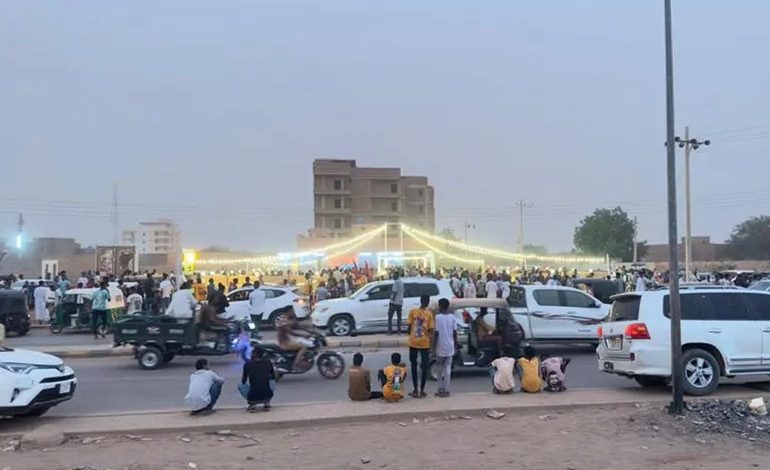
As the heart of Sudan collapses, other cities on its periphery are rising, redrawing the geographical map of economic and urban influence. Khartoum—the capital that once symbolized power and decision-making—is now suffering a devastating decline due to a war that erupted more than two years ago, leaving behind a vacuum in population and institutions. Meanwhile, cities like Port Sudan, Atbara, Gedaref, Shendi, and Al-Dabba are emerging as alternative hubs for the state, economy, and society.
This report highlights the transformation of these cities amid the accelerating collapse of the capital and explores how the margins are becoming temporary—and possibly permanent—centers of gravity.
Port Sudan: The Temporary Capital
Port Sudan, known as the “Pearl of the East,” is located on the western coast of the Red Sea and has undergone profound changes since the war broke out in Khartoum. The city has become an alternative administrative center for the government and a haven for the displaced and those fleeing conflict zones, as well as a transit point for sea and air travelers.
It has also attracted investors and businesspeople who have relocated their operations to the city, which now hosts international and humanitarian organizations and foreign embassies.
Port Sudan International Airport has become the country’s sole air gateway to the outside world, significantly boosting its strategic importance. Likewise, Sudan’s only seaport—established in the early 20th century—has gained increasing economic relevance in the absence of the capital, becoming a vital pillar of the national economy.
Amid this boom, the city’s real estate sector has experienced a sharp surge in prices. Rental costs have doubled, putting housing out of reach for lower-income groups and widening the economic gap between newcomers and the original residents.
Atbara, Shendi, and Gedaref: Industrial, Agricultural, and Urban Growth
In northern Sudan, Atbara—known as the “City of Iron and Fire”—has emerged as one of the fastest-rising cities. Historically a railway hub, Atbara has benefited from its strategic location at the intersection of national roads linking Khartoum, Port Sudan, and Halfa, and from the inflow of capital fleeing conflict zones, especially in the artisanal gold mining sector.
A large number of informal sector workers have relocated to Atbara, swelling its population from about 75,000 to nearly two million, according to former Finance Ministry official Ali Askouri, who spoke to Al Jazeera Net.
“Everywhere in Atbara, you see buildings rising, shopping centers growing, and industrial zones expanding,” Askouri said. This growth has been accompanied by a boom in the gold market, as Nile River State (which includes Atbara) and Red Sea State now produce about 70% of Sudan’s gold. The national gold refinery has been relocated to the region, along with the construction of a dedicated gold market tower.
In eastern Sudan, Gedaref State—a major agricultural production area—has attracted significant capital and large companies. Around 32 factories across various sectors have been launched, helping reduce the food gap and providing wide employment opportunities for youth and skilled workers.
The influx of investors has revitalized the local real estate market, pushing up rents—especially in Gedaref’s central and general markets and commercial areas. This has contributed to improved purchasing power and income levels, despite rising unemployment and inflation across other regions.
In Shendi, located north of Khartoum, dozens of factories relocated from the capital have settled. The local government has designated a full industrial city to accommodate them, according to Shendi’s executive director Khalid Abdel Ghaffar in an interview with Al Jazeera Net.
The new industries in Shendi include food production, exercise books, bottled water, juices, tea, soap, meat, plastics, perfumes, household items, electrical equipment, plumbing materials, vegetable canning, and onion drying.
Shendi has also allocated areas for car dealerships that used to operate in Khartoum, and a new building materials market, while footwear, clothing, and perfume businesses have moved from the famed Saad Gishra market in Bahri to Shendi’s markets. Local data indicates that Shendi’s population has increased more than fivefold, and rents for housing and shops have soared to unprecedented levels.
Al-Dabba: A Land Port
In northern Sudan, the city of Al-Dabba, located on a bend of the Nile River, has transformed into a massive inland port and a vital hub connecting the northern, western, and eastern regions.
It now receives goods from the border triangle with Egypt and Libya, in addition to direct imports from Egypt.
Al-Dabba has become a central distribution point for supplies to Darfur and Kordofan and a destination for displaced people fleeing deteriorating security and services in those regions in search of stability, education, and healthcare for their children.
The city’s population has grown from around 50,000 to over 500,000 in just two years, turning it from a small town into an emerging economic center. Its open access to the desert has made it a key transit point for exports from Kordofan and Darfur either to Port Sudan or northward to the Argeen border crossing with Egypt.
Will the Rise of These Cities Reshape Sudan?
The dramatic transformations underway in cities like Port Sudan, Atbara, Gedaref, Shendi, and Al-Dabba are not merely temporary responses to the ongoing war in Khartoum. They reflect a genuine redistribution of the country’s population and economic weight.
In just two years, these cities have become new centers of growth and development, absorbing waves of displacement and investment that once flowed exclusively into the capital.
But a critical question remains: Will this urban rise lead to a permanent shift in Sudan’s political and economic geography? Or is it a fleeting moment that will fade once the war ends?
What is certain is that the post-Khartoum reality will be unlike the one before—and that the once-marginal cities now hold new keys to the nation’s future.
Source: Al Jazeera