The Future of Stability in Sudan’s Regional Neighborhood Amid War
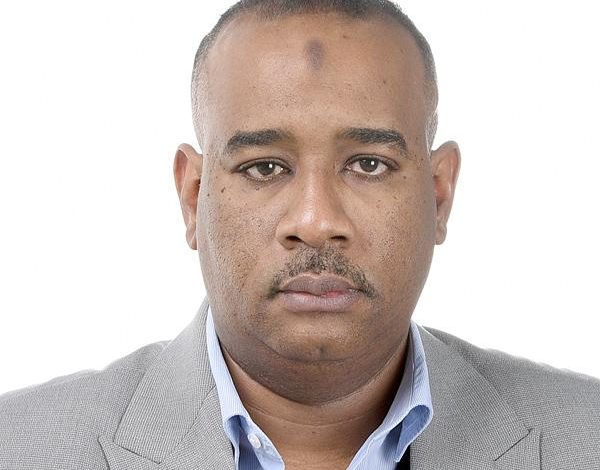
By: Muhannad Awad Mahmoud
Since the outbreak of the current war in Sudan in April 2023 between the Sudanese Armed Forces and the terrorist Rapid Support Forces (RSF)—which rebelled against state authority and attacked civilians, their safety, and their property—it has become clear that this conflict is no longer merely a domestic issue. Instead, it has evolved into a crisis with broad ramifications, threatening the security and stability of Sudan’s entire regional neighborhood.
The war has exposed the fragility of Sudan’s borders and the complex web of interests linking it to neighboring countries—from Chad, Libya, and the Central African Republic to South Sudan, Ethiopia, Eritrea, and Egypt. Egypt, in particular, has consistently stood as a loyal supporter of Sudan’s unity and territorial integrity throughout all stages of its crisis.
As the conflict continues, Sudanese diplomacy has moved responsibly and prudently, presenting facts and documents in regional and international forums to highlight the danger posed by the terrorist militia to Sudan’s security and that of its neighbors. Khartoum has reaffirmed its commitment to good neighborliness and the protection of shared interests.
On July 13, 2023, Egypt hosted the Sudan Neighboring Countries Summit in Cairo, gathering leaders and representatives of states affected by the conflict to discuss its consequences, secure borders, manage refugee flows, and coordinate humanitarian aid. However, more than a year later, current developments confirm that the outcomes of that summit still require reassessment and concrete implementation. Otherwise, chaos could become a new reality that spills beyond Sudan’s borders, threatening the entire region.
Once again, Egypt has proven to be the most politically capable and experienced actor—by virtue of its geographic location and historical ties with Sudan—and is well positioned to lead or sponsor any collective effort to translate vision into unified action to protect regional security.
The war’s impact varies across neighboring countries. Chad, for instance, is among the most affected due to its long, porous eastern border and the intermingling of tribes and local communities between eastern Chad and western Sudan. It has received hundreds of thousands of refugees fleeing conflict zones, placing immense pressure on its already fragile resources and intensifying security and social challenges in its eastern provinces.
The ongoing conflict, if left unresolved, creates openings for cross-border smuggling networks and weapons trafficking, which could turn border regions into lawless zones from which no one would be safe. These are real dangers that should give pause to anyone who views fueling the war as a path to short-term gain—because the fire of chaos does not recognize borders.
South Sudan is suffering from a decline in oil exports, which depend on transit routes through Sudan. Ethiopia is watching developments closely, concerned about the stability of its western border with Sudan. Eritrea, for its part, continues to monitor the situation from a position of good neighborliness and solidarity, having always supported Sudan’s unity and stability, recognizing that Sudan’s security directly underpins its own.
Meanwhile, Libya and the Central African Republic face the risk of their borders—southern Libya and northeastern CAR—being transformed into illegal corridors for looted gold, arms, and outlaw groups used to prolong instability. On the other hand, Egypt has borne a significant humanitarian burden by receiving waves of displaced people, while maintaining a firm position rejecting any externally imposed solutions that compromise Sudan’s unity or seek to legitimize an unlawful militia.
This cannot be mentioned without referencing U.S. President Donald Trump’s remarks during his recent summit with five African leaders on July 9, in which he clearly emphasized the need to achieve peace in Sudan, describing the country as a cornerstone of stability for the entire African continent. His statement reflects the international community’s recognition of Sudan as a key pillar of regional security. However, it also serves as a reminder that real action on the ground lies in the hands of nearby stakeholders—first and foremost Egypt, which is best qualified by virtue of its interests, location, and established ties with Sudan.
Neighboring countries affected by the war must therefore revisit and sincerely implement the outcomes of the Cairo summit to protect their borders and prevent their territories from being exploited to feed the war economy. Sudan, for its part, must continue its diplomatic and political efforts in a coordinated and strategic manner, while national media must work to expose the violations of the terrorist militia and counter disinformation campaigns targeting international public opinion.
At home, internal unity must be preserved behind the Sudanese Armed Forces, the supporting forces, and the mobilized citizens—recognizing that this is a battle for national survival, one that leaves no room for half-measures or foreign-imposed solutions that come at the expense of the state’s unity.
The stability of Sudan’s regional neighborhood cannot be separated from the existence of a strong, unified Sudan. Any delay in ending this rebellion will only lead to more displacement and more cross-border challenges that all parties will ultimately have to bear. Still, hope rests in the awareness of the Sudanese people and their conviction that the blood of martyrs will not be in vain—and that, with the support of sincere allies, Sudan will remain a genuine safeguard for this region, no matter how hard the agents of chaos try to undermine its stability.
Source: Al-Muhaqqiq