Sudanese Banks: Between the Ruins of War and the Horizon of Reform
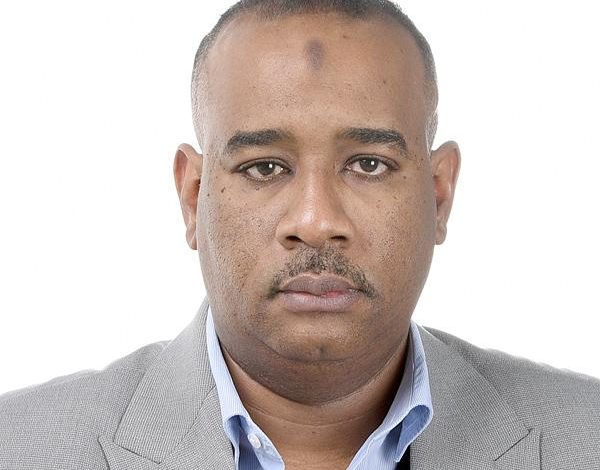
By: Muhannad Awad Mahmoud
Since the outbreak of war in Sudan, the country’s banking sector—especially in Khartoum State—has shifted from being a vital contributor to the economy to a sector teetering on the edge of collapse. This deterioration is a result of the massive destruction caused by the war, whether through direct bombing or widespread looting by mercenaries from the Rapid Support Forces (RSF).
Banks have not only lost their premises and fixed assets, but also much of their market value due to damage to data centers, buildings, equipment, vehicles, and more. Furthermore, most insurance contracts have become useless, either because they have expired or because they do not cover war-related risks. This has deprived both banks and customers of any realistic compensation.
The damage extended beyond fixed assets to the private sector financed by banks. Thousands of properties, factories, and farms—previously considered primary loan guarantees—were destroyed. Rehabilitating these assets would now require billions of Sudanese pounds. Moreover, the value of these guarantees has effectively collapsed due to the severe depreciation of the Sudanese pound. The exchange rate of the dollar has surged from about 580 pounds before the war to around 2,750 pounds today, a depreciation of more than 374%. Some unofficial estimates put annual inflation at over 400%, eroding the purchasing power of both citizens and depositors.
This critical situation has led to an accelerated flight of Sudanese capital—some of which had already left before the war—with the trend increasing due to the uncertainty and loss of legal guarantees.
Additionally, most economic activity before the war was concentrated heavily in Khartoum State, while bank branches in other states were less active in terms of volume and profit, despite the broad branch networks across Sudan. As Khartoum begins to regain a degree of stability, some banks are expected to return to their headquarters. However, concentrating banking activity solely in the capital has proven to be a significant risk, which the war has starkly revealed.
Economists estimate that the combined capital of Sudanese banks before the war ranged between $1.5 billion and $2 billion USD in nominal value at the previous exchange rate. However, due to the extensive destruction of fixed assets and real estate guarantees—combined with the 374% currency devaluation—banks have effectively lost a substantial portion of their capital and purchasing power. Realistic estimates now place the actual capital capacity at just $300–$500 million. This is alarmingly low compared to the size of Sudan’s economy and the requirements of reconstruction, production financing, and exports. Therefore, recapitalizing banks has become an urgent and non-negotiable priority.
In this context, attracting foreign banks that previously operated in Sudan—such as QNB (Qatar National Bank), Byblos Bank, the National Bank of Egypt, and Al Salam Bank—is not just a strategic option but a national necessity. Their re-entry would inject new capital and advanced operational expertise into the banking system, restore confidence, attract remittances from Sudanese expatriates, and support major development projects needed in the upcoming reconstruction phase.
From a technical perspective, merging small and struggling banks is a globally proven strategy to overcome major financial crises. Mergers improve capital strength, reduce operational costs, and enhance risk management efficiency—a solution backed by data and global precedents. In the United States, for instance, a series of massive mergers saved the banking sector during the 2008 global financial crisis—such as JPMorgan Chase’s acquisition of Bear Stearns and Washington Mutual, Bank of America’s acquisition of Merrill Lynch, and Wells Fargo’s takeover of Wachovia. In Malaysia, over 50 banks and financial firms were merged after the Asian financial crisis in the late 1990s into strong entities like Maybank and CIMB Group. In Rwanda, which emerged from one of Africa’s deadliest civil wars, the government supported mergers to strengthen the banking sector—Bank of Kigali absorbed smaller failing institutions and helped finance the reconstruction of productive sectors.
In Greece, after the Eurozone crisis, banks like Alpha Bank and Emporiki Bank merged, Piraeus Bank acquired ATEbank’s assets and smaller institutions, and the National Bank of Greece consolidated several subsidiaries to bolster capitalization. In Germany, Commerzbank acquired Dresdner Bank to form a more resilient entity, while in Spain, traditional savings banks (Cajas) were merged into larger institutions like Bankia and CaixaBank—protecting liquidity and depositor trust.
These models demonstrate that mergers are not just emergency fixes but sound economic policies—provided there is a minimum capital threshold, legal safeguards for depositors’ funds, and transparency in valuation.
However, mergers alone are insufficient. Sudan’s economy urgently needs to redirect financing toward real productive activities—such as agriculture, industry, and mining—that generate added value, create sustainable jobs, and reduce reliance on foreign currency. Export financing must also be supported as a core mechanism to ensure foreign currency inflows and relieve pressure on the exchange rate. Purely consumer-driven trade financing—especially for non-essential imports—drains resources without building a production base.
This approach is supported by economic literature, endogenous growth theories, and the experiences of post-conflict nations like Rwanda and Angola. These countries restructured their banking systems to focus lending on production and exports rather than consumer trade. As a result, they successfully reactivated real economic sectors, reduced unemployment, achieved relative currency stability, and rebuilt trust in their financial systems—thereby attracting foreign investment and accelerating reconstruction at a much faster pace than countries that remained dependent on short-term commercial financing.
In conclusion, reforming the Sudanese banking system requires a comprehensive plan: setting a clear minimum capital threshold, encouraging mergers of troubled institutions, rebuilding legal guarantees, incentivizing financing for productive sectors and exports, and restoring trust by attracting foreign banks.
Saving what remains of Sudanese wealth and preserving what’s left of public confidence demands genuine will and bold decisions—grounded in scientific evidence and the lessons of nations before us. Otherwise, the bleeding will continue, and the price will only be higher for all of us in the future.