Why Has the Formation of Sudan’s “Government of Hope” Been Delayed?
Sudan Events – Agencies
More than a month has passed since Sudanese politician and academic Kamil Idris was appointed Prime Minister, raising public hopes that he could fill the executive vacuum that has plagued state institutions for over two years. However, the delay in announcing the full formation of the government is raising increasing questions about its ability to function amid complex political and security conditions.
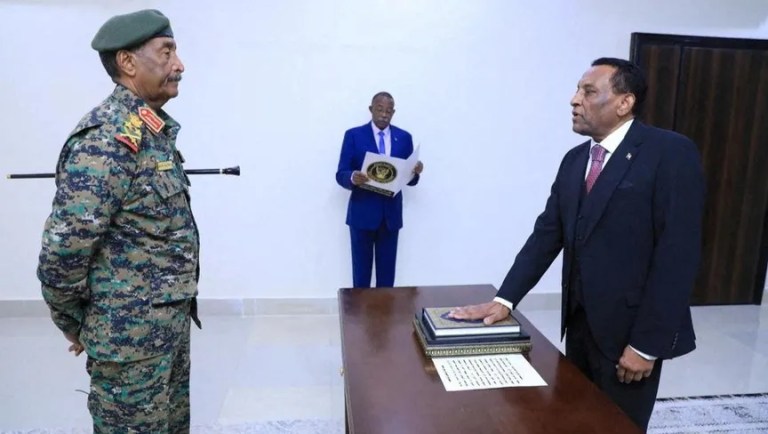
Idris took the constitutional oath on May 31 before the head of the Transitional Sovereign Council, Abdel Fattah al-Burhan, becoming the first civilian Prime Minister to be granted “full powers” since the military measures of October 2021, which ousted the previous civilian government led by Abdalla Hamdok.
According to the announcement, Idris’s cabinet will consist of 22 ministries and has been dubbed the “Government of Hope,” as it is expected to comprise non-partisan national technocrats representing the voice of the “silent majority.”
However, by mid-July, only 15 ministers had been announced in a staggered appointment process. It began with the Ministers of Interior and Defense, followed by Health, Agriculture, and Higher Education, and continued in two more rounds that included Finance, Justice, Federal Governance, Trade, Religious Affairs, then Media, Animal Resources, Minerals, Social Welfare, and Infrastructure.
A Delay That Dashes Hopes
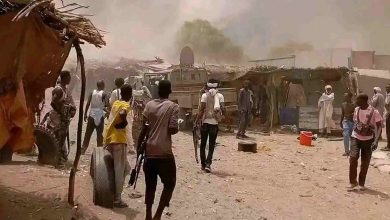
According to a report by Turkey’s Anadolu Agency, despite the symbolic and political significance of Idris’s appointment, the delay in completing the government’s formation has gradually eroded public hope—especially given the ongoing war between the army, led by al-Burhan, and the Rapid Support Forces (RSF), led by Mohamed Hamdan Dagalo (Hemedti), since April 2023.
This war has officially resulted in more than 20,000 deaths and displaced nearly 15 million people internally and externally, according to UN estimates. Meanwhile, a study by U.S. universities suggests the death toll could be close to 130,000.
Political Complexities
Political analyst Othman Fadlallah attributes the delay to internal conflicts between the military and civilian factions supporting the government in Port Sudan, the temporary seat of power.
He told Anadolu that broad consultations between Idris, the Sovereign Council, the army, armed movements, and local community forces are delaying consensus.
Fadlallah added that Idris’s vision of forming a technocratic government free from political and tribal quotas is “unrealistic” given the growing influence of tribal groups and regional militias demanding representation in the government.
He noted that Idris “ran into demands from armed movements,” which, under the Juba Peace Agreement, are entitled to 25% of government positions, further complicating efforts to reach consensus on forming the cabinet.
A Difficult Birth
Political analyst Mohamed Saeed believes this delay is “expected” because “the final decision on appointments does not rest solely with the Prime Minister but involves the military members of the Sovereign Council, which prolongs the negotiation process.”
Saeed noted that this situation reflects a “difficult birth” for a government that may struggle to achieve internal cohesion and harmony.
He argued that Idris “will not have independent decision-making authority but will head an executive government that carries out the directives of the Sovereign Council,” which limits the effectiveness of his role, despite official statements that he has been granted full powers.
Since the ouster of President Omar al-Bashir in April 2019, the country has not seen true political stability. A transitional authority was formed then, based on a “constitutional document” outlining a civilian-military partnership, but it was short-lived and ended with al-Burhan’s coup in October 2021.
Since then, all regional and international efforts to restore civilian rule or end the ongoing war have stalled. Despite the formation of Idris’s government, divisions and on-the-ground challenges—especially in light of the war—continue to threaten any attempts at restoring stability.
Source: Anadolu Agency