Can Recent U.S. Diplomatic Efforts Open the Door to Ending the War in Sudan?
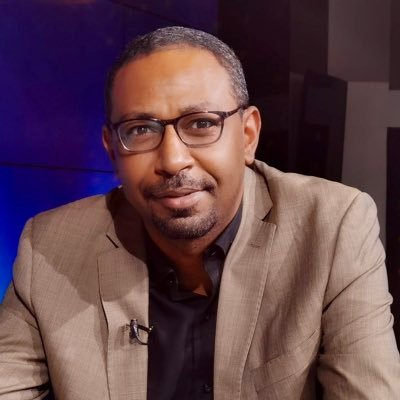
By Amjad Farid Al-Tayeb
Introduction
The armed conflict in Sudan erupted on April 15, 2023, triggering a catastrophic humanitarian crisis that displaced more than 13 million people internally, forced 4.1 million to flee as refugees, and claimed the lives of at least 61,000 people in Khartoum alone. The roots of the conflict lie in a failed coup attempt led by the Rapid Support Forces (RSF) under the command of Mohamed Hamdan Dagalo (Hemedti). The war has been prolonged by foreign interventions—particularly from the United Arab Emirates (UAE)—and further complicated by a “cognitive maze” of media disinformation that obscures the conflict’s origins.
The complicity of the “Taqaddum” coalition (later rebranded as “Samood”) led by former Prime Minister Abdalla Hamdok with the RSF has also deepened the crisis. The coalition provided civilian cover for the RSF’s ambitions under the guise of peace and civilian transition. However, recent U.S. diplomatic movements—indicated by Secretary of State Marco Rubio, U.S. Africa advisor Mossad Boulos, and President Trump—offer some hope for a resolution. Their success, however, depends on addressing the root causes of the war, overcoming past mediation failures, dismantling the disinformation maze, and resisting efforts to legitimize the RSF’s presence.
Recent U.S. Diplomatic Moves: A New Approach?
On June 27, 2025, during the U.S.- and Qatar-brokered peace agreement signing between Congo and Rwanda in Washington, Secretary Rubio announced U.S. readiness to address the Sudanese crisis. This followed a meeting on June 3, 2025, between Deputy Secretary of State Christopher Landau, Africa advisor Mossad Boulos, and the ambassadors of Saudi Arabia, Egypt, and the UAE.
On July 2, 2025, Boulos revealed plans for a ministerial meeting in Washington with the foreign ministers of a new Quartet (U.S., Saudi Arabia, Egypt, and UAE), notably excluding the United Kingdom, which was part of the previous quartet. President Trump’s later statements reaffirming commitment to peace in Sudan and Libya signal seriousness.
However, the proposed meeting must include effective Sudanese participation to avoid repeating the “Munich Agreement syndrome”—the exclusionary diplomacy model of “about us, without us” that has undermined previous efforts. The success of these initiatives will depend on learning from and correcting past mistakes.
Origins of the Current War in Sudan
The war began on April 15, 2023, when the RSF—originally formed by former President Omar al-Bashir in 2013 to rebrand the notorious Janjaweed militias—attempted a coup to seize power. The coup aimed to avoid RSF integration into the Sudanese Armed Forces (SAF), as demanded by the 2019 revolution.
The RSF sought to exploit post-2021 coup negotiations (the Framework Agreement talks) to entrench its autonomy and indefinitely delay integration, preserving its predatory economic structure.
The RSF’s attempted coup began on April 13, 2023, by besieging the Merowe Air Base to neutralize SAF air capabilities, followed by coordinated attacks on April 15 targeting key sites in Khartoum: the Presidential Palace, Khartoum International Airport, and the state broadcaster, where RSF advisor Youssef Ezzat was filmed preparing a coup announcement. Recorded footage confirmed the RSF’s intent to seize the government.
When the coup failed, the RSF escalated to full-scale war, causing a humanitarian catastrophe. The conflict displaced over 15 million people and resulted in unprecedented atrocities, including the deaths of over 61,000 civilians in Khartoum and the massacre of at least 15,000 Masalit people in West Darfur, which the U.S. officially declared a genocide in January 2025.
Previous Mediation Efforts and Their Failures
Several mediation efforts failed to halt Sudan’s war. The Jeddah Platform, launched by the U.S. and Saudi Arabia in May 2023, produced a civilian protection agreement by June, but the RSF ignored its terms, continuing its occupation of civilian facilities, violating its core principles. This reinforced Sudanese government skepticism toward similar negotiations, such as the ALPS coalition summit in Switzerland (August 2024).
Other attempts to curb UAE support for the RSF also failed, including:
1. Ethiopian Mediation (July 2024): Prime Minister Abiy Ahmed facilitated a call between General Abdel Fattah al-Burhan and UAE President Mohammed bin Zayed. The UAE publicized the call as a Sudanese concession, sabotaging the effort.
2. Turkish Mediation (December 2024): President Erdoğan attempted to restrain UAE support for the RSF but failed due to UAE demands for political and economic concessions.
3. Egyptian Mediation (June 2025): Egypt’s proposed meeting in Sharm El-Sheikh collapsed after the UAE conditioned participation on reinstating the Abu Amama Port deal, which had been canceled following revelations of UAE arms shipments to the RSF via Chad and Libya.
These repeated failures underscore the UAE’s lack of commitment to a negotiated solution and the absence of a mediator with sufficient leverage to compel its compliance. A January 2024 UN Panel of Experts report (S/2024/65) confirmed credible evidence of UAE military support to the RSF. U.S. Congressional members identified this support as a key factor in the war’s prolongation. A U.S. administration briefing to Congress in January 2025 confirmed continued UAE support, despite previous pledges to halt it.
The Cognitive Maze: Disinformation Obscuring the Conflict
The “cognitive maze” refers to a coordinated disinformation campaign aimed at obscuring the nature of the Sudanese war, its main actors, and its structural dynamics. Led by pro-RSF and UAE networks and amplified by complicit local, regional, and international actors and media, this campaign deliberately constructs alternative narratives. Its goal is to obscure the RSF’s failed April 2023 coup attempt—the fundamental trigger of the conflict—and reframe the war through misleading rhetoric that serves specific geopolitical agendas, hindering mediation and accountability efforts.
Key elements of this cognitive maze include:
1. Distortion of Conflict Framing: Figures like Abdalla Hamdok and the Taqaddum/Samood coalition present the conflict as a struggle against an alleged return of “Islamist” elements tied to the former Bashir regime. They falsely associate the SAF with groups like Hamas, al-Qaeda, ISIS, and even Iran—claims with no credible basis. A May 2024 article in The Jerusalem Post, backed by UAE interests, advanced this narrative to sway Western perception and bolster RSF-aligned blocs. Invoking Islamism, Hamdok and others justified strategic alignment with the UAE and implicit tolerance of the RSF’s political role—despite its atrocity record—thereby undermining the credibility of genuine civilian democratic forces.
2. Historical Rewriting: The RSF’s attempted coup—beginning with the siege of Merowe base on April 13 and escalated on April 15—has been reframed as a legitimate uprising against entrenched structural inequality and a continuation of historical marginalization struggles. This narrative deliberately obscures the RSF’s genocidal roots and governance failures in areas it controls, marked by chaos, looting, and organized crime.
3. False Equivalence: Presenting the SAF and RSF as morally or politically equivalent is a dangerous false parity. While both sides have committed violations, civilians overwhelmingly flee RSF-held areas for SAF territory. Equating a flawed national army with a paramilitary group born of genocide and now functioning as a mercenary force erases essential distinctions. Independent reports show that 77% of documented abuses are by the RSF, compared to under 15% by the SAF. Furthermore, the SAF—despite challenges—remains embedded in a state framework that provides public services and relative stability.
4. Weaponizing Peace Rhetoric: The RSF strategically uses peace discourse to demand political concessions while ignoring its genocidal conduct and war-driven economy. By cloaking violent goals in peace language, it manipulates international actors for political gain without accountability. Linked to this is the manipulation of humanitarian narratives: the RSF exploits humanitarian concerns to obscure its deliberate targeting of civilians and uses aid access as a control mechanism. This distorts global attention and politicizes aid, while RSF atrocities are falsely blamed on the SAF. Some pro-RSF civilian coalitions—like the Civil Front, Taqaddum’s predecessor—have repeated these distortions, later issuing public retractions when exposed.
5. Eroding Sudanese Agency: A critical aspect of this disinformation campaign is the systemic erasure of genuine Sudanese agency. By centering external actors and geopolitical agendas, it marginalizes local political resistance, popular suffering, and homegrown visions for Sudan’s future.