National Agenda
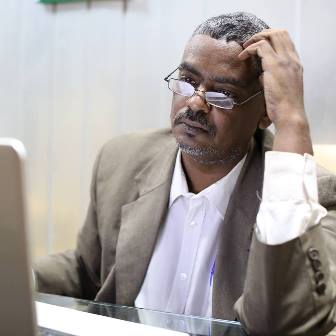
By Dr. Osama Al-Aidaroos
The struggle for power always brings out the worst in us as Sudanese, especially in the current state of intense polarization that has led us into war and death, opening the door wide to foreign interference in our internal affairs. In truth, we have reached a point where politics itself has died—a condition in which events now lead us rather than the other way around. We’ve become passive reactors, incapable of producing solutions or initiatives. I believe our current state is far worse than the “destructive dualities” once described by my mentor, Professor Al-Tijani Abdel Qadir, which have plagued our country since independence. Today, the situation is so complex that each camp turns inward, silencing dissent and labeling even the slightest logical discussion as betrayal.
Polarization has reached a point where there’s no longer a distinction between legal and political paths, and opponents have appointed themselves as judges, attempting to criminalize and completely eliminate each other. This rhetoric has escalated to the point where political costs are extremely high, and platforms such as television interviews, workshops, and even international conferences—like the Cairo Conference for Sudanese-Sudanese Dialogue—have been reduced to heated debates where each side merely tries to prove it holds the truth and is more patriotic than its rivals.
The reality is that none of the proposals on the table truly offer solutions. They are all about positioning and slogan-raising. To this day, no political faction in Sudan has presented a comprehensive vision to stop and end the war. Each group has merely expressed its stance on the conflict, raised a single slogan, entrenched itself behind it, and focused all its energy on portraying the opposing side as the source of all evil.
All Sudanese are experiencing deep sorrow and fear under the weight of the current war—sorrow over the loss of lives, destruction of property, and displacement of families; and fear of the uncertain future that awaits us after the war. This fear may be compounded by the toxic environment of hate speech, societal fragmentation, and nihilistic political alignment. In such an atmosphere, trust in everything vanishes, and the war shifts from the battlefield into the heart of society—fracturing our traditionally tolerant psychological fabric and threatening to dissolve the very national bond that unites us. This, ultimately, could mean the total collapse of the material, social, and psychological foundations on which the nation stands. To avoid such a fate, we must honestly and precisely identify our fears—whether real or imagined—and work to eliminate them so that our social and political lives can return to a path of national recovery and peaceful competition.
The call for political dialogue here is a call to revive politics from its current death, not merely a plea for politicians to sit around a table with forced smiles and re-divide the country’s power and wealth. It is a call to dialogue over the national principles that place the homeland above all and shut the door to any form of foreign interference in Sudanese affairs. Only then can we address the foundations for transitioning from war to peace and stability, and from zero-sum power struggles to a consensus that allows the creation of a free and competitive political environment—one free from the control of money, power, influence, or weapons.
The desired consensus is a condition in which all political factions can exercise their rights without needing to bear arms. It is an environment where everyone is given equal opportunity to access power, free from guardianship by weapons, money, or influence. It ensures that all groups will be represented in future governance in a way that protects and defends their interests. At its core, this would be a reestablishment of the rules of political engagement in Sudan—a foundation that allows everyone to express their demands and protect their interests without fear of marginalization, domination, or control.