An Eye on Kadugli: Siege, Hunger, Women’s Protests, and Arrests
By: Julius Al-Jaili & Adam Ibrahim
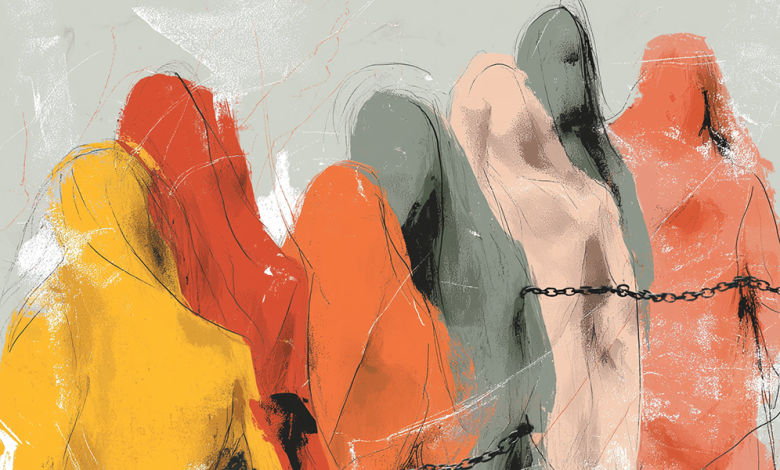
On Sunday, the city of Kadugli in South Kordofan witnessed a protest organized by a group of women near the local branch of the Central Bank of Sudan. The women demanded that the state governor release humanitarian aid being held in the warehouses of the 14th Infantry Division and open the storage facilities for basic commodities. They called on the government to urgently intervene to address the worsening economic crisis in the city, raising slogans like “Kadugli is Dying” and “No to Economic War.” The authorities, however, responded violently, deploying police forces to disperse the protest, resulting in the arrest of 15 participating women.
Before the crisis worsened, the state government had received humanitarian aid, including relief shipments from the World Food Programme over the past two years, which were stored in the warehouses of the 14th Infantry Division, according to local sources speaking to Atar. Citizens believe this decision deprived them of their basic rights to food and medicine during extremely difficult conditions, when they are in desperate need of assistance.
On Monday, July 21, chaos erupted in the city’s central market when a member of the “Kafi Tayyar” militia, which operates under army command, fired shots into the air and urged citizens to raid shops and take what they needed, threatening anyone who opposed them. The chaos lasted briefly before military forces were sent in to contain the situation.
The events didn’t end there. According to eyewitnesses, “Kafi Tayyar” forces—using two technicals mounted with Dushka machine guns—launched a raid on the market’s storage areas, searching for hoarded goods, firing heavily into the air to intimidate merchants and civilians. Citizens then broke into shops and warehouses. The raid clashed with another force known as “Al-Matowa,” which had recently joined the army. A violent armed clash erupted between the two sides, resulting in more than ten civilians killed or injured, in addition to looting and destruction of corn storage, hardware shops, and large parts of the market.
Eyewitness Omar Kajo told Atar that the market raid took place without the knowledge of the 14th Infantry Division and that a military police unit arrived but withdrew immediately upon realizing the attackers were affiliated with “Kafi Tayyar.”
This followed a meeting held by Kafi Tayyar at his residence, in which he urged merchants to open their storage facilities and accused them of rebellion against the state for hoarding goods.
Two days after the women’s protest, Kadugli residents held a mass demonstration demanding the release of the detained women. The government’s response was even more violent: six people were killed, including a child named Musab Abdul Halim Lado, who was shot dead. At least ten others were injured, and numerous protesters were arrested—including women, children, and school students. Among them was a young woman who declared, “The aid belongs to the people, not the army.”
In a statement, State Governor Mohamed Ibrahim Abdel Karim claimed that the chaos was part of a conspiracy orchestrated by “sleeper cells” of opponents and undisciplined citizens who do not want stability in the region.
Since the outbreak of war on April 15, Kadugli has remained under the control of the Sudanese Armed Forces, but the city has also been under a dual siege by the Rapid Support Forces (RSF) and the Sudan People’s Liberation Movement-North (SPLM-N) led by Abdelaziz Al-Hilu. This siege has isolated the city from the rest of the country, worsening the living, health, and security conditions. The city is experiencing a growing humanitarian crisis amid severe shortages of food and medicine, and the ongoing collapse of essential services. Vulnerable groups—especially women, children, and the sick—are suffering due to the RSF’s blockade of the national road in the town of Al-Debeibat, which connects El-Obeid and Dilling. Additionally, frequent clashes between the SPLM and the army at the Karqal camp, located between Dilling and Kadugli, have halted the alternate transport route from Al-Fula to Al-Kharsana.
Besides the government, some merchants have worsened the crisis by hoarding essential goods and raising prices to exploit the shortages for profit. The Um Adara Market in Al-Debeibat and the Al-Naeem Market had been the only commercial outlets supplying Kadugli with food, medicine, and fuel during the siege. However, after RSF forces took control of Al-Debeibat, the national road between it and Kadugli was cut off, leaving the city in suffocating isolation, threatened by famine and disease.
A medical source at Kadugli Hospital, speaking to Atar anonymously, said that women are the most affected by war and famine in the region. He explained that the city completely lacks women’s healthcare essentials, particularly during pregnancy and childbirth: “There are no sanitary pads, no vitamins needed during pregnancy, exposing women to severe complications.”
The same source described deteriorating food conditions, with people relying only on sorghum and beans. “Vegetables and fruits have completely disappeared from Kadugli,” he said, leading to an increase in low birth weight cases—many babies are born under 2.5 kg—and rising child mortality rates due to malnutrition at the city’s pediatric hospital.
A hospital staff member spoke about the heavy psychological and social burden placed on women, especially as many husbands have joined the army, RSF, or the SPLM. “Women are now responsible for everything: living, feeding, and caregiving.”
Speaking to Atar, one of the protest leaders, who preferred to remain anonymous, said the campaign’s main goal was to claim their rightful access to food and medicine—not to incite chaos, as the state government claims. She added that they had had enough of war, which has cost them dearly over the past two years. Yet, with conditions worsening by the day, they could no longer remain silent while their children die of hunger and disease. Atar has learned that the arrested women have been released, though the fate of other detainees remains unknown.
In Kadugli, sorghum is no longer just food—it has become a symbol of crushing crisis and daily humiliation. While the price of a single “maloa” (local unit of measure) has exceeded 30,000 Sudanese pounds, many residents avoid buying it at such outrageous prices, instead lining up in long queues for subsidized sorghum offered by the security forces at 15,000 pounds, which rose to 20,000 pounds by July 18.
People wait more than five hours under the blazing sun—faces weary, bodies frail from hunger and exhaustion—among them women carrying children, elderly men leaning on canes, and anxious youth.
On July 17, a 16-year-old student named Emtithal Othman was among them. She attempted to document the scene with her phone but was violently arrested in front of the gathered crowd by three security personnel.
Speaking to Atar, “S.A.,” an activist from the Kadugli Emergency Room, said that insecurity hinders their ability to deliver aid to the wounded due to a lack of medicine. Security forces are also conducting widespread arrests, especially targeting youth and activists, with allegations of spying and collaboration with RSF and SPLM-N, under heavy surveillance.
Due to the siege, the interruption of goods from Dilling and El-Obeid, and the closure of access from Al-Naeem Market, residents now rely on smuggled goods brought in by traders from the Hamar tribe areas in North and West Kordofan—up to 60 tuk-tuk vehicles arrive monthly.
Even though the national road to Dilling was recaptured by the army on June 28, Dilling itself is facing a shortage of essential goods due to the RSF’s control over El-Obeid. Matters worsened after the government suspended the operations of 30 national NGOs and three international organizations, including the Norwegian Refugee Council, leaving a massive gap in support and essential services for those affected.
Meanwhile, traders in Kadugli exploit the situation to extract cash from desperate citizens—offering up to 30% discounting fees and forcing people to buy goods for just a quarter of their money transfer’s value.
Quoted from Atar