French Writer: What Is Happening in Sudan Is the Fiercest and Most Forgotten War in the World

Sudan Events – Agencies
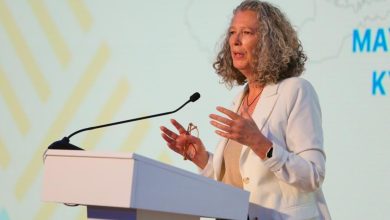
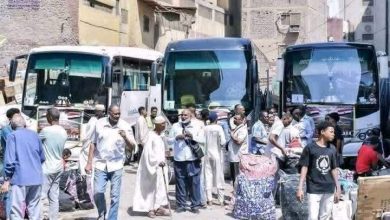
In an interview on BFMTV’s BFM Story following his return from Sudan, French writer and philosopher Bernard-Henri Lévy described the ongoing conflict as “the fiercest and most forgotten war in the world today.” He painted a grim picture of a country torn apart by atrocities and mass displacement, noting that 12 million people have been uprooted out of a population of 51 million—figures he said reveal the scale of a tragedy that has unfolded “entirely under the radar of global media.”
Lévy rejected the narrative that some observers present—out of ignorance or malice—as a simplistic story of “two generals” or a tribal or ethnic feud. “This is a genuine political schism between two opposing visions for the country’s future,” he said. One of those visions, he explained, is led by Hemedti through the Rapid Support Forces (RSF), which he described as “a terrorist militia moving like columns of death,” knowing only “arson, looting, killing, and rape.” He added, “I collected testimonies from women that haunt you day and night,” stressing that these acts constitute terrorism in the classical sense, akin to ISIS or al-Qaeda.
Lévy directly linked these crimes to foreign backing, asserting that the United Arab Emirates is the primary supporter of the militia—a stance he called “a grave political and moral mistake.” He conveyed a clear message from General Abdel Fattah al-Burhan to Abu Dhabi: the Emiratis, who have often stood on the right side of history, are now making a major error by supporting this militia, but one that “can still be corrected” if they choose to reverse course and end a policy that threatens the entire country.
He also relayed Burhan’s demand to end what he described as “the current state of confusion in international discourse that equates the executioner with the victim,” insisting that no false parity should be created between the two sides. Lévy fully endorsed this position, explaining that the reality is unmistakable: on one side is a legitimate Sudanese government, led by a Sovereignty Council and a civilian prime minister—flawed though it may be—and on the other is a terrorist militia committing crimes against civilians and humanity. Continuing to treat them as equals, he said, is “a betrayal of reality” and grants the militia cover to persist in its atrocities.
Lévy described the conflict as not only a humanitarian disaster but also a political project to destroy Sudan and transform it into “a smuggling state” auctioned off to the highest bidder, at the expense of a civilization as ancient as that of the Pharaohs. He noted that Burhan, a signatory to the Abraham Accords, is “offering much” to the international community, and argued that halting external support—particularly from the UAE—could alter the course of the war and give Sudan a chance to survive.
He concluded his remarks as footage of Khartoum, El Obeid, and El Fasher appeared on screen: “No one knows. No one cares. And that, to me, is the greatest injustice in the world.”
Bernard-Henri Lévy is a French philosopher, writer, and filmmaker, born on November 5, 1948, in Beni Saf, Algeria. He has been a leading intellectual and political voice in France since the 1970s, emerging as part of the “New Philosophers” who critiqued Marxism and totalitarian ideologies. Lévy is known for his human rights advocacy and activism in conflict zones such as Bosnia, Libya, and Sudan. He is also a prominent supporter of Israel, framing his stance as a defense of democracy and a rejection of antisemitism, though he has at times criticized certain Israeli policies, particularly regarding occupation and the treatment of Palestinians, insisting that Israel’s survival depends on upholding moral and democratic values.