The Problematic Nature of Democracy in Sudan
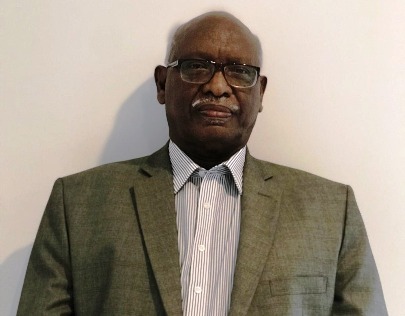
By Zain Al-Abidin Saleh Abdelrahman
The variations in democratic political systems differ from one country to another due to differences in cultures, customs, traditions, and beliefs. Each country has its own unique democratic experience. In Sudan, there has been a focus—historically and still today—on the Westminster model of democracy, primarily because it was introduced by the British. The modern education system established by the colonial power was limited and shaped to serve the needs of the colonizer. The elite who graduated from Gordon Memorial College were directed along a single path, dictated by the foreign language they learned—English—which enabled them to read British newspapers and books. This created a narrow scope of political understanding and awareness.
Today, Sudanese people are spread across various parts of the world, especially in democratic Western countries, where they’ve come to understand that democracy means the peaceful transfer of power through elections held at fixed and known intervals that cannot be bypassed. It is the people who bear the responsibility of choosing between candidates, whether partisan or independent. This diaspora exposure has allowed Sudanese people to engage with diverse interpretations and applications of democracy, which can take various forms—presidential, parliamentary, or mixed systems.
However, there are fundamental societal norms that cannot be overlooked—related to beliefs, customs, and traditions—which distinguish one society from another. One cannot impose the beliefs of one people onto another in the name of democracy. This is a conceptual deficiency, pushed by alienated, inauthentic groups that attempt to impose borrowed ideologies under the guise of borrowed terms. These groups create significant obstacles to democratic transformation in the country.
Sudan is a society with many complex issues that require logical, dialogue-based solutions, far from terms that incite violence, such as “revolutionary” or “exclusion,” or from attempts to provoke racial, ethnic, or regional tensions. These are real problems within society, and it is the responsibility of the state, political parties, and civil society organizations to address them. Unfortunately, many elites exploit these problems for personal or clique-based gains, using them as tools to advance undemocratic interests and agendas under the cover of lofty slogans and principles.
Another major issue is that some elites who preach democracy and consider themselves more enlightened than others believe they alone should define the contours of democracy. They see themselves as the sole advocates of civil governance and try to impose their conditions on the political process. Yet they operate with the same authoritarian mindset left behind by previous regimes. You cannot reach democracy using authoritarian culture. These individuals are primarily concerned with securing narrow interests and gaining access to power, playing a negative role in the democratic transition, which requires a new awareness and a fresh reading of the social reality, and how to address its problems.
Change is not merely about borrowed terms and decorative political speech—it requires practical ideas and actions that elevate the value of political dialogue, especially among different intellectual currents in society. It also requires a culture of tolerance and cooperation among various components, as these are the tools that nurture a democratic culture within society.
The democratic process must begin at the grassroots level and move upward, through educating citizens about their rights and responsibilities, and encouraging active participation in neighborhood committees, unions, sports and cultural clubs, and peaceful transitions through elections in all these structures. It’s also vital to prevent the same individuals from being continuously elected, which can lead to monopolization. Leadership change attracts wider participation and establishes principles of integrity and transparency. Leaders who remain in their positions too long are 80% more likely to fall into corruption and a lack of transparency. Change brings in new individuals with creative abilities, contributing to productive work and societal development as a step toward building all kinds of development in the country—especially human development, which is the foundation of national renaissance.
Confusing public awareness by using terms outside their proper context disrupts the political process. The October Revolution, the April Uprising, and the December Revolution were all peaceful popular movements that overthrew one-party authoritarian regimes—except for October, which brought down a purely military regime. They were peaceful because they relied on political strikes and street protests raising slogans of change. The peaceful nature of the December revolution, in particular, gained global respect. It had nothing to do with the term “revolution” or “revolutionary,” as those are terms that imply violence. The Mahdist revolution, for example, was armed, and so was the French and American revolution—those were violent by nature. Any change accompanied by violence is a revolutionary change. Peaceful changes, on the other hand, are what lay the groundwork for democracy.
Those who insist on using revolutionary rhetoric have no actual connection to democratic principles. They must present intellectual arguments explaining how revolution and democracy intersect—and provide historical examples from other peoples’ struggles.
For democracy to take root in society, it must emerge through open dialogues between diverse intellectual currents, not through the imposition of conditions on participants or on the dialogue itself. Democracy is formed through shared convictions that lead to the constitution, which must be respected by all, along with laws that are internalized as social behavior.
Seeking foreign powers to engineer the political process and elevate some to power has nothing to do with democracy—it’s about power monopolization, which contradicts democratic principles. Democracy means majority rule with full freedom for the minority to convince the majority in order to change the political equation in future elections.
Raising slogans without a knowledge base or understanding of their intent is a real obstacle to democratic transition. Those with alternative visions should present them with intellectual methodology, without relying on empty slogans.
May God grant us insight.