UNICEF: Funding Cuts Push Sudan’s Children to the Brink of Irreversible Harm
Sudan Events – Agencies
The United Nations Children’s Fund (UNICEF) warned on Tuesday that funding cuts are pushing an entire generation of children in Sudan “to the brink of irreversible harm,” as support dwindles and malnutrition persists across the country.
The United Nations High Commissioner for Refugees (UNHCR) and other UN agencies are facing one of the worst funding crises in decades, exacerbated by decisions from the United States and other donor countries to reduce foreign aid, according to a Reuters report.
Sheldon Yett, UNICEF Representative in Sudan, speaking via video link from Port Sudan, said:
“Children cannot access clean water, food, or healthcare. Malnutrition is widespread, and many previously healthy children are now just skin and bones.”
In July, the World Food Programme (WFP) declared that several areas south of the Sudanese capital, Khartoum, were at risk of famine. UNICEF confirmed that children are being deprived of life-saving services due to funding cuts, while the scale of needs is immense.
Yett added:
“With the latest funding cuts, several of our partners in Khartoum and other areas have had to scale back their operations… We are operating at full capacity across Sudan, where children are dying of hunger.”
He warned:
“We are on the verge of causing irreversible damage to an entire generation of children in Sudan.”
The United Nations Office for the Coordination of Humanitarian Affairs (OCHA) stated that only 23 percent of the $4.6 billion Sudan Humanitarian Response Plan has been funded.
UNICEF also noted that access to affected areas remains a major challenge. The rainy season has rendered some roads impassable, hampering aid delivery efforts. Other areas, such as El Fasher, remain under siege.
Jens Laerke, OCHA spokesperson, said:
“It has been a year since famine was confirmed in Zamzam camp, and no food has reached that area. El Fasher remains under siege. We need access now.”
Eric Perdison, WFP Regional Director for Eastern and Southern Africa, added:
“Everyone in El Fasher is facing a daily struggle to survive,” noting that “resilience has completely collapsed after more than two years of war. Lives will be lost without immediate and sustained access to basic resources.”
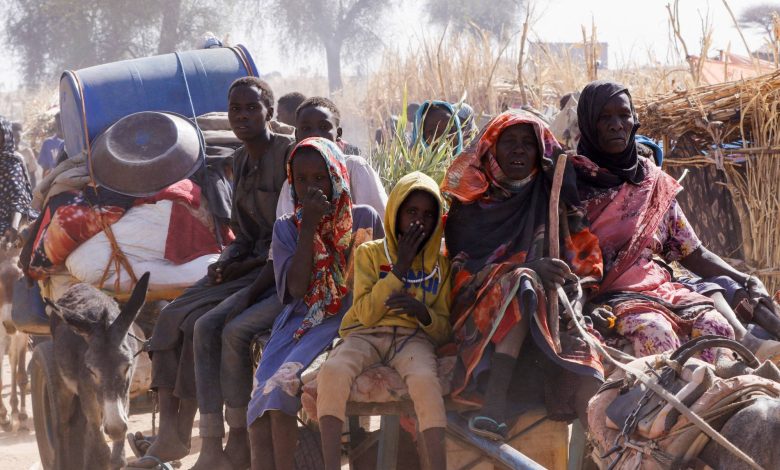
In April, an attack on Zamzam camp forced a large number of civilians fleeing violence to take refuge in El Fasher, the only capital city in the vast Darfur region not under the control of the Rapid Support Forces (RSF).
Prices of basic goods have soared, according to the WFP, which reported that sorghum and wheat—used to make bread and porridge—cost 460 percent more in El Fasher. Markets are nearly empty, and most communal kitchens have shut down.
Some families have no option but to consume animal fodder or waste, while malnutrition has reached alarming levels among children. Around 40 percent of children under five suffer from acute malnutrition, with 11 percent suffering from severe wasting, according to the UN program.
In 2023, famine spread in the “Salam” and “Abu Shouk” camps, as well as several areas in South Sudan.
The war in Sudan, now in its third year, has killed tens of thousands and displaced millions, creating what the UN describes as “the world’s worst humanitarian crisis.”