Washington Returns to Africa Through the Economic Gateway, Under the Banner of Peace
By Abdelmonem Abu Idris Ali
Sudanese journalist specializing in African affairs, author of An Introduction to the Horn of Africa: Tribe and Politics and A Look at Ethiopia After November 2020.
On June 27, in the U.S. capital Washington, a peace agreement was signed between the Democratic Republic of Congo (DRC) and Rwanda to end an armed conflict in eastern Congo, along the border with Rwanda and Uganda.
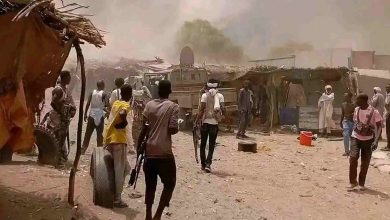
At first glance, the conflict appears to be between the Kinshasa government and the M23 rebels. The agreement calls for an immediate ceasefire between the two sides, the integration of M23 fighters into the Congolese army, the demobilization of those who do not meet military service requirements, and the release of all political detainees and those arrested for their participation in the fighting—provided they do not pose a threat to public security.
That final condition leaves the Kinshasa government room to continue holding some detainees under the pretext of security concerns.
The agreement also grants the eastern region local governance, with residents given a role in decision-making related to the area’s administration.
Uganda Watching Closely
The deal calls for the withdrawal of foreign forces—a term that implicitly covers not only Rwandans, the other signatory party, but potentially others as well. This naturally draws Uganda into the picture, given its geographic proximity and ethnic linkages with both countries.
Although Kampala has issued no official criticism of the agreement, it stands to gain certain benefits from it—chiefly in the security sphere, particularly if the deal curbs cross-border militant activity.
A second potential benefit would come if stability returns to eastern Congo, reducing the refugee flows into Uganda that have been fueled by ongoing violence.
America the Biggest Winner
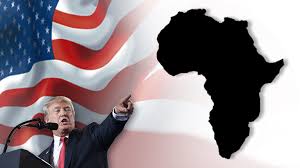
The key question is why Washington has placed eastern Congo at the top of its African agenda—especially given that the Trump administration remained silent for six months on African crises.
What followed the signing provides a clue: a flurry of contracts awarded to U.S. companies for projects in the region, in line with Trump’s policies and the activities of his envoy to Africa, businessman Massad Boulos.
Freeport-McMoRan signed contracts to extract copper and cobalt, while Glencore—a U.S.-Swiss company—inked another mining deal. In the energy sector, which will serve not only eastern Congo but the entire country, contracts went to General Electric and AES Corporation, the latter in partnership with China.
Two other U.S. firms—Bechtel and Fluor Corporation—secured infrastructure contracts. This undermines media claims that the U.S. move is aimed at excluding China entirely. While American companies have taken full control of mining—eastern Congo’s signature economic sector—China remains present in other fields.
Beyond the economic agenda, the U.S. has reinforced its image as the “big brother” safeguarding global peace and security. The Great Lakes region also matters to Washington’s counterterrorism strategy. At the same time, the push helps contain China, which, despite a drop in African investment to $44.2 billion in 2024 from $64.3 billion in 2022, remains the continent’s largest economic partner.
Regional stability would also secure the interests of U.S. allies such as Uganda, Kenya, and, to a lesser extent, Rwanda.
Qatar in the Picture
One striking element was Washington’s decision to let Qatar host the opening round of talks between the Congolese and Rwandan presidents—despite Doha’s geographic distance from the region. The move reflects Qatar’s strong economic ties with both Kigali and Kinshasa, particularly in Rwandan infrastructure.
It also builds on Qatar’s mediation track record in Afghanistan, Palestine, and other conflicts, bolstering its regional and global role as an international peace broker.
Lingering Concerns
Despite White House celebrations, security experts see reasons for caution—recalling the 2013 peace deal that collapsed soon after it was signed. More than a decade later, the same vulnerabilities remain.
Chief among them is the challenge of disarmament in remote areas where gun ownership is deeply entrenched. Small armed groups still hold sway over localized territories.
Eastern Congo has endured over 50 years of conflict, fostering a culture of violence and weakening state institutions. Many communities depend on armed groups for protection. These groups, in turn, profit from artisanal gold mining, as well as forest resources, including timber and bushmeat obtained through unsustainable hunting.
The humanitarian situation is also dire. In addition to war, natural disasters such as landslides and floods have created severe needs.
The ultimate test is whether the agreement can navigate internal and regional obstacles to become a success story for Trump’s economically driven strategy—opening the door to deeper U.S. engagement in Africa—or whether it will fail, prompting Washington to retreat and leaving the continent’s “last frontier” open to other global and regional powers eager to gain a foothold.