A Paid Invasion: Colombian Mercenaries and the UAE’s Map of Aggression in Sudan
Sudan Events – Agencies
Introduction
Since 2023, Sudan—particularly Darfur and the city of El-Fasher—has witnessed dangerous shifts in the nature of its war. New actors have entered the battlefield, most notably Colombian mercenaries recruited through Emirati networks. Their presence signals more than foreign involvement; it marks the transformation of Sudan’s conflict into a proxy war financed and orchestrated from abroad—an outright violation of international law and a direct threat to Sudan’s sovereignty.
Historical Background
In 1971, Khartoum held one of Africa’s earliest public trials of mercenaries, prosecuting German fighter Rolf Steiner.
Since then, international efforts have sought to outlaw mercenarism through the Organization of African Unity’s conventions and the Additional Protocols to the Geneva Conventions (1977), which stripped mercenaries of any legal protection or prisoner-of-war status.
El-Fasher: A Besieged City Facing Foreign Invasion
El-Fasher, the capital of North Darfur, has been under siege for over a year.
First evidence of Colombian mercenaries emerged through battlefield audio recordings in their native Spanish.
This revelation confirmed that Sudan’s war is no longer a purely internal conflict but a hybrid war bankrolled by the UAE and executed by foreign fighters.
Evidence of Colombian Mercenaries
1. Linguistic evidence: recordings featuring distinct Colombian urban accents (Bogotá, Medellín).
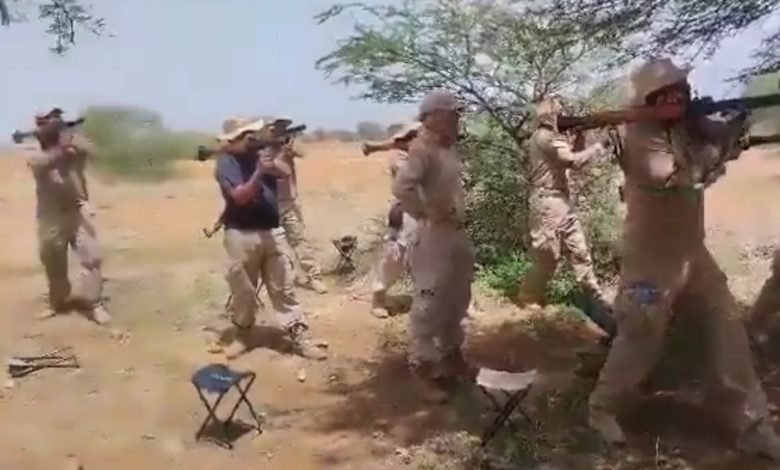
2. Tactical evidence: coordinated maneuvers, professional evacuation drills, and disciplined covering fire.
3. Visual evidence: advanced helmets, body armor, encrypted radios, and a level of military discipline unusual for local militias.
Conclusion: A professional foreign fighting force—dubbed the “Desert Wolves Battalion”—is operating under Emirati funding and directives.
Emirati Recruitment Networks
GSSG (UAE): a security contractor linked to Mohammed bin Zayed, serving as a primary front for mercenary recruitment.
A4SI (Colombia): run by the wife of retired Colonel Álvaro Quijano, the chief architect of recruiting and deploying Colombian soldiers.
Quijano, known as the “Godfather of Mercenaries,” is responsible for transporting recruits to the UAE and deploying them to war zones in Yemen, Libya, and Sudan.
Markets and Methods of Proxy Warfare
Yemen: backing the Southern Transitional Council and creating private security arms.
Libya: funding and arming Haftar, while supplying drone air cover.
Horn of Africa: supporting separatist regions and cultivating ties with Somaliland and Puntland.
Sudan: financing and arming the Rapid Support Forces (RSF), deploying Colombian mercenaries in El-Fasher.
Documented Crimes and Violations
Use of white phosphorus in populated areas (a war crime).
Recruitment and training of child soldiers near Nyala and El-Fasher.
Coercion of mercenaries by confiscating their passports to prevent defection.
Systematic destruction of infrastructure and forced displacement of civilians.
Why Colombia?
Long combat experience against the FARC insurgency.
Lower costs compared to Western mercenaries.
Ease of recruitment and diplomatic deniability.
Result: A Disguised Invasion
Sudan’s conflict can no longer be described as internal—it is a foreign-paid invasion.
El-Fasher has become a laboratory of proxy warfare: Gulf funding, American security expertise, and Latin American manpower.
The strategic aim: to fracture Sudan and reconfigure regional influence in Abu Dhabi’s favor.
Conclusion: A Test of Global Conscience
What is unfolding in Darfur constitutes a full-fledged international crime that cannot be met with silence.
Colombian mercenaries are not mere foot soldiers but instruments of an expansionist Emirati agenda.
The international community must urgently launch investigations and hold war financiers and architects accountable—not just the men on the ground.
Today, Sudan’s plight is both a test of international law’s credibility and of the world’s collective conscience.