The University of Khartoum’s Faculty of Medicine, in collaboration with Japan’s Kumamoto University, announced pioneering research demonstrating the effectiveness of extracts from a wild Sudanese plant root (Abu Al-Qutn Al-Kabira) in combating HIV.
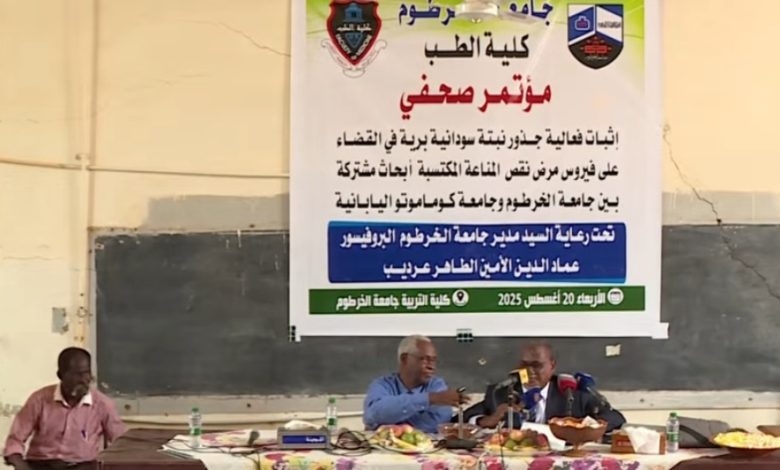
Researchers presented the findings at a press conference on Wednesday at Khartoum University, highlighting the study as a promising step toward a potential treatment for the global disease.
Professor Mustafa Idris, supervising the research, explained that the study was conducted on human cells at Kumamoto University laboratories. The results revealed three major achievements: eliminating active virus within cells, activating dormant virus for treatment susceptibility, and preventing viral penetration into immune cells.
Professor Idris emphasized that while this is an unprecedented scientific breakthrough, the next major challenge is progressing to clinical trials with patient participation, in collaboration with medical sector partners. He also highlighted Sudan’s vast natural resources, home to over 4,000 medicinal plants across diverse environments, and called for increased investment in scientific research to harness these resources for humanity.
The University of Khartoum expressed pride in the achievement and reaffirmed its commitment to supporting scientific research and international partnerships. Representatives from Kumamoto University praised the collaboration, noting the research could open new avenues in combating viral diseases globally.