Night of Flames and the Leader’s Nightmares… The UAE Caught Between Dream and Conspiracy
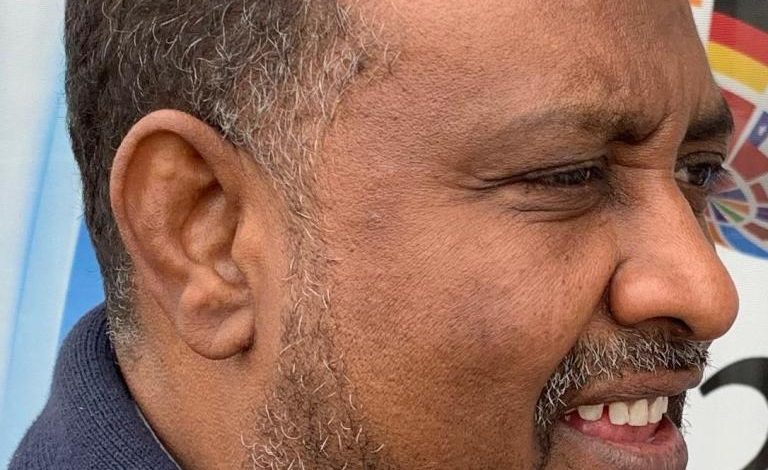
By: Abdelaziz Yaqoub
That night, Dubai was like a shattered mirror, each shard reflecting a different face of terror. It was as if the city were staring at its own reflection in stagnant water, only to find its features grotesquely distorted. The air hung heavy with the stench of burning smoke, and the sky writhed with tongues of flame rising from the city’s heart—visible from the windows of hotels that once sheltered the wealthy, businessmen, and tourists. Sirens alternated with the screams of women, while the tear-streaked faces of children, pressed against car windows stuck in traffic, seemed to accuse corrupt rulers as they searched for a distant shore untouched by fire, a safe road to restore beauty to life.
In a shadowed corner near the public transport station stood a dignified man, like the city’s elder who knew all its secrets. Whispering to a crowd of restless young men around him, his voice was half caution, half disbelief:
“I’ve received confirmed reports… The central emirate, Abu Dhabi, the eastern emirate, the coastal emirate—all are under fire from drone attacks. Ports, airports, military units, water stations, oil refineries… everything is being targeted.”
The news spread like wildfire, igniting hearts before it reached the streets. Panic doubled. Bread lines turned into brawls. Shops were stormed without warning, water trucks looted before they reached their depots, small stores shuttered with trembling locks.
Updates followed like fevered heartbeats—every hour, another explosion at a port or power station. Official broadcasts hinted at “foreign actors,” a “neighboring state,” and “forces seeking to reshape power in the emirate.” Meanwhile, correspondents in the shadows whispered of Sudan as a logistics hub for a murky operation: an eastern ally pushing fighters through intermediaries, a northern wing managing the financing, and a Gulf shadow looming like an angel of death waving from afar.
At sunrise, the ruling family’s urgent communiqué appeared on screen. A stern-faced anchor, his voice quivering, declared:
“Preliminary investigations have proven the involvement of terrorist elements of Sudanese nationality in the attacks targeting our cities, ports, and oil facilities. Several have been captured and will be brought to justice swiftly.”
But the shock came immediately after. A Sudanese anchorwoman appeared, her face polished with a brittle smile, her voice dripping with saccharine flattery. On air, she cursed the Sudanese government, branding it “remnants and terrorists,” accusing it of “treachery and betrayal of the nation.” She then launched into near-liturgical praise of the ruling family, calling them “keys of goodness,” “lamps of guidance,” “quencher of the thirsty,” “defenders of the homeland.” No one needed her name—her face was a book wide open to blind loyalty.
In the streets, mobs turned against Sudanese workers and their businesses. Signs on small restaurants were torn down. Online campaigns demanded their expulsion. State newspapers placed Khartoum at the heart of the sabotage network, alongside unnamed “eastern” and “northern” actors—though everyone knew the Gulf neighbor being implied.
Khartoum issued a terse statement denying any link to the attacks, affirming its respect for state sovereignty, but warning it reserved the right to respond to what it called “the micro-state’s” support for the Rapid Support Forces militia.
The Sudanese opposition, in yet another fall from grace, poured oil on the fire—speaking of a hidden partnership between the government and what they called “the terrorist belt,” and painting Sudan as “a haven for militias and mercenaries.”
Meanwhile, in the capital of the micro-state, the ruling elite seemed to seize the incident as political treasure. Security measures expanded. Troops mobilized along the borders. Secret consultations opened with Western allies under the banner of “protecting the state” and redrawing maps of influence.
…And suddenly, the scene collapsed.
The ruler was tossing in a poisoned sleep, haunted by angry Sudanese faces, statements exploding across TV screens, billions lost like autumn leaves, and headlines in Arab and Western press screaming of his personal involvement in funding the RSF militia. Even the voices of former friends became nails in his skull—yesterday’s allies whispering about his reckless adventures, about delusions of grandeur swelling like a bubble that can only burst.
He jolted from bed like a man possessed, eyes vacant, sweat pouring, hands trembling as though chased from a nightmare yet unable to escape it. Rushing to the window, he found the palace courtyard calm, guards in their places, the sea glinting quietly in the dawn. No explosions. No flames. Turning to the television, he saw morning programs airing economic news and horse races. The same Sudanese anchorwoman continued her incantations of praise, slandering Khartoum with incense-like devotion wafting in the temple of narcissism.
Frozen, he exhaled slowly. It had all been nothing but a dream. Yet his dreams were unlike ordinary dreams; they were black seeds sprouting in the soil of an obsessed mind. He slumped onto the couch, tilted his head back, and cracked a crooked smile. Whispering to himself, as if listening to a devil’s counsel:
“What if… I turned the dream into a real conspiracy—to crush Sudan’s government, its Islamist movement, its people, their religious frenzy—and empower the RSF militia?”
He reached for his glass, swirling it slowly, staring into the liquid like a seer gazing into sacrificial blood—testing the taste of the idea before releasing it into the world like a poisoned arrow.
And so, as daylight unfurled across the palaces of the emirate, the ruler had not awakened from his nightmare but surrendered to it. For he realized the dream was not a warning of doom, but a recipe to ensnare his foes in distant Khartoum and build his glory upon their ruins. In the depths of his mind, where madness lived like an inseparable shadow, narcissism laughed and clapped—whispering that the fire he saw in his dream would not stay confined to sleep. With but a word, it could be made real.