Trying the Tried
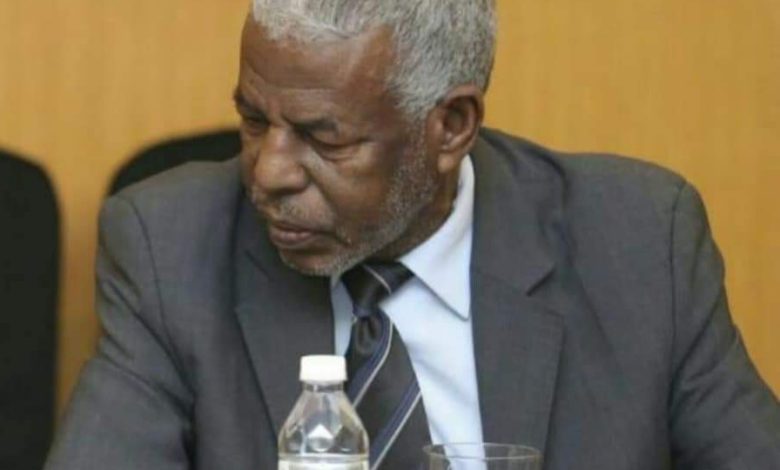
By Dr. Abdelqader Mohamed Ahmed
I heard that the Prime Minister’s recent meeting with officials concluded with the issuance of ten strict decisions aimed at halting the collapse of the national currency. These were described as bold economic measures, which only increased my curiosity to learn more. When I finally found them, I wished I hadn’t. I wished the meeting had never taken place. The only positive thing about it was the photo that accompanied the announcement.
That picture reminded me of the now-famous photo of the late Hemedti flanked by Prime Minister Hamdok, the Minister of Finance, and the Governor of the Central Bank. The occasion was the same—another crisis of the Sudanese pound. Back then, an “economic committee” was formed under Hemedti’s leadership, who declared, “Either we defeat the dollar or it defeats us.” What followed was Hemedti’s departure—and the pound soaring into the skies. At least this time, they seem to acknowledge the catastrophe of inflation and price chaos that has crushed ordinary citizens.
Even so, they themselves appear unconvinced of the new measures. This was evident in the stammering of the Information Minister, Khalid Al-Ayser, usually an eloquent spokesman, as he read from the statement. I had expected the committee to address the real cause of the crisis—the man standing with them in that photo. The first step toward reform should have been the dismissal of this Central Bank governor, whose failures have been acknowledged across all sectors.
Prime Minister Kamel Idris himself admitted in his first speech that the country’s fundamental problem was the failure to put the right people in the right positions. He now faces the very issue he diagnosed—and must start there, if he is serious.
Let us examine these so-called “strict” decisions. The first: forming an Economic Emergency Committee chaired by the Prime Minister. Where is the strictness in that? It immediately recalls the economic committee once chaired by the late Hemedti—are we to expect the same outcome? The second: banning imports without completed banking procedures and blocking goods that fail to meet specifications. This is obvious, and in fact, it damns both the Central Bank and the Standards Authority.
The third: empowering anti-smuggling forces. This only confirms that such forces are not doing their job. Did this really need a high-level meeting? The fourth: enforcing existing anti-smuggling laws and classifying possession of undocumented gold as smuggling. So the laws weren’t being enforced before? Where is the boldness?
Then, establishing a national digital platform to track exports and imports “from port of departure to arrival in Sudan.” I fail to see how this helps the pound. Another decision: revisiting the Cabinet’s earlier resolution on vehicle imports—issuing a policy, then revising it themselves. The most “serious” decision, supposedly, is to review state-level fees and levies deemed illegal. But previous governments tried and failed to stop states from imposing local taxes—they depend on them for revenue, and they always find loopholes.
As for assigning one exclusive entity to export gold, this is nothing but trying the tried. Inevitably, it will be a Central Bank company like Shahama, as before. The Central Bank will print money to buy gold, and the vicious cycle will continue.
I recall when we traveled to Ghana to study its gold policy. The Governor of Ghana’s Central Bank summed it up in one sentence: “The Bank of Ghana has nothing to do with gold.”
Sadly, these ten so-called “bold economic” measures are not economic at all. They are purely administrative, and could have been carried out by any official in his own office. If these leaders truly felt the suffering of citizens under the pound’s collapse, they would have resigned and spared us their failures. But they do not feel it.
Two members of this committee alone earn over $15,000 a month from Sudatel in meeting allowances and annual bonuses. How can they understand our suffering? Their salaries rise with every jump in the dollar. Meanwhile, I mourn Sudanese refugees in Egypt who depend on remittances from Sudan; within a single week, they have been plunged into destitution.
I see no solution to the pound’s collapse except removing Governor Al-Burai’s signature from its banknotes. Did I not warn the late former governor back in 2019 that this man was unfit for any office? We stayed silent over Hemedti’s transgressions until he betrayed us militarily—and now they have betrayed us economically. God is our help.